












First principles characterisation of bio–nano interface
Literature Information
Publication Date
2021-06-10
DOI
10.1039/D1CP01116B
Impact Factor
3.676
Authors
Ian Rouse, David Power, Erik G. Brandt, Matthew Schneemilch, Konstantinos Kotsis, Nick Quirke, Alexander P. Lyubartsev, Vladimir Lobaskin
View Original
Abstract
Nanomaterials possess a wide range of potential applications due to their novel properties and exceptionally high activity as a result of their large surface to volume ratios compared to bulk matter. The active surface may present both advantage and risk when the nanomaterials interact with living organisms. As the overall biological impact of nanomaterials is triggered and mediated by interactions at the bio–nano interface, an ability to predict those from the atomistic descriptors, especially before the material is produced, can present enormous advantage for the development of nanotechnology. Fast screening of nanomaterials and their variations for specific biological effects can be enabled using computational materials modelling. The challenge lies in the range of scales that needs to be crossed from the material-specific atomistic representation to the relevant length scales covering typical biomolecules (proteins and lipids). In this work, we present a systematic multiscale approach that allows one to evaluate crucial interactions at the bionano interface from the first principles without any prior information about the material and thus establish links between the details of the nanomaterials structure to protein–nanoparticle interactions. As an example, an advanced computational characterization of titanium dioxide nanoparticles (6 different surfaces of rutile and anatase polymorphs) has been performed. We computed characteristics of the titanium dioxide interface with water using density functional theory for electronic density, used these parameters to derive an atomistic force field, and calculated adsorption energies for essential biomolecules on the surface of titania nanoparticles via direct atomistic simulations and coarse-grained molecular dynamics. Hydration energies, as well as adsorption energies for a set of 40 blood proteins are reported.
Related Literature
Vibrational structure theory: new vibrational wave function methods for calculation of anharmonic vibrational energies and vibrational contributions to molecular properties
2007-03-23
Invited Article
DOI: 10.1039/B618764A
pH-responsive self-assembly of carboxyl-terminated hyperbranched polymers
Wenyong Dong, Yongfeng Zhou, Deyue Yan, Huiqin Li, Yu Liu
2007-01-23
Paper
DOI: 10.1039/B615525C
Compositional analysis of copper–silica precipitation tubes
Jason J. Pagano, Stephanie Thouvenel-Romans, Oliver Steinbock
2006-11-06
Paper
DOI: 10.1039/B612982J
Modelling of morphology and proton transport in PFSA membranes
James A. Elliott, Stephen J. Paddison
2007-03-30
Invited Article
DOI: 10.1039/B701234A
New theoretical investigations of the photodissociation of ozone in the Hartley, Huggins, Chappuis, and Wulf bands
S. Yu. Grebenshchikov, Z.-W. Qu, H. Zhu, R. Schinke
2007-03-15
Invited Article
DOI: 10.1039/B701020F
Structural and redox properties of VOx and Pd/VOx thin film model catalysts studied by TEM and SAED
Simon Penner, Bernhard Klötzer, Bernd Jenewein
2007-03-19
Paper
DOI: 10.1039/B700650K
Protein–cofactor interactions in bacterial reaction centers from Rhodobacter sphaeroides R-26: Effect of hydrogen bonding on the electronic and geometric structure of the primary quinone. A density functional theory study
Sebastian Sinnecker, Marco Flores, Wolfgang Lubitz
2006-11-24
Paper
DOI: 10.1039/B612568A
You might also like
Compound Q&A
What is the market or research trend for N-(4-Methoxybenzyl)-2-pyridinamine (CAS: 52818-63-0)?
N-(4-Methoxybenzyl)-2-pyridinamine (CAS: 52818-63-0) is increasingly being used ...
52818-63-0N-(4-Methoxybenzyl)-...
Compound Q&A
What precautions should be taken when handling Ethyl 4-(2-chlorophenyl)-1,3-thiazole-2-carboxylate (CAS: 1050507-06-6)?
When handling Ethyl 4-(2-chlorophenyl)-1,3-thiazole-2-carboxylate, appropriate p...
1050507-06-6Ethyl 4-(2-chlorophe...
Compound Q&A
What regulatory guidelines apply to diethyldiselane (CAS: 628-39-7)?
Diethyldiselane (CAS: 628-39-7) is classified under the Globally Harmonized Syst...
628-39-7Diethyldiselane
Compound Q&A
What is the market or research trend for oxocopper (CAS: 12053-18-8)?
The market for oxocopper (CAS: 12053-18-8) is primarily driven by its use in cat...
12053-18-8oxocopper; oxo-(oxoc...
Compound Q&A
What is the market or research trend for 5-{[(2-Methyl-2-propanyl)oxy]carbonyl}-5-azaspiro[2.4]heptane-7-carboxylic acid?
The market for 5-{[(2-Methyl-2-propanyl)oxy]carbonyl}-5-azaspiro[2.4]heptane-7-c...
1268519-54-55-{[(2-Methyl-2-prop...
Compound Q&A
What is 2-(1-Pyrrolidinyl)-4-pyridinamine (CAS: 35981-63-6)?
2-(1-Pyrrolidinyl)-4-pyridinamine is a chemical compound with the CAS number 359...
35981-63-62-(1-Pyrrolidinyl)-4...
Compound Q&A
What are the physical and chemical properties of 2-(3-Pyridinyl)-1-azabicyclo[2.2.2]octane (CAS: 91556-75-1)?
2-(3-Pyridinyl)-1-azabicyclo[2.2.2]octane (CAS: 91556-75-1) is a crystalline sol...
91556-75-12-(3-Pyridinyl)-1-az...
Compound Q&A
How is (S)-Alpha-allyl-proline hydrochloride (CAS: 129704-91-2) typically synthesized?
(S)-Alpha-allyl-proline hydrochloride is usually synthesized via a Wittig reacti...
129704-91-2(S)-Alpha-allyl-prol...
Compound Q&A
What is 3-Methyl-1,2-oxazole-5-carboxylic acid (CAS: 4857-42-5)?
3-Methyl-1,2-oxazole-5-carboxylic acid (CAS: 4857-42-5) is an organic compound w...
4857-42-53-Methyl-1,2-oxazole...
Compound Q&A
How is Lys-SMCC-DM1 (CAS: 1281816-04-3) typically synthesized?
Lys-SMCC-DM1 is synthesized via a multi-step process involving the coupling of S...
1281816-04-3Lys-SMCC-DM1
Source Journal
Physical Chemistry Chemical Physics

CiteScore:
5.5
Self-citation Rate:
10.3%
Articles per Year:
3036
Physical Chemistry Chemical Physics (PCCP) is an international journal co-owned by 19 physical chemistry and physics societies from around the world. This journal publishes original, cutting-edge research in physical chemistry, chemical physics and biophysical chemistry. To be suitable for publication in PCCP, articles must include significant innovation and/or insight into physical chemistry; this is the most important criterion that reviewers and Editors will judge against when evaluating submissions. The journal has a broad scope and welcomes contributions spanning experiment, theory, computation and data science. Topical coverage includes spectroscopy, dynamics, kinetics, statistical mechanics, thermodynamics, electrochemistry, catalysis, surface science, quantum mechanics, quantum computing and machine learning. Interdisciplinary research areas such as polymers and soft matter, materials, nanoscience, energy, surfaces/interfaces, and biophysical chemistry are welcomed if they demonstrate significant innovation and/or insight into physical chemistry. Joined experimental/theoretical studies are particularly appreciated when complementary and based on up-to-date approaches.
Recommended Compounds

2-(4,4-Difluorobutyl)-1H-isoindole-1,3(2H)-dione
CAS Number:
1265341-14-7
Molecular Formula:
C12H11F2NO2
![1-[6-(1H-Imidazol-1-yl)-3-pyridinyl]methanamine structure](https://static.chemtradehub.com/structs/914/914637-08-4-8825.webp "1-[6-(1H-Imidazol-1-yl)-3-pyridinyl]methanamine structure")
![(2R,6S)-6-[(Benzyloxy)methyl]-4-{[(2-methyl-2-propanyl)oxy]carbonyl}-2-morpholinecarboxylic acid structure](https://static.chemtradehub.com/structs/109/1093085-91-6-3382.webp "(2R,6S)-6-[(Benzyloxy)methyl]-4-{[(2-methyl-2-propanyl)oxy]carbonyl}-2-morpholinecarboxylic acid structure")
(2R,6S)-6-[(Benzyloxy)methyl]-4-{[(2-methyl-2-propanyl)oxy]carbonyl}-2-morpholinecarboxylic acid
CAS Number:
1093085-91-6
Molecular Formula:
C18H25NO6
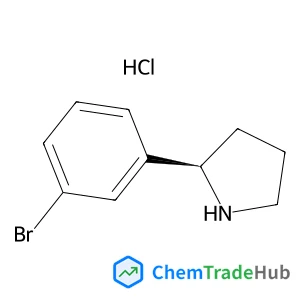
(2R)-2-(3-Bromophenyl)pyrrolidine hydrochloride (1:1)
CAS Number:
1391550-13-2
Molecular Formula:
C10H13BrClN
Recommended Suppliers






Disclaimer
This page provides academic journal information for reference and research purposes only. We are not affiliated with any journal publishers and do not handle publication submissions. For publication-related inquiries, please contact the respective journal publishers directly.
If you notice any inaccuracies in the information displayed, please contact us at support@chemtradehub.com. We will promptly review and address your concerns.