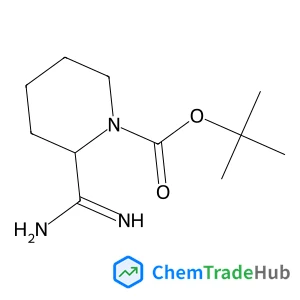
2-Methyl-2-propanyl 2-carbamimidoyl-1-piperidinecarboxylate
CAS Number:
1258640-98-0
Molecular Formula:
C11H21N3O2
Jason J. Pagano, Stephanie Thouvenel-Romans, Oliver Steinbock
Silica gardens consist of hollow tubular structures that form from salt crystals seeded into silicate solution. We investigate the structure and elemental composition of these tubes in the context of a recently developed experimental model that allows quantitative analyses based on predetermined reactant concentrations and flow rates. In these experiments, cupric sulfate solution is injected into large volumes of waterglass. The walls of the resulting tubular structures have a typical width of 10 µm and are gradient materials. Micro-Raman spectroscopy along with energy dispersive X-ray fluorescence data identify amorphous silica and copper(II) hydroxide as the main compounds within the inner and outer tube surfaces, respectively. Upon heating the blueish precipitates to approximately 150 °C, the material turns black as copper(II) hydroxide decomposes to copper(II) oxide. Moreover, we present high resolution transmission electron micrographs that reveal polycrystalline morphologies.
Gabriel Duaux, Etienne Fleury, Daniel Portinha
DOI: 10.1039/D1PY00990G
Xiao-han Pan, Jian-hua Zu
DOI: 10.1039/D1PY00866H
Chuandong Dou
DOI: 10.1039/D0PY00868K
Kostas Parkatzidis, Manon Rolland, Nghia P. Truong, Athina Anastasaki
DOI: 10.1039/D1PY01044A
Jiraya Kiriratnikom, Xin-Chen Yue, Jia-Liang Yang, Ying Wang, Shuo-Hong Chen, Ke-Ke Zhang, Cheng-Jian Zhang, Munir Ullah Khan
DOI: 10.1039/D1PY01013A
Ru Dong, Qi Chen, Xuediao Cai, Qi Zhang, Zhike Liu
DOI: 10.1039/D0PY00680G
Zhe Wang, Hongwen Liang, Mo Xian, Xiaowu Wang
DOI: 10.1039/D0PY00572J
Heng Liu, Chunyu Zhang, Xuequan Zhang
DOI: 10.1039/D1PY00923K
Ruixue Zhang, Xuwen Li, Hongwei Ma, Li Han, Chao Li, Songbo Zhang, Hongyuan Bai, Yang Li
DOI: 10.1039/D1PY01310F
N-(4-Methoxybenzyl)-2-pyridinamine (CAS: 52818-63-0) is increasingly being used ...
When handling Ethyl 4-(2-chlorophenyl)-1,3-thiazole-2-carboxylate, appropriate p...
Diethyldiselane (CAS: 628-39-7) is classified under the Globally Harmonized Syst...
The market for oxocopper (CAS: 12053-18-8) is primarily driven by its use in cat...
The market for 5-{[(2-Methyl-2-propanyl)oxy]carbonyl}-5-azaspiro[2.4]heptane-7-c...
2-(1-Pyrrolidinyl)-4-pyridinamine is a chemical compound with the CAS number 359...
2-(3-Pyridinyl)-1-azabicyclo[2.2.2]octane (CAS: 91556-75-1) is a crystalline sol...
(S)-Alpha-allyl-proline hydrochloride is usually synthesized via a Wittig reacti...
3-Methyl-1,2-oxazole-5-carboxylic acid (CAS: 4857-42-5) is an organic compound w...
Lys-SMCC-DM1 is synthesized via a multi-step process involving the coupling of S...

Physical Chemistry Chemical Physics (PCCP) is an international journal co-owned by 19 physical chemistry and physics societies from around the world. This journal publishes original, cutting-edge research in physical chemistry, chemical physics and biophysical chemistry. To be suitable for publication in PCCP, articles must include significant innovation and/or insight into physical chemistry; this is the most important criterion that reviewers and Editors will judge against when evaluating submissions. The journal has a broad scope and welcomes contributions spanning experiment, theory, computation and data science. Topical coverage includes spectroscopy, dynamics, kinetics, statistical mechanics, thermodynamics, electrochemistry, catalysis, surface science, quantum mechanics, quantum computing and machine learning. Interdisciplinary research areas such as polymers and soft matter, materials, nanoscience, energy, surfaces/interfaces, and biophysical chemistry are welcomed if they demonstrate significant innovation and/or insight into physical chemistry. Joined experimental/theoretical studies are particularly appreciated when complementary and based on up-to-date approaches.