












Molecular biaxiality determines the helical structure – infrared measurements of the molecular order in the nematic twist-bend phase of difluoro terphenyl dimer
Literature Information
Publication Date
2021-02-02
DOI
10.1039/D1CP00187F
Impact Factor
3.676
Authors
Katarzyna Merkel, Barbara Loska, Chris Welch, Georg H. Mehl, Antoni Kocot
View Original
Abstract
Fourier-transform infrared polarized spectroscopy was employed, to obtain the three components of the infrared absorbance for a series of bent-shaped dimers containing double fluorinated terphenyl core (DTC5Cn, n = 5, 7, 9, 11). The data were used to calculate both uniaxial and biaxial order parameters, for various molecular groups of dimers. The molecule bend was estimated based on the observed differences between the uniaxial order parameters for the terphenyl core and central hydrocarbon linker. The orientational order, distinctly reverses its monotonic trend of increase to decrease at the transition temperature, from the uniaxial nematic to the twist-bend nematic phase as result of the director tilt in latter/(twist-bend) phase. The molecular biaxiality, which is negligible in the nematic phase, starts increasing on entering the twist-bend nematic phase, following a sin-square relationships with the tilt angle. The local director curvature is found to be controlled by the molecular biaxiality parameter.
Related Literature
Hydrogen spillover mechanism on covalent organic frameworks as investigated by ab initio density functional calculation
Jing-hua Guo, Hong Zhang, Yongjian Tang, Xinlu Cheng
2013-01-22
Paper
DOI: 10.1039/C2CP44007E
Theoretical predictions for hexagonal BN based nanomaterials as electrocatalysts for the oxygen reduction reaction
2012-12-17
Paper
DOI: 10.1039/C2CP42907A
On heterogeneity in fluorescent few-atom silver nanoclusters
Isabel Díez, Robin H. A. Ras, Mykola I. Kanyuk, Alexander P. Demchenko
2012-11-14
Paper
DOI: 10.1039/C2CP43045B
Influence of catalyst choices on transport behaviors of InAs NWs for high-performance nanoscale transistors
Szu-Ying Chen, Chiu-Yen Wang, Alexandra C. Ford, Jen-Chun Chou, Yi-Chung Wang, Feng-Yun Wang, Johnny C. Ho, Hsiang-Chen Wang, Ali Javey, Jon-Yiew Gan, Lih-Juann Chen, Yu-Lun Chueh
2012-12-21
Communication
DOI: 10.1039/C2CP44213B
Highly efficient hybrid thin-film solar cells using a solution-processed hole-blocking layer
Dong-Ho Kim, Se-Hun Kwon, Yun Chang Park, Hyung Hwan Jung, Hyung Woo Lee, Jung-Dae Kwon, Sung-Gyu Park, Kee-Seok Nam, Yongsoo Jeong, Seung Yoon Ryu, Jae-Wook Kang, Chang Su Kim
2012-12-13
Communication
DOI: 10.1039/C2CP44468B
Other origins for the fluorescence modulation of single dye molecules in open-circuit and short-circuit devices
Jefri S. Teguh, Michael Kurniawan, Xiangyang Wu, Tze Chien Sum, Edwin K. L. Yeow
2012-11-08
Communication
DOI: 10.1039/C2CP43284F
Tunable band gap and hydrogen adsorption property of a two-dimensional porous polymer by nitrogen substitution
Ruifeng Lu, Zhaoshun Meng, Erjun Kan, Feng Li, Dewei Rao, Zelin Lu, Jinchao Qian, Haiping Wu
2012-11-09
Paper
DOI: 10.1039/C2CP42832F
Prediction of (TiO2)x(Cu2O)y alloys for efficient photoelectrochemical water splitting
Heng-Rui Liu, Ji-Hui Yang, Yue-Yu Zhang, Shiyou Chen, Aron Walsh, Hongjun Xiang, Xingao Gong, Su-Huai Wei
2012-12-14
Communication
DOI: 10.1039/C2CP44484D
Is ballistic transportation or quantum confinement responsible for changes in the electrical properties of thin polymer films?
Jean-Pierre Veder, Kunal Patel, Junqiao Lee, Muhammad Tanzirul Alam, Andrew Nelson, Roland De Marco
2012-11-26
Communication
DOI: 10.1039/C2CP43333H
Temperature-controlled self-assembling structure with selective guest-recognition at the liquid–solid interface
Chunhua Liu, Yunzhi Xie, Xiaokang Li, Xun Li, Xiaolin Fan, Ke Deng, Qingdao Zeng, Chen Wang
2012-10-24
Paper
DOI: 10.1039/C2CP43244G
You might also like
Compound Q&A
Is 6-(3-Fluorophenyl)picolinic acid (CAS: 887982-40-3) safe?
6-(3-Fluorophenyl)picolinic acid is generally considered safe for laboratory use...
887982-40-36-(3-Fluorophenyl)pi...
Compound Q&A
What industries use (3R)-3-Pyrrolidinol (CAS: 2799-21-5)?
(3R)-3-Pyrrolidinol is used in the pharmaceutical industry as a precursor for dr...
2799-21-5(3R)-3-Pyrrolidinol
Compound Q&A
What precautions should be taken when handling (4R,5R)-4,5-Diethoxycarbonyl-2,2-dimethyldioxolane (CAS: 59779-75-8)?
When handling (4R,5R)-4,5-Diethoxycarbonyl-2,2-dimethyldioxolane (CAS: 59779-75-...
59779-75-8(4R,5R)-4,5-Diethoxy...
Compound Q&A
How is 1-(6-Chloroimidazo[1,2-b]pyridazin-3-yl)ethanone (CAS: 90734-71-7) typically synthesized?
1-(6-Chloroimidazo[1,2-b]pyridazin-3-yl)ethanone is often synthesized via a mult...
90734-71-71-(6-Chloroimidazo[1...
Compound Q&A
What is the market or research trend for N-Ethyl-3,4-dimethylbenzylamine (CAS: 39180-83-1)?
The market for N-Ethyl-3,4-dimethylbenzylamine (CAS: 39180-83-1) remains steady,...
39180-83-1N-Ethyl-3,4-dimethyl...
Compound Q&A
What is Tert-butyl 3-(pyrrolidin-1-yl)azetidine-1-carboxylate (CAS: 1019008-21-9)?
Tert-butyl 3-(pyrrolidin-1-yl)azetidine-1-carboxylate is a chemical compound wit...
1019008-21-9Tert-butyl 3-(pyrrol...
Compound Q&A
What regulatory guidelines apply to 1-Bromo-3-chloro-2,4-dimethoxybenzene (CAS: 1228956-93-1)?
1-Bromo-3-chloro-2,4-dimethoxybenzene (CAS: 1228956-93-1) falls under the classi...
1228956-93-11-Bromo-3-chloro-2,4...
Compound Q&A
Is 8-Bromo-2-methyl-3,4-dihydroisoquinolin-1(2H)-one (CAS: 1368622-07-4) safe?
The safety of 8-Bromo-2-methyl-3,4-dihydroisoquinolin-1(2H)-one (CAS: 1368622-07...
1368622-07-48-Bromo-2-methyl-3,4...
Compound Q&A
Is Benzyl [(3S)-2,6-dioxo-3-piperidinyl]carbamate (CAS: 22785-43-9) safe?
Benzyl [(3S)-2,6-dioxo-3-piperidinyl]carbamate is generally safe when handled wi...
22785-43-9Benzyl [(3S)-2,6-dio...
Compound Q&A
How should 1-{[4-(4,4,5,5-Tetramethyl-1,3,2-dioxaborolan-2-yl)phenyl]sulfonyl}pyrrolidine (CAS: 928657-21-0) be stored?
1-{[4-(4,4,5,5-Tetramethyl-1,3,2-dioxaborolan-2-yl)phenyl]sulfonyl}pyrrolidine s...
928657-21-01-{[4-(4,4,5,5-Tetra...
Source Journal
Physical Chemistry Chemical Physics

CiteScore:
5.5
Self-citation Rate:
10.3%
Articles per Year:
3036
Physical Chemistry Chemical Physics (PCCP) is an international journal co-owned by 19 physical chemistry and physics societies from around the world. This journal publishes original, cutting-edge research in physical chemistry, chemical physics and biophysical chemistry. To be suitable for publication in PCCP, articles must include significant innovation and/or insight into physical chemistry; this is the most important criterion that reviewers and Editors will judge against when evaluating submissions. The journal has a broad scope and welcomes contributions spanning experiment, theory, computation and data science. Topical coverage includes spectroscopy, dynamics, kinetics, statistical mechanics, thermodynamics, electrochemistry, catalysis, surface science, quantum mechanics, quantum computing and machine learning. Interdisciplinary research areas such as polymers and soft matter, materials, nanoscience, energy, surfaces/interfaces, and biophysical chemistry are welcomed if they demonstrate significant innovation and/or insight into physical chemistry. Joined experimental/theoretical studies are particularly appreciated when complementary and based on up-to-date approaches.
Recommended Compounds
![(2E)-4-[(1R,2S,8R,19S,21R)-14-Hydroxy-11-isopropenyl-8,23,23-trimethyl-5-(3-methyl-2-buten-1-yl)-16,20-dioxo-3,7,22-trioxaheptacyclo[17.4.1.1~8,12~.0~2,17~.0~2,21~.0~4,15~.0~6,13~]pentacosa-4(15),5,13
,17-tetraen-21-yl]-2-methyl-2-butenoic acid structure](https://static.chemtradehub.com/structs/173/173867-04-4-d2d3.webp "(2E)-4-[(1R,2S,8R,19S,21R)-14-Hydroxy-11-isopropenyl-8,23,23-trimethyl-5-(3-methyl-2-buten-1-yl)-16,20-dioxo-3,7,22-trioxaheptacyclo[17.4.1.1~8,12~.0~2,17~.0~2,21~.0~4,15~.0~6,13~]pentacosa-4(15),5,13
,17-tetraen-21-yl]-2-methyl-2-butenoic acid structure")


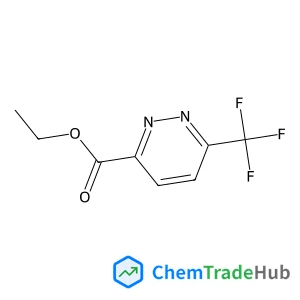
Ethyl 6-(trifluoromethyl)pyridazine-3-carboxylate
CAS Number:
1192155-06-8
Molecular Formula:
C8H7F3N2O2
Recommended Suppliers






Disclaimer
This page provides academic journal information for reference and research purposes only. We are not affiliated with any journal publishers and do not handle publication submissions. For publication-related inquiries, please contact the respective journal publishers directly.
If you notice any inaccuracies in the information displayed, please contact us at support@chemtradehub.com. We will promptly review and address your concerns.