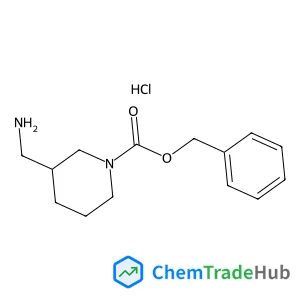
![Benzyl spiro[indole-3,4'-piperidine]-1(2H)-carboxylate hydrochloride (1:1) structure](https://static.chemtradehub.com/structs/159/159635-46-8-8de0.webp "Benzyl spiro[indole-3,4'-piperidine]-1(2H)-carboxylate hydrochloride (1:1) structure")
Benzyl spiro[indole-3,4'-piperidine]-1(2H)-carboxylate hydrochloride (1:1)
CAS Number:
159635-46-8
Molecular Formula:
C20H23ClN2O2
Jean-Pierre Veder, Kunal Patel, Junqiao Lee, Muhammad Tanzirul Alam, Andrew Nelson, Roland De Marco
Resistivities of thin polymer films increase abruptly with decreasing thickness, although the corresponding decline in resistance plateaus below a certain thickness. One can jump to the incorrect conclusion that quantum confinement and surface scattering are responsible for this behaviour, and we highlight the pitfalls of committing such an error.

Accounts of Chemical Research

Journal of the American Chemical Society

Bulletin of the Chemical Society of Japan

Anti-Corrosion Methods and Materials

Canadian Metallurgical Quarterly

Chemistry of Natural Compounds

Advances in Colloid and Interface Science

Chemical & Pharmaceutical Bulletin

Cement and Concrete Research

AIAA Journal
Wen Guo, Hui Zou
DOI: 10.1039/C3PY00478C
Shengyi Dong, Lingyan Gao, Jinying Li, Donghua Xu, Qizhong Zhou
DOI: 10.1039/C3PY00494E
Ruiwen Hao, Jinming Zhang, Tao Xu, Lei Huang, Jinrong Yao, Xin Chen, Zhengzhong Shao
DOI: 10.1039/C3PY21096K
Alexander A. Steinschulte, Bjoern Schulte, Natascha Drude, Michael Erberich, Christian Herbert, Jun Okuda, Martin Möller, Felix A. Plamper
DOI: 10.1039/C3PY00444A
Wim Van Camp, Filip Du Prez, Laurent Rubatat, Laurent Billon, Maud Save
DOI: 10.1039/C3PY00643C
Hyeon Park, Ho-Keun Lee, Tae-Lim Choi
DOI: 10.1039/C3PY00556A
Qihua Wu, Wangping Qin, Suping Bao
DOI: 10.1039/C3PY00404J
Bo Jiang, Xin Zhang, Chuanlang Zhan, Zhenhuan Lu, Jianhua Huang, Xunlei Ding, Shenggui He, Jiannian Yao
DOI: 10.1039/C3PY00457K
6-(3-Fluorophenyl)picolinic acid is generally considered safe for laboratory use...
(3R)-3-Pyrrolidinol is used in the pharmaceutical industry as a precursor for dr...
When handling (4R,5R)-4,5-Diethoxycarbonyl-2,2-dimethyldioxolane (CAS: 59779-75-...
1-(6-Chloroimidazo[1,2-b]pyridazin-3-yl)ethanone is often synthesized via a mult...
The market for N-Ethyl-3,4-dimethylbenzylamine (CAS: 39180-83-1) remains steady,...
Tert-butyl 3-(pyrrolidin-1-yl)azetidine-1-carboxylate is a chemical compound wit...
1-Bromo-3-chloro-2,4-dimethoxybenzene (CAS: 1228956-93-1) falls under the classi...
The safety of 8-Bromo-2-methyl-3,4-dihydroisoquinolin-1(2H)-one (CAS: 1368622-07...
Benzyl [(3S)-2,6-dioxo-3-piperidinyl]carbamate is generally safe when handled wi...
1-{[4-(4,4,5,5-Tetramethyl-1,3,2-dioxaborolan-2-yl)phenyl]sulfonyl}pyrrolidine s...

Physical Chemistry Chemical Physics (PCCP) is an international journal co-owned by 19 physical chemistry and physics societies from around the world. This journal publishes original, cutting-edge research in physical chemistry, chemical physics and biophysical chemistry. To be suitable for publication in PCCP, articles must include significant innovation and/or insight into physical chemistry; this is the most important criterion that reviewers and Editors will judge against when evaluating submissions. The journal has a broad scope and welcomes contributions spanning experiment, theory, computation and data science. Topical coverage includes spectroscopy, dynamics, kinetics, statistical mechanics, thermodynamics, electrochemistry, catalysis, surface science, quantum mechanics, quantum computing and machine learning. Interdisciplinary research areas such as polymers and soft matter, materials, nanoscience, energy, surfaces/interfaces, and biophysical chemistry are welcomed if they demonstrate significant innovation and/or insight into physical chemistry. Joined experimental/theoretical studies are particularly appreciated when complementary and based on up-to-date approaches.