













Nanostructuring SnTe to improve thermoelectric properties through Zn and Sb co-doping
Literature Information
Publication Date
2020-09-01
DOI
10.1039/D0SE01081B
Impact Factor
6.367
Authors
Samuel Kimani Kihoi, Ho Seong Lee
View Original
Abstract
The suitability of tin telluride (SnTe) as a potential alternative thermoelectric material avidly continues and the outcome so far has been superbly promising. In our research, both Zn doped and Zn and Sb co-doped SnTe were studied. We show that introducing the ZnTe second phase plays a significantly crucial role in improving the thermoelectric properties of pristine SnTe. In addition, the Sb-rich layered structure has a paramount effect on specially reducing the phonon mean free path (PMFP) during dispersion. An anomalous behavior is observed in Zn doped SnTe, where slight doping results in increased electrical conductivity. On the other hand, Sb co-doping significantly reduces the carrier concentration and electrical conductivity is seen to decrease with increasing Sb concentration. A maximum Seebeck coefficient of ∼170 μV K−1 in a 15 mol% Sb co-doped sample emanates from the band convergence effect of Zn in SnTe and reduction of the carrier concentration; and an overall maximum power factor (PF) of ∼17.2 μW cm−1 K−2 at 773 K is also reported. The astounding effect of Sb addition on modulation of the carrier concentration is evident in the ultra-low electronic thermal contribution (κe). An improved Vickers hardness value of up to 130 Hv and a two-fold improved ZT of Zn doped SnTe to a value of ∼0.6 is promising but there still remains room for further improvement.
Related Literature
Surface-segregating zwitterionic copolymers to control poly(dimethylsiloxane) surface chemistry
Luca Mazzaferro, Ayse Asatekin
2023-11-27
Paper
DOI: 10.1039/D3TB02164E
Tailored ternary hetero-interfaces with in situ formed CNTs for effective electromagnetic coupling at low/mid-frequency
Jing Chen, Hong-Han Wang‡, Qing-Da An, Zuo-Yi Xiao, Xiao-Ling Dong, Kai-Ruo Zhu, Shang-Ru Zhai
2023-12-05
Paper
DOI: 10.1039/D3NJ05319A
Development and characterization of bio-based polyurethane flexible foams containing silver nanoparticles for efficient dermal healing application
Mohammad Mehdi Soltanzadeh, Mahmoud Reza Hojjati, Shadi Hassanajili, Ali Akbar Mohammadi
2023-12-07
Paper
DOI: 10.1039/D3NJ03339B
Red light-triggerable nanohybrids of graphene oxide, gold nanoparticles and thermo-responsive polymers for combined photothermia and drug release effects
Ludovica Maugeri, Giuseppe Forte, Gianpiero Buscarino, Antonino Gulino, Luca Lanzanò, Paolo Bonacci, Nicolò Musso
2023-11-09
Paper
DOI: 10.1039/D3TB01863F
A novel magnetically guided, oxygen propelled CoPt/Au nanosheet motor in conjugation with a multilayer hollow microcapsule for effective drug delivery and light triggered drug release
Samira Kariminia, Mojtaba Shamsipur, Kamran Mansouri
2023-11-27
Paper
DOI: 10.1039/D3TB01888A
Integrated metabolomics revealed the photothermal therapy of melanoma by Mo2C nanosheets: toward rehabilitated homeostasis in metabolome combined lipidome
Ming Wang, Ge Liang, Wen Zheng, Luolan Gui, Xin Li, Lu Zhang, Wenjuan Zeng, Yin Yang, Yu Zeng, Zhe Huang, Junwen Guan, Tao Li, Ligang Chen, Jie Zhou
2023-12-04
Paper
DOI: 10.1039/D3TB02123H
Porphyrin and doxorubicin mediated nanoarchitectonics of copper clusters: a bimodal theranostics for cancer diagnosis and treatment in vitro
Merin Joseph, Muhammed Shafeeque Rahman Pathiripparambath, Vinoy Thomas, Hanas Tharayil, Ramapurath S Jayasree
2023-12-24
Paper
DOI: 10.1039/D3TB02618C
Furaldehyde-based magnetic supported palladium nanoparticles as an efficient heterogeneous catalyst for Mizoroki–Heck cross-coupling reaction
Sumanth Hegde, Aatika Nizam, Ajesh Vijayan
2023-11-30
Paper
DOI: 10.1039/D3NJ04868C
A copper–platinum nanoplatform for synergistic photothermal and chemodynamic tumor therapy via ROS outburst and GSH exhaustion
Chao Li, Yan Kang, Chaohui Zhou, Nengqin Jia
2024-01-08
Paper
DOI: 10.1039/D3TB02288A
Application of micro/nanomotors in environmental remediation
Dan Jing, Ziyi Li, Wennan Yan, Ji Zhang, Yingshu Guo
2023-12-18
Perspective
DOI: 10.1039/D3NJ04873J
You might also like
Compound Q&A
How should waste containing (6-Bromo-2-naphthyl)oxy](dimethyl)(2-methyl-2-propanyl)silane be handled?
Waste containing (6-Bromo-2-naphthyl)oxy](dimethyl)(2-methyl-2-propanyl)silane (...
100751-65-3[(6-Bromo-2-naphthyl...
Compound Q&A
How is 7-Fluoro-4-isoquinolinecarboxylic acid (CAS: 1841081-40-0) typically synthesized?
7-Fluoro-4-isoquinolinecarboxylic acid can be synthesized via a multi-step proce...
1841081-40-07-Fluoro-4-isoquinol...
Compound Q&A
What are the physical and chemical properties of 2,3,5,6-Tetrabromothieno[3,2-b]thiophene (CAS: 124638-53-5)?
2,3,5,6-Tetrabromothieno[3,2-b]thiophene is a crystalline compound with a high m...
124638-53-52,3,5,6-Tetrabromoth...
Compound Q&A
Is 1-[4-(Benzylamino)-7,8-dihydro-5H-pyrano[4,3-d]pyrimidin-2-yl]-2-methyl-1H-indole-4-carboxamide (CAS: 1542705-92-9) safe?
1-[4-(Benzylamino)-7,8-dihydro-5H-pyrano[4,3-d]pyrimidin-2-yl]-2-methyl-1H-indol...
1542705-92-91-[4-(Benzylamino)-7...
Compound Q&A
What is the market or research trend for imidazo[5,1-d]-1,2,3,5-tetrazine-8-carboxylic acid, 3,4-dihydro-3-methyl-4-oxo- (CAS: 113942-30-6)?
The market for imidazo[5,1-d]-1,2,3,5-tetrazine-8-carboxylic acid, 3,4-dihydro-3...
113942-30-6Imidazo[5,1-d]-1,2,3...
Compound Q&A
What is 3-(Triisopropylsilyl)propiolaldehyde (CAS: 163271-80-5)?
3-(Triisopropylsilyl)propiolaldehyde is a synthetic organic compound with the CA...
163271-80-53-(Triisopropylsilyl...
Compound Q&A
What regulatory guidelines apply to 6-Nitro-2H-1,4-benzoxazin-3(4H)-one (CAS: 81721-87-1)?
6-Nitro-2H-1,4-benzoxazin-3(4H)-one (CAS: 81721-87-1) is subject to various regu...
81721-87-16-Nitro-2H-1,4-benzo...
Compound Q&A
How should waste containing (3-Fluorophenyl)(4-{[(2-methyl-2-propanyl)oxy]carbonyl}-1-piperazinyl)acetic acid (CAS: 885272-91-3) be handled?
Waste containing (3-Fluorophenyl)(4-{[(2-methyl-2-propanyl)oxy]carbonyl}-1-piper...
885272-91-3(3-Fluorophenyl)(4-{...
Compound Q&A
What are the physical and chemical properties of N,N'-4,4'-Biphenyldiyldiisonicotinamide (CAS: 55119-40-9)?
N,N'-4,4'-Biphenyldiyldiisonicotinamide is a white crystalline solid with a mole...
55119-40-9N,N'-4,4'-Biphenyldi...
Compound Q&A
What industries use 6-Bromo-8-fluoro-2-quinazolinol (CAS: 1036756-15-6)?
6-Bromo-8-fluoro-2-quinazolinol is primarily used in the pharmaceutical industry...
1036756-15-66-Bromo-8-fluoro-2-q...
Source Journal
Recommended Compounds
![2-{[4-(2-Methoxyethyl)phenoxy]methyl}oxirane structure](https://static.chemtradehub.com/structs/567/56718-70-8-f037.webp "2-{[4-(2-Methoxyethyl)phenoxy]methyl}oxirane structure")
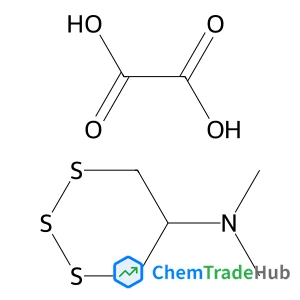
Oxalic acid compound with cyclohexylsulfamothioic O-acid (11)
CAS Number:
31895-22-4
Molecular Formula:
C7H13NO4S3
Recommended Suppliers






Disclaimer
This page provides academic journal information for reference and research purposes only. We are not affiliated with any journal publishers and do not handle publication submissions. For publication-related inquiries, please contact the respective journal publishers directly.
If you notice any inaccuracies in the information displayed, please contact us at support@chemtradehub.com. We will promptly review and address your concerns.