












Application of micro/nanomotors in environmental remediation
Literature Information
Publication Date
2023-12-18
DOI
10.1039/D3NJ04873J
Impact Factor
3.591
Authors
Dan Jing, Ziyi Li, Wennan Yan, Ji Zhang, Yingshu Guo
View Original
Abstract
Micro/nanomotors are ultra-small machines that can navigate autonomously and carry out particular tasks at the micro/nanoscale. The micro/nanomotors can act as “smart mobile” cleaners in complex situations by employing propulsion to degrade contaminants and clear impurities while overcoming resistance since they have power units that give them the essential attribute of continuous movement. This work reviews the speed control and direction control of micro/nanomotors, whose speed can range from 2.7 μm s−1 to 24.3 mm s−1, as well as the propulsion mode of micro/nanomotors, including the propulsion mechanism of micro/nanomotors from both chemical and physical perspectives. The detection and degradation of environmental pollutants by the micro/nanomotors are also summarized. The functions of “smart mobile” cleaners in the detection of heavy metals in the environment, detection, decomposition and degradation of organic compounds, removal of pathogenic bacteria, elimination of oil droplets from water, and adsorptive removal of pollutants for environmental remediation are all covered in detail. Finally, the primary obstacles to converting micro/nanomotors into useful materials are examined, along with potential developments in this sector for future research.
Related Literature
Poly(N-isopropylacrylamide) coated gold nanoparticles as colourimetric temperature and salt sensors
Samarendra Maji, Belgin Cesur, Zhiyue Zhang, Bruno G. De Geest, Richard Hoogenboom
2016-01-28
Communication
DOI: 10.1039/C5PY01959A
Synthesis of highly refractive and highly fluorescent rigid cyanuryl polyimines with polycyclic aromatic hydrocarbon pendants
T. Kotaki, N. Nishimura, M. Ozawa, A. Fujimori, H. Muraoka, S. Ogawa, T. Korenaga, E. Suzuki, Y. Oishi, Y. Shibasaki
2015-12-23
Paper
DOI: 10.1039/C5PY01920F
Fluorescent PEGylation agent by a thiolactone-based one-pot reaction: a new strategy for theranostic combinations
Yuan Zhao, Bin Yang, Yaling Zhang, Shiqi Wang, Changkui Fu, Yen Wei, Lei Tao
2014-08-12
Communication
DOI: 10.1039/C4PY00995A
A new strategy to prepare thermo-responsive multicompartment nanoparticles constructed with two diblock copolymers
Xin He, Quanlong Li, Pengfei Shi, Yongliang Cui, Shentong Li, Wangqing Zhang
2014-09-03
Paper
DOI: 10.1039/C4PY01077A
Suzuki–Miyaura catalyst-transfer polycondensation with Pd(IPr)(OAc)2 as the catalyst for the controlled synthesis of polyfluorenes and polythiophenes
Xincui Shi, Hongkun Tian, Yanhou Geng, Fosong Wang
2014-08-28
Paper
DOI: 10.1039/C4PY00917G
Ultra bright red AIE dots for cytoplasm and nuclear imaging
Zilong Wang, Lulin Yan, Lei Zhang, Yujue Chen, Hui Li, Jibo Zhang, Yan Zhang, Xing Li, Bin Xu, Xueqi Fu, Zaicheng Sun, Wenjing Tian
2014-08-13
Paper
DOI: 10.1039/C4PY00764F
Preparation of graphene/poly(2-hydroxyethyl acrylate) nanohybrid materials via an ambient temperature “grafting-from” strategy
Shaojia Zhu, Yongsheng Li, Ping Shi, Zhong Huang, Xiaoyu Huang
2014-09-23
Paper
DOI: 10.1039/C4PY00903G
Novel poly(triphenylamine-alt-fluorene) with asymmetric hexaphenylbenzene and pyrene moieties: synthesis, fluorescence, flexible near-infrared electrochromic devices and theoretical investigation
Po-I. Wang, Wan-Ru Shie, Jyh-Chiang Jiang, Lain-Jong Li, Der-Jang Liaw
2016-01-13
Paper
DOI: 10.1039/C5PY01971K
Hyperbranched poly(phosphoester)s as flame retardants for technical and high performance polymers
Karoline Täuber, Frederik R. Wurm, Bernhard Schartel
2014-09-08
Paper
DOI: 10.1039/C4PY00830H
You might also like
Compound Q&A
How should waste containing (6-Bromo-2-naphthyl)oxy](dimethyl)(2-methyl-2-propanyl)silane be handled?
Waste containing (6-Bromo-2-naphthyl)oxy](dimethyl)(2-methyl-2-propanyl)silane (...
100751-65-3[(6-Bromo-2-naphthyl...
Compound Q&A
How is 7-Fluoro-4-isoquinolinecarboxylic acid (CAS: 1841081-40-0) typically synthesized?
7-Fluoro-4-isoquinolinecarboxylic acid can be synthesized via a multi-step proce...
1841081-40-07-Fluoro-4-isoquinol...
Compound Q&A
What are the physical and chemical properties of 2,3,5,6-Tetrabromothieno[3,2-b]thiophene (CAS: 124638-53-5)?
2,3,5,6-Tetrabromothieno[3,2-b]thiophene is a crystalline compound with a high m...
124638-53-52,3,5,6-Tetrabromoth...
Compound Q&A
Is 1-[4-(Benzylamino)-7,8-dihydro-5H-pyrano[4,3-d]pyrimidin-2-yl]-2-methyl-1H-indole-4-carboxamide (CAS: 1542705-92-9) safe?
1-[4-(Benzylamino)-7,8-dihydro-5H-pyrano[4,3-d]pyrimidin-2-yl]-2-methyl-1H-indol...
1542705-92-91-[4-(Benzylamino)-7...
Compound Q&A
What is the market or research trend for imidazo[5,1-d]-1,2,3,5-tetrazine-8-carboxylic acid, 3,4-dihydro-3-methyl-4-oxo- (CAS: 113942-30-6)?
The market for imidazo[5,1-d]-1,2,3,5-tetrazine-8-carboxylic acid, 3,4-dihydro-3...
113942-30-6Imidazo[5,1-d]-1,2,3...
Compound Q&A
What is 3-(Triisopropylsilyl)propiolaldehyde (CAS: 163271-80-5)?
3-(Triisopropylsilyl)propiolaldehyde is a synthetic organic compound with the CA...
163271-80-53-(Triisopropylsilyl...
Compound Q&A
What regulatory guidelines apply to 6-Nitro-2H-1,4-benzoxazin-3(4H)-one (CAS: 81721-87-1)?
6-Nitro-2H-1,4-benzoxazin-3(4H)-one (CAS: 81721-87-1) is subject to various regu...
81721-87-16-Nitro-2H-1,4-benzo...
Compound Q&A
How should waste containing (3-Fluorophenyl)(4-{[(2-methyl-2-propanyl)oxy]carbonyl}-1-piperazinyl)acetic acid (CAS: 885272-91-3) be handled?
Waste containing (3-Fluorophenyl)(4-{[(2-methyl-2-propanyl)oxy]carbonyl}-1-piper...
885272-91-3(3-Fluorophenyl)(4-{...
Compound Q&A
What are the physical and chemical properties of N,N'-4,4'-Biphenyldiyldiisonicotinamide (CAS: 55119-40-9)?
N,N'-4,4'-Biphenyldiyldiisonicotinamide is a white crystalline solid with a mole...
55119-40-9N,N'-4,4'-Biphenyldi...
Compound Q&A
What industries use 6-Bromo-8-fluoro-2-quinazolinol (CAS: 1036756-15-6)?
6-Bromo-8-fluoro-2-quinazolinol is primarily used in the pharmaceutical industry...
1036756-15-66-Bromo-8-fluoro-2-q...
Source Journal
New Journal of Chemistry

CiteScore:
5.3
Self-citation Rate:
3.7%
Articles per Year:
2153
NJC (New Journal of Chemistry) is a broad-based primary journal encompassing all branches of chemistry and its sub-disciplines. It contains full research articles, communications, perspectives and focus articles. This well-established journal, owned by the Centre National de la Recherche Scientifique (CNRS) of France, has been co-published with the Royal Society of Chemistry since January 1998. NJC is the forum for the publication of high-quality, original and significant work that opens new directions in chemistry or other scientific disciplines. In addition to having a significant chemical component, work published in NJC must demonstrate that it will have an impact on areas of research other than that of the reported work.
Recommended Compounds
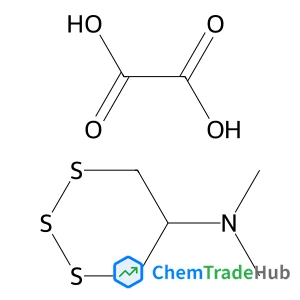
Oxalic acid compound with cyclohexylsulfamothioic O-acid (11)
CAS Number:
31895-22-4
Molecular Formula:
C7H13NO4S3

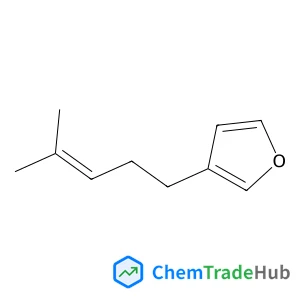
![5-Bromoimidazo[1,2-a]pyridine structure](https://static.chemtradehub.com/structs/692/69214-09-1-d8e2.webp "5-Bromoimidazo[1,2-a]pyridine structure")
Recommended Suppliers





Disclaimer
This page provides academic journal information for reference and research purposes only. We are not affiliated with any journal publishers and do not handle publication submissions. For publication-related inquiries, please contact the respective journal publishers directly.
If you notice any inaccuracies in the information displayed, please contact us at support@chemtradehub.com. We will promptly review and address your concerns.