













A novel magnetically guided, oxygen propelled CoPt/Au nanosheet motor in conjugation with a multilayer hollow microcapsule for effective drug delivery and light triggered drug release
Literature Information
Publication Date
2023-11-27
DOI
10.1039/D3TB01888A
Impact Factor
6.331
Authors
Samira Kariminia, Mojtaba Shamsipur, Kamran Mansouri
View Original
Abstract
In recent years, nanomotors have been developed and attracted extensive attention in biomedical applications. In this work, a magnetically-guided oxygen-propelled CoPt/gold nanosheet motor (NSM) was prepared and used as an active self-propelled platform that can load, transfer and control the release of drug carrier to cancer cells. As a drug carrier, the microcapsules were constructed by the layer-by-layer (LbL) coating of chitosan and carboxymethyl cellulose layers, followed by incorporation of gold and magnetite nanoparticles. Doxorubicin (DOX) as an anti-cancer drug was loaded onto the synthesized microcapsules with a loading efficiency of 77%. The prepared NSMs can deliver the DOX loaded magnetic multilayer microcapsule to the target cancer cell based on the catalytic decomposition of H2O2 solution (1% v/v) via guidance from an external magnetic force. The velocity of NSM was determined to be 25.1 μm s−1 in 1% H2O2. Under near-infrared irradiation, and due to the photothermal effect of the gold nanoparticles, the proposed system was found to rapidly release more drugs compared to that of an internal stimulus diffusion process. Moreover, the investigation of cytotoxicity of NSMs and multilayer microcapsules clearly revealed that they have negligible side effects over all the concentrations tested.
Related Literature
High throughput volatile fatty acid skin metabolite profiling by thermal desorption secondary electrospray ionisation mass spectrometry
Helen J. Martin, James C. Reynolds, Svetlana Riazanskaia, C. L. Paul Thomas
2014-05-16
Paper
DOI: 10.1039/C4AN00134F
Green electrochemical sensing platforms: utilizing hydroxyapatite derived from natural fish scales as a novel electrochemical material for the sensitive detection of kidney injury molecule 1 (KIM-1)
Ying Zhang, Wei Zhang, Qing Zhang, Kaiyang Li, Wei Liu, Yong Liu, Craig E. Banks
2014-09-05
Communication
DOI: 10.1039/C4AN00957F
Low cost referenced luminescent imaging of oxygen and pH with a 2-CCD colour near infrared camera
Josef Ehgartner, Helmar Wiltsche, Sergey M. Borisov, Torsten Mayr
2014-07-03
Paper
DOI: 10.1039/C4AN00783B
Quality assessment of recombinant proteins by infrared spectroscopy. Characterisation of a protein aggregation related band of the Ca2+-ATPase
Chenge Li, Saroj Kumar, Andreas Barth
2014-05-22
Paper
DOI: 10.1039/C4AN00483C
Cleavage-based hybridization chain reaction for electrochemical detection of thrombin
Yuanyuan Chang, Yaqin Chai, Shunbi Xie, Yali Yuan, Juan Zhang, Ruo Yuan
2014-06-06
Paper
DOI: 10.1039/C4AN00712C
Detection of multiple steroidal compounds in synthetic urine using comprehensive gas chromatography-mass spectrometry (GC×GC-MS) combined with a molecularly imprinted polymer clean-up protocol
Adnan Zulfiqar, Geraint Morgan, Nicholas W. Turner
2014-07-17
Paper
DOI: 10.1039/C4AN00721B
Monitoring cellular stress responses using integrated high-frequency impedance spectroscopy and time-resolved ELISA
Verena Charwat, Martin Joksch, Drago Sticker, Michaela Purtscher, Mario Rothbauer, Peter Ertl
2014-08-11
Paper
DOI: 10.1039/C4AN00824C
Trap and track: designing self-reporting porous Si photonic crystals for rapid bacteria detection
Naama Massad-Ivanir, Yossi Mirsky, Amit Nahor, Eitan Edrei, Lisa M. Bonanno-Young, Nadav Ben Dov, Amir Sa'ar
2014-06-02
Paper
DOI: 10.1039/C4AN00364K
You might also like
Compound Q&A
How should waste containing (6-Bromo-2-naphthyl)oxy](dimethyl)(2-methyl-2-propanyl)silane be handled?
Waste containing (6-Bromo-2-naphthyl)oxy](dimethyl)(2-methyl-2-propanyl)silane (...
100751-65-3[(6-Bromo-2-naphthyl...
Compound Q&A
How is 7-Fluoro-4-isoquinolinecarboxylic acid (CAS: 1841081-40-0) typically synthesized?
7-Fluoro-4-isoquinolinecarboxylic acid can be synthesized via a multi-step proce...
1841081-40-07-Fluoro-4-isoquinol...
Compound Q&A
What are the physical and chemical properties of 2,3,5,6-Tetrabromothieno[3,2-b]thiophene (CAS: 124638-53-5)?
2,3,5,6-Tetrabromothieno[3,2-b]thiophene is a crystalline compound with a high m...
124638-53-52,3,5,6-Tetrabromoth...
Compound Q&A
Is 1-[4-(Benzylamino)-7,8-dihydro-5H-pyrano[4,3-d]pyrimidin-2-yl]-2-methyl-1H-indole-4-carboxamide (CAS: 1542705-92-9) safe?
1-[4-(Benzylamino)-7,8-dihydro-5H-pyrano[4,3-d]pyrimidin-2-yl]-2-methyl-1H-indol...
1542705-92-91-[4-(Benzylamino)-7...
Compound Q&A
What is the market or research trend for imidazo[5,1-d]-1,2,3,5-tetrazine-8-carboxylic acid, 3,4-dihydro-3-methyl-4-oxo- (CAS: 113942-30-6)?
The market for imidazo[5,1-d]-1,2,3,5-tetrazine-8-carboxylic acid, 3,4-dihydro-3...
113942-30-6Imidazo[5,1-d]-1,2,3...
Compound Q&A
What is 3-(Triisopropylsilyl)propiolaldehyde (CAS: 163271-80-5)?
3-(Triisopropylsilyl)propiolaldehyde is a synthetic organic compound with the CA...
163271-80-53-(Triisopropylsilyl...
Compound Q&A
What regulatory guidelines apply to 6-Nitro-2H-1,4-benzoxazin-3(4H)-one (CAS: 81721-87-1)?
6-Nitro-2H-1,4-benzoxazin-3(4H)-one (CAS: 81721-87-1) is subject to various regu...
81721-87-16-Nitro-2H-1,4-benzo...
Compound Q&A
How should waste containing (3-Fluorophenyl)(4-{[(2-methyl-2-propanyl)oxy]carbonyl}-1-piperazinyl)acetic acid (CAS: 885272-91-3) be handled?
Waste containing (3-Fluorophenyl)(4-{[(2-methyl-2-propanyl)oxy]carbonyl}-1-piper...
885272-91-3(3-Fluorophenyl)(4-{...
Compound Q&A
What are the physical and chemical properties of N,N'-4,4'-Biphenyldiyldiisonicotinamide (CAS: 55119-40-9)?
N,N'-4,4'-Biphenyldiyldiisonicotinamide is a white crystalline solid with a mole...
55119-40-9N,N'-4,4'-Biphenyldi...
Compound Q&A
What industries use 6-Bromo-8-fluoro-2-quinazolinol (CAS: 1036756-15-6)?
6-Bromo-8-fluoro-2-quinazolinol is primarily used in the pharmaceutical industry...
1036756-15-66-Bromo-8-fluoro-2-q...
Source Journal
Journal of Materials Chemistry B

CiteScore:
12
Self-citation Rate:
4.9%
Articles per Year:
831
Journal of Materials Chemistry A, B & C cover high quality studies across all fields of materials chemistry. The journals focus on those theoretical or experimental studies that report new understanding, applications, properties and synthesis of materials. The journals have a strong history of publishing quality reports of interest to interdisciplinary communities and providing an efficient and rigorous service through peer review and publication. The journals are led by an international team of Editors-in-Chief and Associate Editors who are all active researchers in their fields. Journal of Materials Chemistry A, B & C are separated by the intended application of the material studied. Broadly, applications in energy and sustainability are of interest to Journal of Materials Chemistry A, applications in biology and medicine are of interest to Journal of Materials Chemistry B, and applications in optical, magnetic and electronic devices are of interest to Journal of Materials Chemistry C. More than one Journal of Materials Chemistry journal may be suitable for certain fields and researchers are encouraged to submit their paper to the journal that they feel best fits for their particular article. Example topic areas within the scope of Journal of Materials Chemistry B are listed below. This list is neither exhaustive nor exclusive. Antifouling coatings Biocompatible materials Bioelectronics Bioimaging Biomimetics Biomineralisation Bionics Biosensors Diagnostics Drug delivery Gene delivery Immunobiology Nanomedicine Regenerative medicine & Tissue engineering Scaffolds Soft robotics Stem cells Therapeutic devices image block All articles published in Journal of Materials Chemistry B from 2019 onwards will be indexed in MEDLINE®. Articles that primarily focus on providing insight into the underlying science and performance of biomaterials within a biological environment are more suited to our companion journal, Biomaterials Science.
Recommended Compounds
![5-Bromoimidazo[1,2-a]pyridine structure](https://static.chemtradehub.com/structs/692/69214-09-1-d8e2.webp "5-Bromoimidazo[1,2-a]pyridine structure")
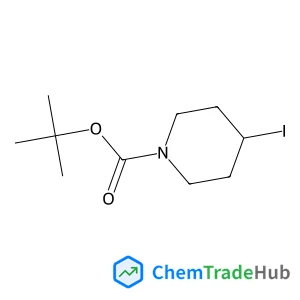
2-Methyl-2-propanyl 4-iodo-1-piperidinecarboxylate
CAS Number:
301673-14-3
Molecular Formula:
C10H18INO2
![2,2'-{2,2-Propanediylbis[(2,6-dibromo-4,1-phenylene)oxy]}diethanol structure](https://static.chemtradehub.com/structs/416/4162-45-2-b3d6.webp "2,2'-{2,2-Propanediylbis[(2,6-dibromo-4,1-phenylene)oxy]}diethanol structure")
2,2'-{2,2-Propanediylbis[(2,6-dibromo-4,1-phenylene)oxy]}diethanol
CAS Number:
4162-45-2
Molecular Formula:
C19H20Br4O4
Recommended Suppliers





Disclaimer
This page provides academic journal information for reference and research purposes only. We are not affiliated with any journal publishers and do not handle publication submissions. For publication-related inquiries, please contact the respective journal publishers directly.
If you notice any inaccuracies in the information displayed, please contact us at support@chemtradehub.com. We will promptly review and address your concerns.