













Integrated metabolomics revealed the photothermal therapy of melanoma by Mo2C nanosheets: toward rehabilitated homeostasis in metabolome combined lipidome
Literature Information
Publication Date
2023-12-04
DOI
10.1039/D3TB02123H
Impact Factor
6.331
Authors
Ming Wang, Ge Liang, Wen Zheng, Luolan Gui, Xin Li, Lu Zhang, Wenjuan Zeng, Yin Yang, Yu Zeng, Zhe Huang, Junwen Guan, Tao Li, Ligang Chen, Jie Zhou
View Original
Abstract
Melanoma, the most aggressive and life-threatening form of skin cancer, lacks innovative therapeutic approaches and deeper bioinformation. In this study, we developed a photothermal therapy (PTT) based on Mo2C nanosheets to eliminate melanoma while utilizing integrated metabolomics to investigate the metabolic shift of metabolome combined lipidome during PTT at the molecular level. Our results demonstrated that 1 mg ml−1 Mo2C nanosheets could efficiently convert laser energy into heat with a strong and stable photothermal effect (74 ± 0.9 °C within 7 cycles). Furthermore, Mo2C-based PTT led to a rapid decrease in melanoma volume (from 3.299 to 0 cm2) on the sixth day, indicating the effective elimination of melanoma. Subsequent integrated metabolomics analysis revealed significant changes in aqueous metabolites (including organic acids, amino acids, fatty acids, and amines) and lipid classes (including phospholipids, lysophospholipids, and sphingolipids), suggesting that melanoma caused substantial fluctuations in both metabolome and lipidome, while Mo2C-based PTT helped improve amino acid metabolism-related biological events (such as tryptophan metabolism) impaired by melanoma. These findings suggest that Mo2C nanosheets hold significant potential as an effective therapeutic agent for skin tumors, such as melanoma. Moreover, through exploring multidimensional bioinformation, integrated metabolomics technology provides novel insights for studying the metabolic effects of tumors, monitoring the correction of metabolic abnormalities by Mo2C nanosheet therapy, and evaluating the therapeutic effect on tumors.
Related Literature
Studies on homologous random and alternating segmented conjugated polymers with and without silicon synthesized by ADMET‡
Hamid Ardolic
2015-11-20
Paper
DOI: 10.1039/C5PY01455G
pH dependent thermoresponsive behavior of acrylamide–acrylonitrile UCST-type copolymers in aqueous media
Beatriz A. Pineda-Contreras, Holger Schmalz, Seema Agarwal
2016-02-12
Paper
DOI: 10.1039/C6PY00162A
Reactive imidazole intermediates: simplified synthetic approach to functional aliphatic cyclic carbonates
Johan V. Olsson, Daniel Hult, Yanling Cai, Sandra García-Gallego, Michael Malkoch
2014-08-13
Communication
DOI: 10.1039/C4PY00911H
A side-chain engineering approach to solvent-resistant semiconducting polymer thin films
Zi-Hao Guo, Na Ai, Connor Ryan McBroom, Yen-Hao Lin, Michael Roders, Congzhi Zhu, Alexander L. Ayzner, Jian Pei
2015-11-10
Paper
DOI: 10.1039/C5PY01669J
Suzuki–Miyaura catalyst-transfer polycondensation with Pd(IPr)(OAc)2 as the catalyst for the controlled synthesis of polyfluorenes and polythiophenes
Xincui Shi, Hongkun Tian, Yanhou Geng, Fosong Wang
2014-08-28
Paper
DOI: 10.1039/C4PY00917G
Synthesis of highly reactive polyisobutylene with FeCl3/ether complexes in hexane; kinetic and mechanistic studies
Rajeev Kumar, Priyadarsi De, Bin Zheng, Kuo-Wei Huang, Jack Emert, Rudolf Faust
2014-09-12
Paper
DOI: 10.1039/C4PY01039F
BODIPY-based macromolecular photosensitizer with cation-enhanced antibacterial activity
Zhentan Lu, Xinge Zhang, Yu Zhao, Yinan Xue, Tingting Zhai, Zhongming Wu, Chaoxing Li
2014-10-06
Paper
DOI: 10.1039/C4PY00715H
Thiol-Michael “click” chemistry: another efficient tool for head functionalization of giant surfactants
Yiwen Li, Hao Su, Xueyan Feng, Zhao Wang, Kai Guo, Qiang Fu, Stephen Z. D. Cheng
2014-08-21
Paper
DOI: 10.1039/C4PY01103A
Correction: Co-delivery of 5-fluorocytosine and cytosine deaminase into glioma cells mediated by an intracellular environment-responsive nanovesicle
Yuanyuan Yuan, Shudong Lin, Du Cheng, Xiaoying Wang, Qing Jiang, Xintao Shuai
2014-10-09
Correction
DOI: 10.1039/C4PY90073A
You might also like
Compound Q&A
How should waste containing (6-Bromo-2-naphthyl)oxy](dimethyl)(2-methyl-2-propanyl)silane be handled?
Waste containing (6-Bromo-2-naphthyl)oxy](dimethyl)(2-methyl-2-propanyl)silane (...
100751-65-3[(6-Bromo-2-naphthyl...
Compound Q&A
How is 7-Fluoro-4-isoquinolinecarboxylic acid (CAS: 1841081-40-0) typically synthesized?
7-Fluoro-4-isoquinolinecarboxylic acid can be synthesized via a multi-step proce...
1841081-40-07-Fluoro-4-isoquinol...
Compound Q&A
What are the physical and chemical properties of 2,3,5,6-Tetrabromothieno[3,2-b]thiophene (CAS: 124638-53-5)?
2,3,5,6-Tetrabromothieno[3,2-b]thiophene is a crystalline compound with a high m...
124638-53-52,3,5,6-Tetrabromoth...
Compound Q&A
Is 1-[4-(Benzylamino)-7,8-dihydro-5H-pyrano[4,3-d]pyrimidin-2-yl]-2-methyl-1H-indole-4-carboxamide (CAS: 1542705-92-9) safe?
1-[4-(Benzylamino)-7,8-dihydro-5H-pyrano[4,3-d]pyrimidin-2-yl]-2-methyl-1H-indol...
1542705-92-91-[4-(Benzylamino)-7...
Compound Q&A
What is the market or research trend for imidazo[5,1-d]-1,2,3,5-tetrazine-8-carboxylic acid, 3,4-dihydro-3-methyl-4-oxo- (CAS: 113942-30-6)?
The market for imidazo[5,1-d]-1,2,3,5-tetrazine-8-carboxylic acid, 3,4-dihydro-3...
113942-30-6Imidazo[5,1-d]-1,2,3...
Compound Q&A
What is 3-(Triisopropylsilyl)propiolaldehyde (CAS: 163271-80-5)?
3-(Triisopropylsilyl)propiolaldehyde is a synthetic organic compound with the CA...
163271-80-53-(Triisopropylsilyl...
Compound Q&A
What regulatory guidelines apply to 6-Nitro-2H-1,4-benzoxazin-3(4H)-one (CAS: 81721-87-1)?
6-Nitro-2H-1,4-benzoxazin-3(4H)-one (CAS: 81721-87-1) is subject to various regu...
81721-87-16-Nitro-2H-1,4-benzo...
Compound Q&A
How should waste containing (3-Fluorophenyl)(4-{[(2-methyl-2-propanyl)oxy]carbonyl}-1-piperazinyl)acetic acid (CAS: 885272-91-3) be handled?
Waste containing (3-Fluorophenyl)(4-{[(2-methyl-2-propanyl)oxy]carbonyl}-1-piper...
885272-91-3(3-Fluorophenyl)(4-{...
Compound Q&A
What are the physical and chemical properties of N,N'-4,4'-Biphenyldiyldiisonicotinamide (CAS: 55119-40-9)?
N,N'-4,4'-Biphenyldiyldiisonicotinamide is a white crystalline solid with a mole...
55119-40-9N,N'-4,4'-Biphenyldi...
Compound Q&A
What industries use 6-Bromo-8-fluoro-2-quinazolinol (CAS: 1036756-15-6)?
6-Bromo-8-fluoro-2-quinazolinol is primarily used in the pharmaceutical industry...
1036756-15-66-Bromo-8-fluoro-2-q...
Source Journal
Journal of Materials Chemistry B
CiteScore:
12
Self-citation Rate:
4.9%
Articles per Year:
831
Journal of Materials Chemistry A, B & C cover high quality studies across all fields of materials chemistry. The journals focus on those theoretical or experimental studies that report new understanding, applications, properties and synthesis of materials. The journals have a strong history of publishing quality reports of interest to interdisciplinary communities and providing an efficient and rigorous service through peer review and publication. The journals are led by an international team of Editors-in-Chief and Associate Editors who are all active researchers in their fields. Journal of Materials Chemistry A, B & C are separated by the intended application of the material studied. Broadly, applications in energy and sustainability are of interest to Journal of Materials Chemistry A, applications in biology and medicine are of interest to Journal of Materials Chemistry B, and applications in optical, magnetic and electronic devices are of interest to Journal of Materials Chemistry C. More than one Journal of Materials Chemistry journal may be suitable for certain fields and researchers are encouraged to submit their paper to the journal that they feel best fits for their particular article. Example topic areas within the scope of Journal of Materials Chemistry B are listed below. This list is neither exhaustive nor exclusive. Antifouling coatings Biocompatible materials Bioelectronics Bioimaging Biomimetics Biomineralisation Bionics Biosensors Diagnostics Drug delivery Gene delivery Immunobiology Nanomedicine Regenerative medicine & Tissue engineering Scaffolds Soft robotics Stem cells Therapeutic devices image block All articles published in Journal of Materials Chemistry B from 2019 onwards will be indexed in MEDLINE®. Articles that primarily focus on providing insight into the underlying science and performance of biomaterials within a biological environment are more suited to our companion journal, Biomaterials Science.
Recommended Compounds
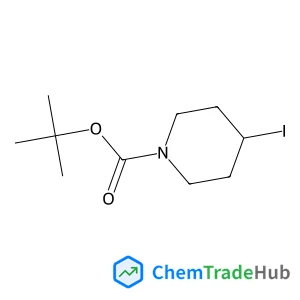
2-Methyl-2-propanyl 4-iodo-1-piperidinecarboxylate
CAS Number:
301673-14-3
Molecular Formula:
C10H18INO2
Recommended Suppliers


Disclaimer
This page provides academic journal information for reference and research purposes only. We are not affiliated with any journal publishers and do not handle publication submissions. For publication-related inquiries, please contact the respective journal publishers directly.
If you notice any inaccuracies in the information displayed, please contact us at support@chemtradehub.com. We will promptly review and address your concerns.