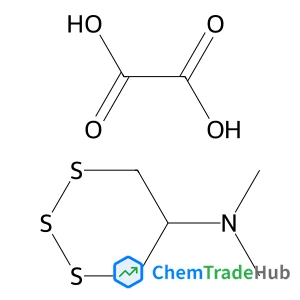
Oxalic acid compound with cyclohexylsulfamothioic O-acid (11)
CAS Number:
31895-22-4
Molecular Formula:
C7H13NO4S3
Mohammad Mehdi Soltanzadeh, Mahmoud Reza Hojjati, Shadi Hassanajili, Ali Akbar Mohammadi
Polymers are used in various industries and, particularly in the medical industry, the use of skin-friendly, biocompatible materials is essential. In this field, using natural and biocompatible carbonaceous materials to replace petroleum-derived materials is the most efficient solution. In this study, which was performed in two phases, polyurethane foam made from natural polyol obtained from rapeseed oil (RPO) and containing silver (Ag) nanoparticles for use in wound dressings was prepared and examined. In the first phase, bio-based polyurethane was prepared via a specific method and characterized using Fourier-transform infrared and nuclear magnetic resonance analysis. Polyol foams were prepared using different ratios of natural polyol to a petroleum based polyol. The results of the water absorption test showed that PF-NPO-35 (containing 35% natural polyol) has a 145% absorption rate. The water vapor transfer rate test was also conducted on this sample, giving results in the range of 8–9 mg cm−2 h−1, which is a suitable range for a wound dressing application. After selecting PF-NPO-35 as the optimal sample, different amounts of Ag nanoparticles were added to this sample and the final foams with different percentages of Ag nanoparticles were prepared. The antibacterial properties of the samples showed that PF-NPO-35-Ag-7 (7% Ag nanoparticles) was more sensitive to Escherichia coli than to Staphylococcus aureus. Increasing the amount of Ag nanoparticles improved the antibacterial properties. Cytotoxicity tests also showed that all samples containing Ag nanoparticles survived for 48 h. High levels of cell viability were observed in the presence of the synthetic foams. In the animal tests, the healing process of the wounds treated with a sample containing silver nanoparticles showed improved progress after 14 days.
Jianbo Zeng, Ji Qi, Fuquan Bai, Jorn Chi Chung Yu, Wei-Chuan Shih
DOI: 10.1039/C4AN00657G
Marko Dorrestijn, Agathe Camerlo, Špela Korent Urek, Aleksandra Lobnik, Catherine E. Housecroft, Edwin C. Constable, Lukas J. Scherer
DOI: 10.1039/C4AN00061G
Tao Jiang, Li Zhang, Jun Zhou
DOI: 10.1039/C4AN01293C
David Smith, Alicia J. El Haj
DOI: 10.1039/C4AN01102C
Vitaly Panchuk, Marina Agafonova-Moroz, Alexander Lumpov, Valentin Semenov
DOI: 10.1039/C4AN00227J
DOI: 10.1039/C4AN00897A
Elisabeth Ehler, Suwan N. Jayasinghe
DOI: 10.1039/C4AN00766B
Marek Smoluch, Przemyslaw Mielczarek, Edward Reszke, Gary M. Hieftje
DOI: 10.1039/C3AN02067C
Waste containing (6-Bromo-2-naphthyl)oxy](dimethyl)(2-methyl-2-propanyl)silane (...
7-Fluoro-4-isoquinolinecarboxylic acid can be synthesized via a multi-step proce...
2,3,5,6-Tetrabromothieno[3,2-b]thiophene is a crystalline compound with a high m...
1-[4-(Benzylamino)-7,8-dihydro-5H-pyrano[4,3-d]pyrimidin-2-yl]-2-methyl-1H-indol...
The market for imidazo[5,1-d]-1,2,3,5-tetrazine-8-carboxylic acid, 3,4-dihydro-3...
3-(Triisopropylsilyl)propiolaldehyde is a synthetic organic compound with the CA...
6-Nitro-2H-1,4-benzoxazin-3(4H)-one (CAS: 81721-87-1) is subject to various regu...
Waste containing (3-Fluorophenyl)(4-{[(2-methyl-2-propanyl)oxy]carbonyl}-1-piper...
N,N'-4,4'-Biphenyldiyldiisonicotinamide is a white crystalline solid with a mole...
6-Bromo-8-fluoro-2-quinazolinol is primarily used in the pharmaceutical industry...

NJC (New Journal of Chemistry) is a broad-based primary journal encompassing all branches of chemistry and its sub-disciplines. It contains full research articles, communications, perspectives and focus articles. This well-established journal, owned by the Centre National de la Recherche Scientifique (CNRS) of France, has been co-published with the Royal Society of Chemistry since January 1998. NJC is the forum for the publication of high-quality, original and significant work that opens new directions in chemistry or other scientific disciplines. In addition to having a significant chemical component, work published in NJC must demonstrate that it will have an impact on areas of research other than that of the reported work.