













From non-innocent to guilty: on the role of redox-active ligands in the electro-assisted reduction of CO2 mediated by a cobalt(ii)-polypyridyl complex
Literature Information
Publication Date
2020-05-13
DOI
10.1039/D0SE00570C
Impact Factor
6.367
Authors
N. Queyriaux, K. Abel, J. Fize, J. Pécaut, M. Orio, L. Hammarström
View Original
Abstract
The electrochemical behavior of [Co(bapbpy)Cl]+ [1-Cl]+, a pentacoordinated polypyridyl cobalt(II) complex containing a redox-active tetradentate ligand (bapbpy: 6,6′-bis-(2-aminopyridyl)-2,2′-bipyridine) has been investigated in DMF. Cyclic voltammograms (CV), recorded in the presence of increasing amounts of chloride anions, highlighted the existence of an equilibrium with the neutral hexacoordinated complex. Under a CO2 atmosphere, CVs of [Co(bapbpy)Cl]+ exhibit significant current enhancement assigned to CO2 catalytic reduction. Controlled-potential electrolysis experiments confirmed formation of CO and HCOOH as the only identifiable products. The addition of water or chloride ions was shown to affect the distribution of the products obtained, as well as the faradaic efficiency associated with their electrocatalytic generation. A combination of electrochemical techniques, chemical reductions, spectroscopic measurements (UV-vis and IR) and quantum chemical calculations suggests that the ability of the bapbpy ligand to be reduced at moderately negative potentials drastically limits the catalytic performances of [1-Cl]+, by stabilizing the formation of a catalytically-competent CO2-adduct that only slowly reacts with oxide acceptors to evolve towards the desired reduction products.
Related Literature
Correction: Synthesis and structural characterization of bio-based bis(cyclic carbonate)s for the preparation of non-isocyanate polyurethanes
Kamila Błażek, Hynek Beneš, Zuzana Walterová, Sabina Abbrent, Arantxa Eceiza, Tamara Calvo-Correas, Janusz Datta
2021-03-31
Correction
DOI: 10.1039/D1PY90040D
Modeling ultrasound-induced molecular weight decrease of polymers with multiple scissile azo-mechanophores
Mathieu A. Ayer, Cheyenne H. Liu, Christoph Weder
2021-06-22
Paper
DOI: 10.1039/D1PY00420D
Construction of biodegradable core cross-linked nanoparticles from near infrared dyes encoded in polyprodrug amphiphiles and investigation of their synergistic anticancer activity
Xiaoxu Mao, Shoukui Hu, Ke Shang, Guangwei Yang, Jinhao Yan, Chao Ma, Jun Yin
2021-03-05
Paper
DOI: 10.1039/D1PY00128K
Conjugated microporous polymers using a copper-catalyzed [4 + 2] cyclobenzannulation reaction: promising materials for iodine and dye adsorption
Saleh Al-Mousawi
2021-03-17
Paper
DOI: 10.1039/D1PY00193K
Oxygen tolerant, photoinduced controlled radical polymerization approach for the synthesis of giant amphiphiles
Alexis Theodorou, Petros Mandriotis, Athina Anastasaki, Kelly Velonia
2021-03-18
Paper
DOI: 10.1039/D0PY01608J
Self-catalyzing photoredox polymerization for recyclable polymer catalysts
Jacob J. Lessard, Georg M. Scheutz, Angie B. Korpusik, Rebecca A. Olson, C. Adrian Figg, Brent S. Sumerlin
2021-04-07
Communication
DOI: 10.1039/D1PY00208B
Understanding and controlling the glass transition of HTPB oligomers
Eleftheria Dossi, Jacob Earnshaw, Laurence Ellison, Gabriella Rabello dos Santos, Hamish Cavaye, Douglas J. Cleaver
2021-04-07
Paper
DOI: 10.1039/D1PY00233C
NMR investigations of polytrifluoroethylene (PTrFE) synthesized by RAFT
Vincent Bouad, Marc Guerre, Sami Zeliouche, Bruno Améduri, Cédric Totée, Gilles Silly, Rinaldo Poli, Vincent Ladmiral
2021-03-15
Paper
DOI: 10.1039/D0PY01753A
Polymerizability of exomethylene monomers based on adamantyl frameworks
Raita Goseki, Shogo Miyai, Satoshi Uchida, Takashi Ishizone
2021-06-02
Paper
DOI: 10.1039/D1PY00500F
A pillar[5]arene-based 3D polymer network for efficient iodine capture in aqueous solution
Jiajun Cao, Huangtianzhi Zhu, Liqing Shangguan, Yuezhou Liu, Peiren Liu, Qi Li, Yitao Wu
2021-05-27
Communication
DOI: 10.1039/D1PY00535A
You might also like
Compound Q&A
What industries use (1R,3S)-1,3-Cyclopentanediol (CAS: 16326-97-9)?
(1R,3S)-1,3-Cyclopentanediol finds applications in various industries. In the ph...
16326-97-9(1R,3S)-1,3-Cyclopen...
Compound Q&A
What precautions should be taken when handling N'-[4-(Dimethylamino)phenyl]-N,N-dimethyl-1,4-benzenediamine (CAS: 637-31-0)?
When handling N'-[4-(Dimethylamino)phenyl]-N,N-dimethyl-1,4-benzenediamine, it i...
637-31-0N'-[4-(Dimethylamino...
Compound Q&A
Are there alternatives to 5-(2,4-Difluorophenyl)-2-methoxypyrimidine (CAS: 1352318-16-1) in synthesis?
There are several alternatives to 5-(2,4-Difluorophenyl)-2-methoxypyrimidine in ...
1352318-16-15-(2,4-Difluoropheny...
Compound Q&A
What regulatory guidelines apply to 1-(3-Methoxyphenoxy)propan-2-ol (CAS: 382141-68-6)?
1-(3-Methoxyphenoxy)propan-2-ol (CAS: 382141-68-6) must comply with the Globally...
382141-68-61-(3-Methoxyphenoxy)...
Compound Q&A
Is Tetrodotoxin Citrate (CAS: 18660-81-6) safe?
Tetrodotoxin Citrate is extremely dangerous and should be handled with extreme c...
18660-81-6Tetrodotoxin Citrate
Compound Q&A
What are the main uses of 2-Methyl-2-propanyl [(1R,3S)-3-hydroxycyclopentyl]carbamate (CAS: 225641-84-9)?
2-Methyl-2-propanyl [(1R,3S)-3-hydroxycyclopentyl]carbamate (CAS: 225641-84-9) i...
225641-84-92-Methyl-2-propanyl ...
Compound Q&A
How should waste containing 4-(2-Hydroxyhexafluoroisopropyl)Benzoic Acid (CAS: 16261-80-6) be handled?
Waste containing 4-(2-Hydroxyhexafluoroisopropyl)Benzoic Acid (CAS: 16261-80-6) ...
16261-80-64-(2-Hydroxyhexafluo...
Compound Q&A
How is 2-Methyl-2-proanyl {(2S)-1-[(benzyloxy)amino]-3-hydroxy-3-methyl-1-oxo-2-butanyl}carbamate (CAS: 102507-19-7) typically synthesized?
2-Methyl-2-proanyl {(2S)-1-[(benzyloxy)amino]-3-hydroxy-3-methyl-1-oxo-2-butanyl...
102507-19-72-Methyl-2-propanyl ...
Compound Q&A
What is Benzeneethanamine, α-ethyl-, hydrochloride (1:1) (CAS: 20735-15-3)?
Benzeneethanamine, α-ethyl-, hydrochloride (1:1) is an organic compound with the...
20735-15-3Benzeneethanamine, α...
Compound Q&A
Are there alternatives to 3-{(E)-[4-(Dimethylamino)phenyl]diazenyl}benzoic acid (CAS: 20691-84-3) in synthesis?
In the synthesis of compounds similar to 3-{(E)-[4-(Dimethylamino)phenyl]diazeny...
20691-84-33-{(E)-[4-(Dimethyla...
Source Journal
Recommended Compounds
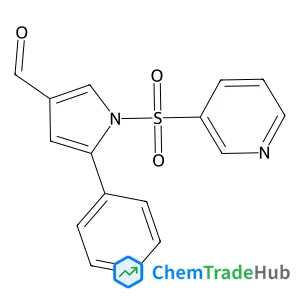
5-Phenyl-1-(pyridin-3-ylsulfonyl)-1H-pyrrole-3-carbaldehyde
CAS Number:
881676-90-0
Molecular Formula:
C16H12N2O3S
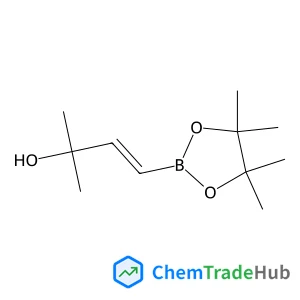
(E)-2-methyl-4-(4,4,5,5-tetramethyl-1,3,2-dioxaborolan-2-yl)but-3-en-2-ol
CAS Number:
581802-26-8
Molecular Formula:
C11H21BO3
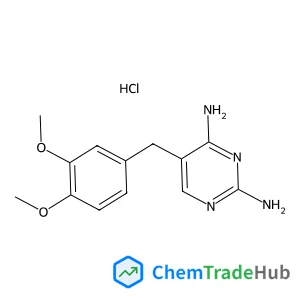
5-(3,4-Dimethoxybenzyl)-2,4-pyrimidinediamine hydrochloride (1:1)
CAS Number:
2507-23-5
Molecular Formula:
C13H17ClN4O2
Recommended Suppliers




Disclaimer
This page provides academic journal information for reference and research purposes only. We are not affiliated with any journal publishers and do not handle publication submissions. For publication-related inquiries, please contact the respective journal publishers directly.
If you notice any inaccuracies in the information displayed, please contact us at support@chemtradehub.com. We will promptly review and address your concerns.