












Spectrophotometric analysis at the single-cell level: elucidating dispersity within melanic immortalized cell populations
Literature Information
Publication Date
2017-03-13
DOI
10.1039/C6AN02662A
Impact Factor
4.616
Authors
Gerardo Gutiérrez-Juárez, David Cywiak, Rafael Pérez-Solano, Gary A. Baker
View Original
Abstract
It is widely held that the melanosome is an exemplar of the absorption features of melanin-containing cells, which are assumed to be uniform in both size and optical characteristics. In recent years, however, it has become increasingly apparent that this is a strikingly poor assumption. Indeed, melanin extracted from natural sources and synthetic melanin both show wide variability in their degree of polymerization (molecular weight) and spectroscopic characteristics. In the current study, imaging spectrophotometry performed on individual cells of immortalized melanin-producing cell lines revealed broad distributions in their sizes: 9.5–36.2 μm for Hs936 human melanoma cells, 10.9–20.8 μm for T47D human breast cancer cells, 5.3–43.5 μm for B16F1 mouse melanoma cells, and 6.4–54.2 μm for B16F10 mouse melanoma cells. The color appearance (from translucent to yellow to nearly black), absorption spectrum, and absorption (extinction) coefficient at 532 nm (28.73 to 364.75, 0.01 to 40.17, 5.88 to 977.19, and 0.01 to 1120 cm−1 for Hs936, T47D, B16F1, and B16F10 cells, respectively) of an individual cell also vary widely and cannot be adequately described by a ‘typical’ value. In comparison, human red blood cells are much more uniform in size (6.0–8.1 μm diameter; 1.9–3.2 μm thickness), although they too show a broad range of absorptivities, with extinction coefficients in the range of 65 to 370 cm−1 when measured at 532 nm. To further evaluate the impact of these findings on photoacoustic bioanalysis, we performed simulations of the generation of photoacoustic signals expected from these cell types. These simulations revealed that their variation in optical features exerts a pronounced effect on the amplitude and shape of the photoacoustic signals generated from these cell types. Finally, we compared the photoacoustic signal generated from these cells under ideal conditions (i.e., a single cell in isolation) versus a heterogeneous real-world sample, demonstrating that when a single or few cancer cells are present within a blood droplet, the photoacoustic signal is indistinguishable from that measured from blood alone. These outcomes have important ramifications for the early photoacoustic detection of cancer cells and circulating tumor emboli, while pointing to the potential of single-cell imaging spectrophotometry to assess heterogeneity within cell populations in more quantitative terms.
Related Literature
Improving the thermoelectric properties of half-Heusler TiNiSn through inclusion of a second full-Heusler phase: microwave preparation and spark plasma sintering of TiNi1+xSn
Bethany R. Lettiere, Gareth Seward, Nisha Verma, Yichi Zhang
2013-04-04
Paper
DOI: 10.1039/C3CP50918D
Origin of electrolyte-dopant dependent sulfur poisoning of SOFC anodes
ZhenHua Zeng, Mårten E. Björketun, Sune Ebbesen, Mogens B. Mogensen, Jan Rossmeisl
2013-03-14
Communication
DOI: 10.1039/C3CP51099A
A novel method for automatic single molecule tracking of blinking molecules at low intensities
Christoph Kölbl, Beate Stempfle
2013-02-06
Paper
DOI: 10.1039/C3CP44693J
Rovibrational states of ClHCl− isotopologues up to high J: a joint theoretical and spectroscopic investigation
Peter Sebald, Rainer Oswald, Peter Botschwina, Kentarou Kawaguchi
2013-03-14
Paper
DOI: 10.1039/C3CP44236E
Comparing molecular photofragmentation dynamics in the gas and liquid phases
Stephanie J. Harris, Daniel Murdock, Yuyuan Zhang, Thomas A. A. Oliver, Michael P. Grubb, Andrew J. Orr-Ewing, Gregory M. Greetham, Ian P. Clark, Michael Towrie, Stephen E. Bradforth, Michael N. R. Ashfold
2013-03-19
Perspective
DOI: 10.1039/C3CP50756D
Hydrogen and carbon monoxide generation from laser-induced graphitized nanodiamonds in water
Dong Myung Jang, Hyung Soon Im, Yoon Myung, Yong Jae Cho, Han Sung Kim, Seung Hyuk Back, Jeunghee Park, Eun Hee Cha, Minyung Lee
2013-03-19
Paper
DOI: 10.1039/C3CP50769F
Manipulating dynamics with chemical structure: probing vibrationally-enhanced tunnelling in photoexcited catechol
Jamie D. Young, Dave Townsend, Justyna M. Żurek, Martin J. Paterson, Gareth M. Roberts, Vasilios G. Stavros
2013-03-22
Paper
DOI: 10.1039/C3CP51108A
You might also like
Compound Q&A
What is the market or research trend for N-(4-Methoxybenzyl)-2-pyridinamine (CAS: 52818-63-0)?
N-(4-Methoxybenzyl)-2-pyridinamine (CAS: 52818-63-0) is increasingly being used ...
52818-63-0N-(4-Methoxybenzyl)-...
Compound Q&A
What precautions should be taken when handling Ethyl 4-(2-chlorophenyl)-1,3-thiazole-2-carboxylate (CAS: 1050507-06-6)?
When handling Ethyl 4-(2-chlorophenyl)-1,3-thiazole-2-carboxylate, appropriate p...
1050507-06-6Ethyl 4-(2-chlorophe...
Compound Q&A
What regulatory guidelines apply to diethyldiselane (CAS: 628-39-7)?
Diethyldiselane (CAS: 628-39-7) is classified under the Globally Harmonized Syst...
628-39-7Diethyldiselane
Compound Q&A
What is the market or research trend for oxocopper (CAS: 12053-18-8)?
The market for oxocopper (CAS: 12053-18-8) is primarily driven by its use in cat...
12053-18-8oxocopper; oxo-(oxoc...
Compound Q&A
What is the market or research trend for 5-{[(2-Methyl-2-propanyl)oxy]carbonyl}-5-azaspiro[2.4]heptane-7-carboxylic acid?
The market for 5-{[(2-Methyl-2-propanyl)oxy]carbonyl}-5-azaspiro[2.4]heptane-7-c...
1268519-54-55-{[(2-Methyl-2-prop...
Compound Q&A
What is 2-(1-Pyrrolidinyl)-4-pyridinamine (CAS: 35981-63-6)?
2-(1-Pyrrolidinyl)-4-pyridinamine is a chemical compound with the CAS number 359...
35981-63-62-(1-Pyrrolidinyl)-4...
Compound Q&A
What are the physical and chemical properties of 2-(3-Pyridinyl)-1-azabicyclo[2.2.2]octane (CAS: 91556-75-1)?
2-(3-Pyridinyl)-1-azabicyclo[2.2.2]octane (CAS: 91556-75-1) is a crystalline sol...
91556-75-12-(3-Pyridinyl)-1-az...
Compound Q&A
How is (S)-Alpha-allyl-proline hydrochloride (CAS: 129704-91-2) typically synthesized?
(S)-Alpha-allyl-proline hydrochloride is usually synthesized via a Wittig reacti...
129704-91-2(S)-Alpha-allyl-prol...
Compound Q&A
What is 3-Methyl-1,2-oxazole-5-carboxylic acid (CAS: 4857-42-5)?
3-Methyl-1,2-oxazole-5-carboxylic acid (CAS: 4857-42-5) is an organic compound w...
4857-42-53-Methyl-1,2-oxazole...
Compound Q&A
How is Lys-SMCC-DM1 (CAS: 1281816-04-3) typically synthesized?
Lys-SMCC-DM1 is synthesized via a multi-step process involving the coupling of S...
1281816-04-3Lys-SMCC-DM1
Source Journal
Analyst

CiteScore:
7.8
Self-citation Rate:
5.6%
Articles per Year:
653
Analyst publishes analytical and bioanalytical research that reports premier fundamental discoveries and inventions, and the applications of those discoveries, unconfined by traditional discipline barriers.
Recommended Compounds
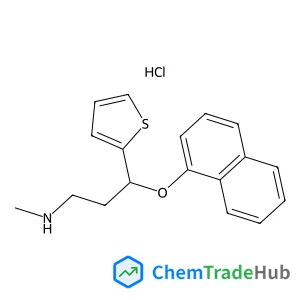
N-Methyl-3-(1-naphthyloxy)-3-(2-thienyl)-1-propanamine hydrochloride (1:1)
CAS Number:
1188266-11-6
Molecular Formula:
C18H20ClNOS
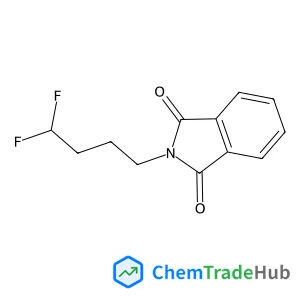
2-(4,4-Difluorobutyl)-1H-isoindole-1,3(2H)-dione
CAS Number:
1265341-14-7
Molecular Formula:
C12H11F2NO2
![N-{[(2-Methyl-2-propanyl)oxy]carbonyl}-L-methionylglycine structure](https://static.chemtradehub.com/structs/234/23446-03-9-e1e5.webp "N-{[(2-Methyl-2-propanyl)oxy]carbonyl}-L-methionylglycine structure")
N-{[(2-Methyl-2-propanyl)oxy]carbonyl}-L-methionylglycine
CAS Number:
23446-03-9
Molecular Formula:
C12H22N2O5S
Recommended Suppliers





Disclaimer
This page provides academic journal information for reference and research purposes only. We are not affiliated with any journal publishers and do not handle publication submissions. For publication-related inquiries, please contact the respective journal publishers directly.
If you notice any inaccuracies in the information displayed, please contact us at support@chemtradehub.com. We will promptly review and address your concerns.