












Phase-field simulation of dose rate effect on the Cu precipitation with neutron irradiation
Literature Information
Publication Date
2021-01-16
DOI
10.1039/D0CP05777K
Impact Factor
3.676
Authors
Shahid Maqbool, Suleman Muhammad
View Original
Abstract
Radiation-enhanced precipitation (REP) of Cu in Fe–Cu alloys results in hardening and degradation of the mechanical properties. By combining the CALPHAD-based free energy for phase-field modeling, and radiation-enhanced diffusion (RED) with neutron irradiating energetic particle, the precipitation of Cu in binary Fe–Cu alloys is studied under different dose rates, concentrations, and temperatures. Rate theory (RT) provides the RED that serves as an input parameter for the phase-field simulation to capture the morphology of the precipitates. The REP results agree with the theoretical predictions: the increase in the dose rates increases the concentration of defects, and accelerates the kinetics of precipitation. The simulation predicts the stability of the precipitates even under high damage rates. The increase in radius is achieved for high damage rates. Precipitate dissolution is observed to be dependent on the combination of dose rate, concentration, and temperature. The work also outlines the limitations of the model and the potential future improvements.
Related Literature
Post-polymerization modification of reactive polymers derived from vinylcyclopropane: 1. synthesis and thermo-responsive behaviour
Denis H. Seuyep N., Gerrit A. Luinstra, Patrick Theato
2013-02-18
Paper
DOI: 10.1039/C3PY00109A
Polypyrrole–silver composites prepared by the reduction of silver ions with polypyrrole nanotubes
Jitka Škodová, Dušan Kopecký, Martin Vrňata, Martin Varga, Jan Prokeš, Miroslav Cieslar, Patrycja Bober, Jaroslav Stejskal
2013-04-05
Paper
DOI: 10.1039/C3PY00250K
The reactivity of N-vinylcarbazole in RAFT polymerization: trithiocarbonates deliver optimal control for the synthesis of homopolymers and block copolymers
Carlos Guerrero-Sanchez, Graeme Moad
2013-04-30
Paper
DOI: 10.1039/C3PY00487B
Synthesis of α-helix-containing PPEGMEA-g-PBLG, well-defined amphiphilic graft copolymer, by sequential SET-LRP and ROP
Sujuan Zhai, Xuemei Song, Chun Feng, Xiuyu Jiang, Yongjun Li, Guolin Lu, Xiaoyu Huang
2013-05-14
Paper
DOI: 10.1039/C3PY00474K
Grafting of polyethylene onto graphite oxide sheets: a comparison of two routes
Gregory Martin, Philippe Sonntag, Franck D'Agosto, Christophe Boisson
2013-02-26
Paper
DOI: 10.1039/C3PY00160A
Functionalized polymersomes for biomedical applications
Prasad V. Pawar, Shalini V. Gohil, Jay Prakash Jain, Neeraj Kumar
2013-02-05
Review Article
DOI: 10.1039/C3PY00023K
Synthesis of donor–acceptor copolymers based on anthracene derivatives for polymer solar cells
Chunchen Liu, Wanzhu Cai, Xing Guan, Chunhui Duan, Qifan Xue, Lei Ying, Fei Huang, Yong Cao
2013-04-23
Paper
DOI: 10.1039/C3PY00430A
An efficient approach to prepare ether and amide-based self-catalyzed phthalonitrile resins
Michael R. Kessler, Zhou Heng, Javid Hussain Zaidi, Shahid Hameed
2013-03-21
Paper
DOI: 10.1039/C3PY00237C
Photo-cross-linkable star-shaped polymers with poly(ethylene glycol) and renewable cardanol side groups: synthesis, characterization, and application to antifouling coatings for filtration membranes
Dong-Gyun Kim, Hyo Kang, Yong-Seok Choi, Sungsoo Han, Jong-Chan Lee
2013-07-11
Paper
DOI: 10.1039/C3PY00756A
You might also like
Compound Q&A
Is 6-(3-Fluorophenyl)picolinic acid (CAS: 887982-40-3) safe?
6-(3-Fluorophenyl)picolinic acid is generally considered safe for laboratory use...
887982-40-36-(3-Fluorophenyl)pi...
Compound Q&A
What industries use (3R)-3-Pyrrolidinol (CAS: 2799-21-5)?
(3R)-3-Pyrrolidinol is used in the pharmaceutical industry as a precursor for dr...
2799-21-5(3R)-3-Pyrrolidinol
Compound Q&A
What precautions should be taken when handling (4R,5R)-4,5-Diethoxycarbonyl-2,2-dimethyldioxolane (CAS: 59779-75-8)?
When handling (4R,5R)-4,5-Diethoxycarbonyl-2,2-dimethyldioxolane (CAS: 59779-75-...
59779-75-8(4R,5R)-4,5-Diethoxy...
Compound Q&A
How is 1-(6-Chloroimidazo[1,2-b]pyridazin-3-yl)ethanone (CAS: 90734-71-7) typically synthesized?
1-(6-Chloroimidazo[1,2-b]pyridazin-3-yl)ethanone is often synthesized via a mult...
90734-71-71-(6-Chloroimidazo[1...
Compound Q&A
What is the market or research trend for N-Ethyl-3,4-dimethylbenzylamine (CAS: 39180-83-1)?
The market for N-Ethyl-3,4-dimethylbenzylamine (CAS: 39180-83-1) remains steady,...
39180-83-1N-Ethyl-3,4-dimethyl...
Compound Q&A
What is Tert-butyl 3-(pyrrolidin-1-yl)azetidine-1-carboxylate (CAS: 1019008-21-9)?
Tert-butyl 3-(pyrrolidin-1-yl)azetidine-1-carboxylate is a chemical compound wit...
1019008-21-9Tert-butyl 3-(pyrrol...
Compound Q&A
What regulatory guidelines apply to 1-Bromo-3-chloro-2,4-dimethoxybenzene (CAS: 1228956-93-1)?
1-Bromo-3-chloro-2,4-dimethoxybenzene (CAS: 1228956-93-1) falls under the classi...
1228956-93-11-Bromo-3-chloro-2,4...
Compound Q&A
Is 8-Bromo-2-methyl-3,4-dihydroisoquinolin-1(2H)-one (CAS: 1368622-07-4) safe?
The safety of 8-Bromo-2-methyl-3,4-dihydroisoquinolin-1(2H)-one (CAS: 1368622-07...
1368622-07-48-Bromo-2-methyl-3,4...
Compound Q&A
Is Benzyl [(3S)-2,6-dioxo-3-piperidinyl]carbamate (CAS: 22785-43-9) safe?
Benzyl [(3S)-2,6-dioxo-3-piperidinyl]carbamate is generally safe when handled wi...
22785-43-9Benzyl [(3S)-2,6-dio...
Compound Q&A
How should 1-{[4-(4,4,5,5-Tetramethyl-1,3,2-dioxaborolan-2-yl)phenyl]sulfonyl}pyrrolidine (CAS: 928657-21-0) be stored?
1-{[4-(4,4,5,5-Tetramethyl-1,3,2-dioxaborolan-2-yl)phenyl]sulfonyl}pyrrolidine s...
928657-21-01-{[4-(4,4,5,5-Tetra...
Source Journal
Physical Chemistry Chemical Physics

CiteScore:
5.5
Self-citation Rate:
10.3%
Articles per Year:
3036
Physical Chemistry Chemical Physics (PCCP) is an international journal co-owned by 19 physical chemistry and physics societies from around the world. This journal publishes original, cutting-edge research in physical chemistry, chemical physics and biophysical chemistry. To be suitable for publication in PCCP, articles must include significant innovation and/or insight into physical chemistry; this is the most important criterion that reviewers and Editors will judge against when evaluating submissions. The journal has a broad scope and welcomes contributions spanning experiment, theory, computation and data science. Topical coverage includes spectroscopy, dynamics, kinetics, statistical mechanics, thermodynamics, electrochemistry, catalysis, surface science, quantum mechanics, quantum computing and machine learning. Interdisciplinary research areas such as polymers and soft matter, materials, nanoscience, energy, surfaces/interfaces, and biophysical chemistry are welcomed if they demonstrate significant innovation and/or insight into physical chemistry. Joined experimental/theoretical studies are particularly appreciated when complementary and based on up-to-date approaches.
Recommended Compounds


4-Cyclohexene-1,2-dicarboxylic acid, 1,2-dimethyl ester, (1R,2R)-rel-
CAS Number:
17673-68-6
Molecular Formula:
C10H14O4
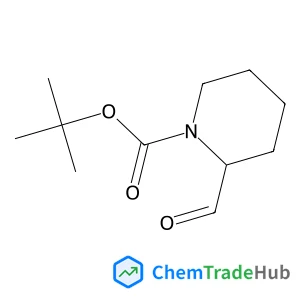
2-Methyl-2-propanyl (2R)-2-formyl-1-piperidinecarboxylate
CAS Number:
134526-69-5
Molecular Formula:
C11H19NO3
![2-Methyl-2-propanyl [(2S)-1-hydroxy-3-(4-hydroxyphenyl)-2-propanyl]carbamate structure](https://static.chemtradehub.com/structs/833/83345-46-4-eec2.webp "2-Methyl-2-propanyl [(2S)-1-hydroxy-3-(4-hydroxyphenyl)-2-propanyl]carbamate structure")
2-Methyl-2-propanyl [(2S)-1-hydroxy-3-(4-hydroxyphenyl)-2-propanyl]carbamate
CAS Number:
83345-46-4
Molecular Formula:
C14H21NO4
Recommended Suppliers







Disclaimer
This page provides academic journal information for reference and research purposes only. We are not affiliated with any journal publishers and do not handle publication submissions. For publication-related inquiries, please contact the respective journal publishers directly.
If you notice any inaccuracies in the information displayed, please contact us at support@chemtradehub.com. We will promptly review and address your concerns.