


Influence of the Coriolis effect on the properties of scattering resonances in symmetric and asymmetric isotopomers of ozone
Literature Information
Publication Date
2020-11-25
DOI
10.1039/D0CP05060A
Impact Factor
3.676
Authors
Igor Gayday, Elizaveta Grushnikova, Dmitri Babikov
View Original
Abstract
Scattering resonances above dissociation threshold are computed for four isotopically substituted ozone species: 16O18O16O, 16O16O18O, 18O16O18O and 16O18O18O, using a variational method with accurate treatment of the rotation–vibration coupling terms (Coriolis effect) for all values of the total angular momentum J from 0 to 4. To make these calculations numerically affordable, a new approach was developed which employs one vibrational basis set optimized for a typical rotational excitation (J,Λ), to run coupled rotation–vibration calculations at several desired values of J. In order to quantify the effect of Coriolis coupling, new data are contrasted with those computed using the symmetric-top rotor approximation, where the rotation–vibration coupling terms are neglected. It is found that, overall, the major properties of scattering resonances (such as their lifetimes, the number of these states, and their cumulative partition function Q) are all influenced by the Coriolis effect and this influence grows as the angular momentum J is raised. However, it is found that the four isotopically substituted ozone molecules are affected roughly equally by the Coriolis coupling. When the ratio η of partition functions for asymmetric over symmetric ozone molecules is computed, the Coriolis effect largely cancels, and this cancelation seems to occur for all values of J. Therefore, it does not seem grounded to attribute any appreciable mass-independent symmetry-driven isotopic fractionation to the Coriolis coupling effect.
Recommended Journals

Chemistry Education Research and Practice

Chemical Communications

Russian Chemical Bulletin

Russian Journal of Organic Chemistry

Saudi Pharmaceutical Journal

Russian Journal of Applied Chemistry

New Journal of Chemistry

Russian Journal of Bioorganic Chemistry

Drug Discovery Today

Journal of Natural Medicines
Related Literature
Asymmetric multifunctional organocatalytic Michael addition of nitroalkanes to α,β-unsaturated ketones
Pengfei Li, Yongcan Wang, Jinxing Ye
2008-05-16
Communication
DOI: 10.1039/B804540B
Simple linear asymmetrical complexes of silver(i): NC–Ag–NH3 and Br–Ag–NH3
Ann M. Chippindale, Laura E. Head, Simon J. Hibble
2008-05-14
Communication
DOI: 10.1039/B803500H
Sulfate aniontemplation of a neutral pseudorotaxane assembly using an indolocarbazole threading component
Michał J. Chmielewski, Liyun Zhao, Asha Brown, David Curiel, Mark R. Sambrook, Amber L. Thompson, Sergio M. Santos, Vitor Felix, Jason J. Davis, Paul D. Beer
2008-05-09
Communication
DOI: 10.1039/B804941F
Synthesis of allyl selenides by palladium-catalyzed decarboxylative coupling
Shelli R. Waetzig, Jon A. Tunge
2008-06-10
Communication
DOI: 10.1039/B806949B
The relationships between oxidase and synthase activities of flavin dependent thymidylate synthase (FDTS)
Anatoly Chernyshev, Todd Fleischmann, Eric M. Koehn, Scott A. Lesley, Amnon Kohen
2007-04-25
Communication
DOI: 10.1039/B700977A
Controlling the formation of 1 out of 64 stereoisomers using organocatalysis
Søren Bertelsen, Rasmus L. Johansen, Karl Anker Jørgensen
2008-06-09
Communication
DOI: 10.1039/B806418K
An expeditious one-step entry to the tetracyclic core of integrastatins
C. V. Ramana, Challa Nageswara Reddy, Rajesh G. Gonnade
2008-05-12
Communication
DOI: 10.1039/B801755G
Formation of one-dimensional nickel wires by chemical reduction of nickel ions under magnetic fields
Lixia Sun, Qianwang Chen, Yan Tang, Ying Xiong
2007-04-30
Communication
DOI: 10.1039/B704689H
Photoluminescence and electroluminescence of hexaphenylsilole are enhanced by pressurization in the solid state
Xing Fan, Jianliang Sun, Fuzhi Wang, Zengze Chu, Ping Wang, Yongqiang Dong, Rongrong Hu, Ben Zhong Tang, Dechun Zou
2008-05-08
Communication
DOI: 10.1039/B803539C
You might also like
Compound Q&A
Are there alternatives to 1-(4-Chlorophenyl)-N-hydroxymethanimine (CAS: 3848-36-0) in synthesis?
When considering alternatives to 1-(4-Chlorophenyl)-N-hydroxymethanimine (CAS: 3...
3848-36-01-(4-Chlorophenyl)-N...
Compound Q&A
How should (1R,9S,10S,12S,14E,16S,19R,20R,21S,22R)-3,9,21-Trihydroxy-5,10,12,14,16,20,22-heptamethyl-23,24-dioxatetracyclo[17.3.1.1~6,9~.0~2,7~]tetracosa-2,5,7,14-tetraen-4-one (CAS: 183202-73-5) be stored?
This compound should be stored in a cool, dry place away from direct sunlight. I...
183202-73-5(1R,9S,10S,12S,14E,1...
Compound Q&A
How is 3-(4-Bromophenyl)-5-(2-fluorophenyl)-1,2,4-oxadiazole (CAS: 419553-16-5) typically synthesized?
3-(4-Bromophenyl)-5-(2-fluorophenyl)-1,2,4-oxadiazole is synthesized through a m...
419553-16-53-(4-Bromophenyl)-5-...
Compound Q&A
How is 5-Chloro-2-(4-chlorophenyl)-4-methyl-6-[3-(1-piperidinyl)propoxy]pyrimidine (CAS: 1639220-19-1) typically synthesized?
5-Chloro-2-(4-chlorophenyl)-4-methyl-6-[3-(1-piperidinyl)propoxy]pyrimidine (CAS...
1639220-19-15-Chloro-2-(4-chloro...
Compound Q&A
What industries use 2-Chloro-4-(difluoromethoxy)pyridine (CAS: 1206978-15-5)?
2-Chloro-4-(difluoromethoxy)pyridine is used in the pharmaceutical industry for ...
1206978-15-52-Chloro-4-(difluoro...
Compound Q&A
What regulatory guidelines apply to 3-Chloro-6-methylpyridazine (CAS: 1121-79-5)?
3-Chloro-6-methylpyridazine (CAS: 1121-79-5) is classified under the Globally Ha...
1121-79-53-Chloro-6-methylpyr...
Compound Q&A
Are there alternatives to Methyl 4,5-dimethyl-2-nitrobenzoate in synthesis?
Several alternatives can be used in the synthesis of Methyl 4,5-dimethyl-2-nitro...
90922-74-0Methyl 4,5-dimethyl-...
Compound Q&A
Are there alternatives to (2E,2'E)-3,3'-(1,4-Phenylene)bisacrylaldehyde in synthesis?
Alternatives to (2E,2'E)-3,3'-(1,4-Phenylene)bisacrylaldehyde include other acry...
63405-68-5(2E,2'E)-3,3'-(1,4-P...
Compound Q&A
What is 3-Amino-5-chloropyridin-2-ol hydrochloride (CAS: 1261906-29-9)?
3-Amino-5-chloropyridin-2-ol hydrochloride is an organic compound with the CAS n...
1261906-29-93-Amino-5-chloropyri...
Compound Q&A
What precautions should be taken when handling 6,7-Difluoro-2,3-dihydro-4H-chromen-4-one (CAS: 1092349-93-3)?
When handling 6,7-Difluoro-2,3-dihydro-4H-chromen-4-one, it is essential to wear...
1092349-93-36,7-Difluoro-2,3-dih...
Source Journal
Physical Chemistry Chemical Physics

CiteScore:
5.5
Self-citation Rate:
10.3%
Articles per Year:
3036
Physical Chemistry Chemical Physics (PCCP) is an international journal co-owned by 19 physical chemistry and physics societies from around the world. This journal publishes original, cutting-edge research in physical chemistry, chemical physics and biophysical chemistry. To be suitable for publication in PCCP, articles must include significant innovation and/or insight into physical chemistry; this is the most important criterion that reviewers and Editors will judge against when evaluating submissions. The journal has a broad scope and welcomes contributions spanning experiment, theory, computation and data science. Topical coverage includes spectroscopy, dynamics, kinetics, statistical mechanics, thermodynamics, electrochemistry, catalysis, surface science, quantum mechanics, quantum computing and machine learning. Interdisciplinary research areas such as polymers and soft matter, materials, nanoscience, energy, surfaces/interfaces, and biophysical chemistry are welcomed if they demonstrate significant innovation and/or insight into physical chemistry. Joined experimental/theoretical studies are particularly appreciated when complementary and based on up-to-date approaches.
Recommended Compounds
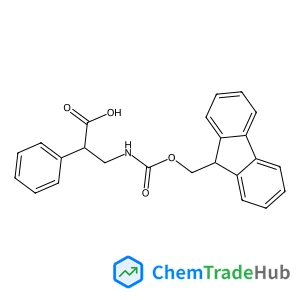
(S)-3-((((9H-Fluoren-9-yl)methoxy)carbonyl)amino)-2-phenylpropanoic acid
CAS Number:
1217663-60-9
Molecular Formula:
C24H21NO4
Recommended Suppliers



Disclaimer
This page provides academic journal information for reference and research purposes only. We are not affiliated with any journal publishers and do not handle publication submissions. For publication-related inquiries, please contact the respective journal publishers directly.
If you notice any inaccuracies in the information displayed, please contact us at support@chemtradehub.com. We will promptly review and address your concerns.