


Controlling the formation of 1 out of 64 stereoisomers using organocatalysis
Literature Information
Publication Date
2008-06-09
DOI
10.1039/B806418K
Impact Factor
6.222
Authors
Søren Bertelsen, Rasmus L. Johansen, Karl Anker Jørgensen
View Original
Abstract
The formation of 1 out of 64 stereoisomers, i.e. controlling the creation of 6 stereocenters, of important optically active bicyclo[3.3.1]non-2-ene compounds, has been achieved using organocatalysis; the reaction proceeds with excellent stereocontrol and can be carried out with the generation of enantiopure products using chromatography-free procedures.
Recommended Journals

Current Pharmaceutical Biotechnology

Photochemical & Photobiological Sciences

Faraday Discussions

Mini-Reviews in Medicinal Chemistry

European Journal of Organic Chemistry

Journal of Medical Biochemistry

Advanced Engineering Materials

Angewandte Chemie International Edition

Green Chemistry

Coloration Technology
Related Literature
Structure–property relationship of blue solid state emissive phenanthroimidazole derivatives
Agne Ivanauskaite, Ramunas Lygaitis, Steponas Raisys, Karolis Kazlauskas, Gediminas Kreiza, Dmytro Volyniuk, Dalius Gudeika, Saulius Jursenas, Juozas V. Grazulevicius
2017-05-31
Paper
DOI: 10.1039/C7CP02248D
Atomic-scale observation of pressure-dependent reduction dynamics of W18O49 nanowires using environmental TEM
Zhengfei Zhang, Liping Sheng, Lu Chen, Ze Zhang, Yong Wang
2017-05-30
Communication
DOI: 10.1039/C7CP03071A
Femtosecond time-resolved photoelectron spectroscopy of the benzyl radical
L. Poisson
2017-04-12
Paper
DOI: 10.1039/C7CP01437F
Cool white, persistent room-temperature phosphorescence in carbon dots embedded in a silica gel matrix
Julin Joseph, Aji A. Anappara
2017-05-31
Paper
DOI: 10.1039/C7CP02731A
Multi-level quantum mechanics theories and molecular mechanics study of the double-inversion mechanism of the F− + CH3I reaction in aqueous solution
Peng Liu, Jingxue Zhang, Dunyou Wang
2017-05-25
Paper
DOI: 10.1039/C7CP02313H
Binary twinned-icosahedral [B21H18]− interacts with cyclodextrins as a precedent for its complexation with other organic motifs
Eduard Bernhardt, Juan Z. Dávalos, Martin Lepšík, Khaleel I. Assaf, Werner M. Nau, Josef Holub, Josep M. Oliva-Enrich, Jindřich Fanfrlík, Drahomír Hnyk
2017-04-19
Communication
DOI: 10.1039/C7CP01074E
Umbrella sampling molecular dynamics simulations reveal concerted ion movement through G-quadruplex DNA channels
Parisa Akhshi, Gang Wu
2017-03-16
Paper
DOI: 10.1039/C7CP01028A
Carborane-based polymers: a novel class of semiconductors with tunable properties
B. Dong, A. Oyelade, J. A. Kelber
2017-04-03
Perspective
DOI: 10.1039/C7CP00835J
Interrelationship between TiO2 nanoparticle size and kind/size of dyes in the mechanism and conversion efficiency of dye sensitized solar cells
Pooya Tahay, Meisam Babapour Gol Afshani, Ali Alavi, Zahra Parsa, Nasser Safari
2017-03-31
Paper
DOI: 10.1039/C7CP01159H
You might also like
Compound Q&A
Are there alternatives to 1-(4-Chlorophenyl)-N-hydroxymethanimine (CAS: 3848-36-0) in synthesis?
When considering alternatives to 1-(4-Chlorophenyl)-N-hydroxymethanimine (CAS: 3...
3848-36-01-(4-Chlorophenyl)-N...
Compound Q&A
How should (1R,9S,10S,12S,14E,16S,19R,20R,21S,22R)-3,9,21-Trihydroxy-5,10,12,14,16,20,22-heptamethyl-23,24-dioxatetracyclo[17.3.1.1~6,9~.0~2,7~]tetracosa-2,5,7,14-tetraen-4-one (CAS: 183202-73-5) be stored?
This compound should be stored in a cool, dry place away from direct sunlight. I...
183202-73-5(1R,9S,10S,12S,14E,1...
Compound Q&A
How is 3-(4-Bromophenyl)-5-(2-fluorophenyl)-1,2,4-oxadiazole (CAS: 419553-16-5) typically synthesized?
3-(4-Bromophenyl)-5-(2-fluorophenyl)-1,2,4-oxadiazole is synthesized through a m...
419553-16-53-(4-Bromophenyl)-5-...
Compound Q&A
How is 5-Chloro-2-(4-chlorophenyl)-4-methyl-6-[3-(1-piperidinyl)propoxy]pyrimidine (CAS: 1639220-19-1) typically synthesized?
5-Chloro-2-(4-chlorophenyl)-4-methyl-6-[3-(1-piperidinyl)propoxy]pyrimidine (CAS...
1639220-19-15-Chloro-2-(4-chloro...
Compound Q&A
What industries use 2-Chloro-4-(difluoromethoxy)pyridine (CAS: 1206978-15-5)?
2-Chloro-4-(difluoromethoxy)pyridine is used in the pharmaceutical industry for ...
1206978-15-52-Chloro-4-(difluoro...
Compound Q&A
What regulatory guidelines apply to 3-Chloro-6-methylpyridazine (CAS: 1121-79-5)?
3-Chloro-6-methylpyridazine (CAS: 1121-79-5) is classified under the Globally Ha...
1121-79-53-Chloro-6-methylpyr...
Compound Q&A
Are there alternatives to Methyl 4,5-dimethyl-2-nitrobenzoate in synthesis?
Several alternatives can be used in the synthesis of Methyl 4,5-dimethyl-2-nitro...
90922-74-0Methyl 4,5-dimethyl-...
Compound Q&A
Are there alternatives to (2E,2'E)-3,3'-(1,4-Phenylene)bisacrylaldehyde in synthesis?
Alternatives to (2E,2'E)-3,3'-(1,4-Phenylene)bisacrylaldehyde include other acry...
63405-68-5(2E,2'E)-3,3'-(1,4-P...
Compound Q&A
What is 3-Amino-5-chloropyridin-2-ol hydrochloride (CAS: 1261906-29-9)?
3-Amino-5-chloropyridin-2-ol hydrochloride is an organic compound with the CAS n...
1261906-29-93-Amino-5-chloropyri...
Compound Q&A
What precautions should be taken when handling 6,7-Difluoro-2,3-dihydro-4H-chromen-4-one (CAS: 1092349-93-3)?
When handling 6,7-Difluoro-2,3-dihydro-4H-chromen-4-one, it is essential to wear...
1092349-93-36,7-Difluoro-2,3-dih...
Source Journal
Chemical Communications

CiteScore:
8.6
Self-citation Rate:
4.7%
Articles per Year:
2458
ChemComm publishes urgent research which is of outstanding significance and interest to experts in the field, while also appealing to the journal’s broad chemistry readership. Our communication format is ideally suited to short, urgent studies that are of such importance that they require accelerated publication. Our scope covers all topics in chemistry, and research at the interface of chemistry and other disciplines (such as materials science, nanoscience, physics, engineering and biology) where there is a significant novelty in the chemistry aspects. Major topic areas covered include: Analytical Chemistry Catalysis Chemical Biology and medicinal chemistry Computational Chemistry and Machine Learning Energy and sustainable chemistry Environmental Chemistry Green Chemistry Inorganic Chemistry Materials Chemistry Nanoscience Organic Chemistry Physical Chemistry Polymer Chemistry Supramolecular Chemistry
Recommended Compounds
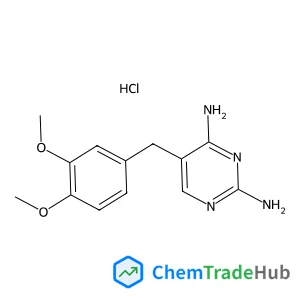
5-(3,4-Dimethoxybenzyl)-2,4-pyrimidinediamine hydrochloride (1:1)
CAS Number:
2507-23-5
Molecular Formula:
C13H17ClN4O2
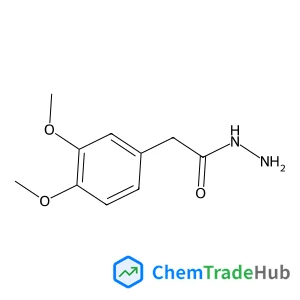
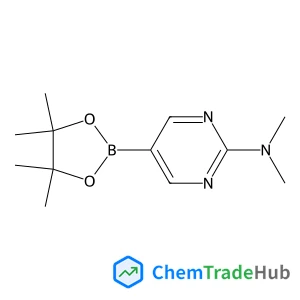
N,N-Dimethyl-5-(4,4,5,5-tetramethyl-1,3,2-dioxaborolan-2-yl)-2-pyrimidinamine
CAS Number:
1032759-30-0
Molecular Formula:
C12H20BN3O2
Recommended Suppliers






Disclaimer
This page provides academic journal information for reference and research purposes only. We are not affiliated with any journal publishers and do not handle publication submissions. For publication-related inquiries, please contact the respective journal publishers directly.
If you notice any inaccuracies in the information displayed, please contact us at support@chemtradehub.com. We will promptly review and address your concerns.