











Effect of Fe substitution on structure and exchange interactions within and between the sublattices of frustrated CoCr2O4
Literature Information
Publication Date
2020-12-09
DOI
10.1039/D0CP04783J
Impact Factor
3.676
Authors
Canglong Li, Chunlei Wang, Qiankun Lei, Godfrey Okumu Barasa, Qingshan Fu, Yang Qiu
View Original
Abstract
Obtaining tunable magnetic states in geometrically frustrated multiferroic compound CoCr2O4 by tuning the sublattice magnetic coupling is indeed of high interest from the fundamental and applied points of view. In this work, Fe substitution effects in Co(Cr1−xFex)2O4 (0 ≤ x ≤0.5) are experimentally investigated through detailed measurements of the crystalline structure and magnetization. Our experiments reveal that the samples undergo a magnetic transition characterized by a sharp variation in magnetization from 94 K at x = 0 to 317 K at x = 0.5. The field-cooled process shows that a magnetization reversal phenomenon is observed under a stable positive magnetic field when the measurement undergoes the compensation temperature. A magnetic field-assisted switching effect is realized near the compensation temperature, which possesses the characteristics of high repeatability and stability. The molecular field coefficients are evaluated based on the ferrimagnetic Curie–Weiss fitting, and the exchange interactions within and between the sublattices show a relationship of |JAA| < |JAB| < |JBB|. The magnetization reversal in Co(Cr1−xFex)2O4 is considered to be attributed to the coexistence and competition of A–A, A–B and B–B magnetic interactions, as well as the weakening of spin frustration.
Recommended Journals
Related Literature
Methanol–methanol and methanol–water systems: the intermolecular interactions controlling the transition from small clusters to the liquid phase
Margarita Albertí, Anna Amat, Antonio Aguilar, Fernando Pirani
2017-06-05
Paper
DOI: 10.1039/C7CP02919E
Extra electronic outer-shell peculiarities accessible under a joint XPS and DFT study
A. R. Cholach, A. A. Bryliakova
2017-05-22
Paper
DOI: 10.1039/C7CP00900C
How predictive could alchemical derivatives be?
Macarena Muñoz, Carlos Cárdenas
2017-05-30
Paper
DOI: 10.1039/C7CP02755A
The effect of pressure on the crystallization of rapidly supercooled zirconium melts
Zean Tian, Rangsu Liu, Lili Zhou, Zhaoyang Hou
2017-04-13
Paper
DOI: 10.1039/C7CP00865A
Recyclable Au–TiO2 nanocomposite SERS-active substrates contributed by synergistic charge-transfer effect
Xin Jiang, Xiaodong Sun, Di Yin, Xiuling Li, Ming Yang, Xiaoxia Han, Libin Yang, Bing Zhao
2017-03-29
Paper
DOI: 10.1039/C7CP01610G
Cobalt-porphine catalyzed CO2 electro-reduction: a novel protonation mechanism
Cang Lang Yao, Jian Chen Li, Wang Gao, Qing Jiang
2017-05-15
Paper
DOI: 10.1039/C7CP01881A
Mapping the ionic fingerprints of molecular monolayers
Joshua Lehr, Justin R. Weeks, Adriano Santos, Gustavo T. Feliciano, Melany I. G. Nicholson, Jason J. Davis, Paulo R. Bueno
2017-05-12
Paper
DOI: 10.1039/C7CP01500C
Modeling the absorption spectrum of the permanganate ion in vacuum and in aqueous solution
Jógvan Magnus Haugaard Olsen, Erik Donovan Hedegård
2017-05-31
Paper
DOI: 10.1039/C7CP01194F
Synergistic effects of plasma–catalyst interactions for CH4 activation
Jongsik Kim, Jason C. Hicks
2017-04-28
Paper
DOI: 10.1039/C7CP01322A
Revisiting the definition of local hardness and hardness kernel
Carlos A. Polanco-Ramírez, Javier Carmona-Espíndola, José L. Gázquez, Paul W. Ayers
2017-03-31
Paper
DOI: 10.1039/C7CP00691H
You might also like
Compound Q&A
Are there alternatives to 1-(4-Chlorophenyl)-N-hydroxymethanimine (CAS: 3848-36-0) in synthesis?
When considering alternatives to 1-(4-Chlorophenyl)-N-hydroxymethanimine (CAS: 3...
3848-36-01-(4-Chlorophenyl)-N...
Compound Q&A
How should (1R,9S,10S,12S,14E,16S,19R,20R,21S,22R)-3,9,21-Trihydroxy-5,10,12,14,16,20,22-heptamethyl-23,24-dioxatetracyclo[17.3.1.1~6,9~.0~2,7~]tetracosa-2,5,7,14-tetraen-4-one (CAS: 183202-73-5) be stored?
This compound should be stored in a cool, dry place away from direct sunlight. I...
183202-73-5(1R,9S,10S,12S,14E,1...
Compound Q&A
How is 3-(4-Bromophenyl)-5-(2-fluorophenyl)-1,2,4-oxadiazole (CAS: 419553-16-5) typically synthesized?
3-(4-Bromophenyl)-5-(2-fluorophenyl)-1,2,4-oxadiazole is synthesized through a m...
419553-16-53-(4-Bromophenyl)-5-...
Compound Q&A
How is 5-Chloro-2-(4-chlorophenyl)-4-methyl-6-[3-(1-piperidinyl)propoxy]pyrimidine (CAS: 1639220-19-1) typically synthesized?
5-Chloro-2-(4-chlorophenyl)-4-methyl-6-[3-(1-piperidinyl)propoxy]pyrimidine (CAS...
1639220-19-15-Chloro-2-(4-chloro...
Compound Q&A
What industries use 2-Chloro-4-(difluoromethoxy)pyridine (CAS: 1206978-15-5)?
2-Chloro-4-(difluoromethoxy)pyridine is used in the pharmaceutical industry for ...
1206978-15-52-Chloro-4-(difluoro...
Compound Q&A
What regulatory guidelines apply to 3-Chloro-6-methylpyridazine (CAS: 1121-79-5)?
3-Chloro-6-methylpyridazine (CAS: 1121-79-5) is classified under the Globally Ha...
1121-79-53-Chloro-6-methylpyr...
Compound Q&A
Are there alternatives to Methyl 4,5-dimethyl-2-nitrobenzoate in synthesis?
Several alternatives can be used in the synthesis of Methyl 4,5-dimethyl-2-nitro...
90922-74-0Methyl 4,5-dimethyl-...
Compound Q&A
Are there alternatives to (2E,2'E)-3,3'-(1,4-Phenylene)bisacrylaldehyde in synthesis?
Alternatives to (2E,2'E)-3,3'-(1,4-Phenylene)bisacrylaldehyde include other acry...
63405-68-5(2E,2'E)-3,3'-(1,4-P...
Compound Q&A
What is 3-Amino-5-chloropyridin-2-ol hydrochloride (CAS: 1261906-29-9)?
3-Amino-5-chloropyridin-2-ol hydrochloride is an organic compound with the CAS n...
1261906-29-93-Amino-5-chloropyri...
Compound Q&A
What precautions should be taken when handling 6,7-Difluoro-2,3-dihydro-4H-chromen-4-one (CAS: 1092349-93-3)?
When handling 6,7-Difluoro-2,3-dihydro-4H-chromen-4-one, it is essential to wear...
1092349-93-36,7-Difluoro-2,3-dih...
Source Journal
Physical Chemistry Chemical Physics

CiteScore:
5.5
Self-citation Rate:
10.3%
Articles per Year:
3036
Physical Chemistry Chemical Physics (PCCP) is an international journal co-owned by 19 physical chemistry and physics societies from around the world. This journal publishes original, cutting-edge research in physical chemistry, chemical physics and biophysical chemistry. To be suitable for publication in PCCP, articles must include significant innovation and/or insight into physical chemistry; this is the most important criterion that reviewers and Editors will judge against when evaluating submissions. The journal has a broad scope and welcomes contributions spanning experiment, theory, computation and data science. Topical coverage includes spectroscopy, dynamics, kinetics, statistical mechanics, thermodynamics, electrochemistry, catalysis, surface science, quantum mechanics, quantum computing and machine learning. Interdisciplinary research areas such as polymers and soft matter, materials, nanoscience, energy, surfaces/interfaces, and biophysical chemistry are welcomed if they demonstrate significant innovation and/or insight into physical chemistry. Joined experimental/theoretical studies are particularly appreciated when complementary and based on up-to-date approaches.
Recommended Compounds
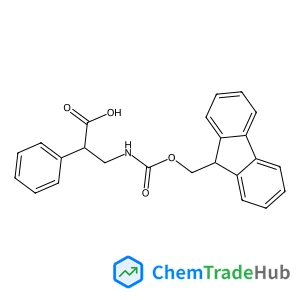
(S)-3-((((9H-Fluoren-9-yl)methoxy)carbonyl)amino)-2-phenylpropanoic acid
CAS Number:
1217663-60-9
Molecular Formula:
C24H21NO4
Recommended Suppliers






Disclaimer
This page provides academic journal information for reference and research purposes only. We are not affiliated with any journal publishers and do not handle publication submissions. For publication-related inquiries, please contact the respective journal publishers directly.
If you notice any inaccuracies in the information displayed, please contact us at support@chemtradehub.com. We will promptly review and address your concerns.