


Methanol–methanol and methanol–water systems: the intermolecular interactions controlling the transition from small clusters to the liquid phase
Literature Information
Publication Date
2017-06-05
DOI
10.1039/C7CP02919E
Impact Factor
3.676
Authors
Margarita Albertí, Anna Amat, Antonio Aguilar, Fernando Pirani
View Original
Abstract
The present paper focuses on the characterization of the properties of methanol and water molecules in gas and liquid environments. A force field for methanol–methanol and methanol–water interactions, useful to be applied in Molecular Dynamics (MD) simulations, is proposed. The electrostatic interaction contributions, arising from permanent charge and/or from anisotropic charge distributions originating from permanent electric multipoles (Vel), different in gas and in liquid phases, are combined with the non electrostatic ones (Vnel), defined by means of Improved Lennard-Jones (ILJ) functions [F. Pirani et al., Phys. Chem. Chem. Phys., 2008, 10, 5489–5503]. Interestingly, the relevant parameters of the ILJ functions are not fitted to reproduce the selected properties of the systems but calculated from the molecular polarizability, which is considered the key property to define size (or Pauli) repulsion and dispersion and induction attractions. The constructed force field predicts binding energies and geometries of the methanol–methanol and methanol–water dimers, in good agreement with available data. On the other hand, several bulk and structural properties of liquid methanol, such as densities, vaporization enthalpies, diffusion coefficients, coefficients of cubic thermal expansion, heat capacities at constant pressure and some relevant radial distribution functions, calculated considering 2744 molecules and different conditions of pressure and temperature, have also been found to be in good agreement with experimental data. The study has been completed by calculating the density values at 298 K and 1 bar of some methanol–water mixtures, which have also been found to be in good agreement with experimental data.
Recommended Journals

Chemistry Education Research and Practice

New Journal of Chemistry

Nature Medicine

Russian Journal of Organic Chemistry

Current Opinion in Solid State & Materials Science

Organic Process Research & Development

Journal of Natural Medicines

Drug Discovery Today

Journal of Saudi Chemical Society

Russian Journal of General Chemistry
Related Literature
How the number of fitting points for the slope of the mean-square displacement influences the experimentally determined particle size distribution from single-particle tracking
Dominique Ernst, Jürgen Köhler
2013-02-04
Communication
DOI: 10.1039/C3CP44391D
Synthesis and characterization of biodegradable polyurethanes with folate side chains conjugated to hard segments
Zhicheng Pan, Lunquan Yu, Nijia Song, Lijuan Zhou, Jiehua Li, Mingming Ding, Hong Tan, Qiang Fu
2013-12-24
Paper
DOI: 10.1039/C3PY01340E
Facile preparation of long-chain aliphatic polycarbonates containing block copolycarbonates via one-pot sequential organic catalyzed polymerization of macrocyclic carbonates and trimethylene carbonates
Bingkun Yan, Jiaqian Hou, Chao Wei, Yan Xiao, Meidong Lang, Farong Huang
2020-02-12
Paper
DOI: 10.1039/D0PY00031K
Tailor-made compositional gradient copolymer by a many-shot RAFT emulsion polymerization method
Yunlong Guo, Jianhua Zhang, Peile Xie, Xiang Gao, Yingwu Luo
2014-01-24
Paper
DOI: 10.1039/C4PY00003J
Iodine-catalyzed efficient 2-arylsulfanylphenol formation from thiols and cyclohexanones
Pengcheng Jiang, Shanping Chen, Hongrui Qi, Guo-Jun Deng
2013-09-16
Communication
DOI: 10.1039/C3GC41671B
Enhanced rate performance and cycling stability of a CoCO3–polypyrrole composite for lithium ion battery anodes
Zhaojun Ding, Bin Yao, Jinkui Feng, Jianxin Zhang
2013-07-16
Paper
DOI: 10.1039/C3TA12227A
Access to aliphatic protons as reporters in non-deuterated proteins by solid-state NMR
Suresh Kumar Vasa, Petra Rovó, Karin Giller, Stefan Becker, Rasmus Linser
2015-11-20
Paper
DOI: 10.1039/C5CP06601H
Tuning cesium–guanidinium in formamidinium tin triiodide perovskites with an ethylenediammonium additive for efficient and stable lead-free perovskite solar cells
Gabriella A. Tosado, Erjin Zheng, Qiuming Yu
2020-11-25
Paper
DOI: 10.1039/D0MA00520G
You might also like
Compound Q&A
Are there alternatives to 1-(4-Chlorophenyl)-N-hydroxymethanimine (CAS: 3848-36-0) in synthesis?
When considering alternatives to 1-(4-Chlorophenyl)-N-hydroxymethanimine (CAS: 3...
3848-36-01-(4-Chlorophenyl)-N...
Compound Q&A
How should (1R,9S,10S,12S,14E,16S,19R,20R,21S,22R)-3,9,21-Trihydroxy-5,10,12,14,16,20,22-heptamethyl-23,24-dioxatetracyclo[17.3.1.1~6,9~.0~2,7~]tetracosa-2,5,7,14-tetraen-4-one (CAS: 183202-73-5) be stored?
This compound should be stored in a cool, dry place away from direct sunlight. I...
183202-73-5(1R,9S,10S,12S,14E,1...
Compound Q&A
How is 3-(4-Bromophenyl)-5-(2-fluorophenyl)-1,2,4-oxadiazole (CAS: 419553-16-5) typically synthesized?
3-(4-Bromophenyl)-5-(2-fluorophenyl)-1,2,4-oxadiazole is synthesized through a m...
419553-16-53-(4-Bromophenyl)-5-...
Compound Q&A
How is 5-Chloro-2-(4-chlorophenyl)-4-methyl-6-[3-(1-piperidinyl)propoxy]pyrimidine (CAS: 1639220-19-1) typically synthesized?
5-Chloro-2-(4-chlorophenyl)-4-methyl-6-[3-(1-piperidinyl)propoxy]pyrimidine (CAS...
1639220-19-15-Chloro-2-(4-chloro...
Compound Q&A
What industries use 2-Chloro-4-(difluoromethoxy)pyridine (CAS: 1206978-15-5)?
2-Chloro-4-(difluoromethoxy)pyridine is used in the pharmaceutical industry for ...
1206978-15-52-Chloro-4-(difluoro...
Compound Q&A
What regulatory guidelines apply to 3-Chloro-6-methylpyridazine (CAS: 1121-79-5)?
3-Chloro-6-methylpyridazine (CAS: 1121-79-5) is classified under the Globally Ha...
1121-79-53-Chloro-6-methylpyr...
Compound Q&A
Are there alternatives to Methyl 4,5-dimethyl-2-nitrobenzoate in synthesis?
Several alternatives can be used in the synthesis of Methyl 4,5-dimethyl-2-nitro...
90922-74-0Methyl 4,5-dimethyl-...
Compound Q&A
Are there alternatives to (2E,2'E)-3,3'-(1,4-Phenylene)bisacrylaldehyde in synthesis?
Alternatives to (2E,2'E)-3,3'-(1,4-Phenylene)bisacrylaldehyde include other acry...
63405-68-5(2E,2'E)-3,3'-(1,4-P...
Compound Q&A
What is 3-Amino-5-chloropyridin-2-ol hydrochloride (CAS: 1261906-29-9)?
3-Amino-5-chloropyridin-2-ol hydrochloride is an organic compound with the CAS n...
1261906-29-93-Amino-5-chloropyri...
Compound Q&A
What precautions should be taken when handling 6,7-Difluoro-2,3-dihydro-4H-chromen-4-one (CAS: 1092349-93-3)?
When handling 6,7-Difluoro-2,3-dihydro-4H-chromen-4-one, it is essential to wear...
1092349-93-36,7-Difluoro-2,3-dih...
Source Journal
Physical Chemistry Chemical Physics

CiteScore:
5.5
Self-citation Rate:
10.3%
Articles per Year:
3036
Physical Chemistry Chemical Physics (PCCP) is an international journal co-owned by 19 physical chemistry and physics societies from around the world. This journal publishes original, cutting-edge research in physical chemistry, chemical physics and biophysical chemistry. To be suitable for publication in PCCP, articles must include significant innovation and/or insight into physical chemistry; this is the most important criterion that reviewers and Editors will judge against when evaluating submissions. The journal has a broad scope and welcomes contributions spanning experiment, theory, computation and data science. Topical coverage includes spectroscopy, dynamics, kinetics, statistical mechanics, thermodynamics, electrochemistry, catalysis, surface science, quantum mechanics, quantum computing and machine learning. Interdisciplinary research areas such as polymers and soft matter, materials, nanoscience, energy, surfaces/interfaces, and biophysical chemistry are welcomed if they demonstrate significant innovation and/or insight into physical chemistry. Joined experimental/theoretical studies are particularly appreciated when complementary and based on up-to-date approaches.
Recommended Compounds

1-(3-Bromo-4-fluorophenyl)methanamine hydrochloride (1:1)
CAS Number:
202865-68-7
Molecular Formula:
C7H8BrClFN
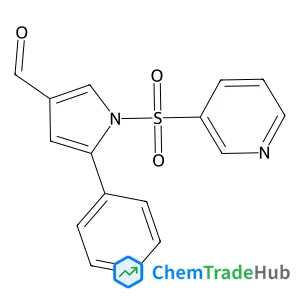
5-Phenyl-1-(pyridin-3-ylsulfonyl)-1H-pyrrole-3-carbaldehyde
CAS Number:
881676-90-0
Molecular Formula:
C16H12N2O3S
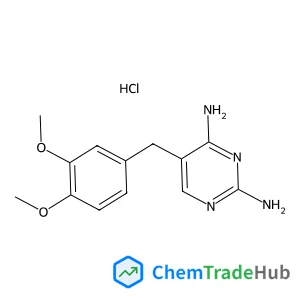
5-(3,4-Dimethoxybenzyl)-2,4-pyrimidinediamine hydrochloride (1:1)
CAS Number:
2507-23-5
Molecular Formula:
C13H17ClN4O2
Recommended Suppliers







Disclaimer
This page provides academic journal information for reference and research purposes only. We are not affiliated with any journal publishers and do not handle publication submissions. For publication-related inquiries, please contact the respective journal publishers directly.
If you notice any inaccuracies in the information displayed, please contact us at support@chemtradehub.com. We will promptly review and address your concerns.