


A force field for bio-polymers in ionic liquids (BILFF) – part 1: [EMIm][OAc]/water mixtures
Literature Information
Publication Date
2020-12-07
DOI
10.1039/D0CP04537C
Impact Factor
3.676
Authors
Eliane Roos, Martin Brehm
View Original
Abstract
We present BILFF, a novel force field for bio-polymers in ionic liquids. In the first part of our study, we introduce optimized force field parameters for mixtures of the ionic liquid (IL) 1-ethyl-3-methylimidazolium acetate ([EMIm][OAc]) with water. This imidazolium-based IL is of particular practical importance as it can dissolve significant amounts of cellulose even at room temperature. An understanding of this dissolution process via molecular dynamics simulations requires a quantitative description of the microscopic structure and the strong hydrogen bonds with a method able of simulating at least several dozen nanoseconds, which is the main aim of our novel force field. To reach this goal, we optimize the force field parameters to reproduce radial, spatial, and combined distribution functions, hydrogen bond lifetimes, diffusion coefficients, and several other quantities from reference ab initio molecular dynamics (AIMD) simulations. Non-trivial effects such as dispersion interactions between the side chains and π–π stacking of the cations are reproduced very well. We further validate the force field by comparison to experimental data such as thermal expansion coefficients, bulk modulus, and density at different temperatures, which yields good agreement and correct trends. No other force field with optimized parameters for mixtures of [EMIm][OAc] and water has been presented in the literature yet. Optimized force field parameters for cellulose and other ILs will be published in upcoming articles.
Recommended Journals

Journal of Saudi Chemical Society

Journal of Natural Medicines

Saudi Pharmaceutical Journal

Current Opinion in Solid State & Materials Science

Russian Journal of Applied Chemistry

Acta Materialia

Journal of Peptide Science

Russian Journal of Coordination Chemistry

Current Opinion in Colloid & Interface Science

Crystallography Reports
Related Literature
Light-fluorous safety-catch arylgermanes – exceptionally robust, photochemically activated precursors for biaryl synthesis by Pd(0) catalysed cross-coupling
Alan C. Spivey, Chih-Chung Tseng, Joseph P. Hannah, Christopher J. G. Gripton, Paul de Fraine, Nigel J. Parr, Jan J. Scicinski
2007-06-21
Communication
DOI: 10.1039/B707517K
Oxygen-assisted reduction of Au species on Au/SiO2catalyst in room temperature CO oxidation
Zili Wu, Shenghu Zhou, Haoguo Zhu, Sheng Dai, Steven H. Overbury
2008-06-05
Communication
DOI: 10.1039/B803834A
Sulfate aniontemplation of a neutral pseudorotaxane assembly using an indolocarbazole threading component
Michał J. Chmielewski, Liyun Zhao, Asha Brown, David Curiel, Mark R. Sambrook, Amber L. Thompson, Sergio M. Santos, Vitor Felix, Jason J. Davis, Paul D. Beer
2008-05-09
Communication
DOI: 10.1039/B804941F
Polymer-supported proline-decorated dendrons: dendritic effect in asymmetric aldol reaction
Tzofit Kehat, Moshe Portnoy
2007-06-05
Communication
DOI: 10.1039/B703016A
Probing the stable G-quadruplex transition using quencher-free end-stacking ethynyl pyrene–adenosine
Young Jun Seo, Il Joon Lee, Jeong Wu Yi, Byeang Hyean Kim
2007-06-18
Communication
DOI: 10.1039/B707278C
Concerted attack of frustrated Lewis acid–base pairs on olefinic double bonds: a theoretical study
András Stirling, Andrea Hamza, Tibor András Rokob, Imre Pápai
2008-05-09
Communication
DOI: 10.1039/B804662J
A simple route to chiralphosphinous acid–boranes
Delphine Moraleda, David Gatineau, David Martin, Laurent Giordano, Gérard Buono
2008-04-22
Communication
DOI: 10.1039/B802817F
Csp3–F bond activation by nucleophilic attack of the {Pt2S2} core assisted by non-covalent interactions
Ainara Nova, Gregori Ujaque, Pilar González-Duarte, Agustí Lledós
2008-04-29
Communication
DOI: 10.1039/B801889H
Tetrameric molecular bowl assembled from glycoluril building blocks
Neng-Fang She, Xiang-Gao Meng, Meng Gao, An-Xin Wu, Lyle Isaacs
2008-04-04
Communication
DOI: 10.1039/B800785C
You might also like
Compound Q&A
Are there alternatives to 1-(4-Chlorophenyl)-N-hydroxymethanimine (CAS: 3848-36-0) in synthesis?
When considering alternatives to 1-(4-Chlorophenyl)-N-hydroxymethanimine (CAS: 3...
3848-36-01-(4-Chlorophenyl)-N...
Compound Q&A
How should (1R,9S,10S,12S,14E,16S,19R,20R,21S,22R)-3,9,21-Trihydroxy-5,10,12,14,16,20,22-heptamethyl-23,24-dioxatetracyclo[17.3.1.1~6,9~.0~2,7~]tetracosa-2,5,7,14-tetraen-4-one (CAS: 183202-73-5) be stored?
This compound should be stored in a cool, dry place away from direct sunlight. I...
183202-73-5(1R,9S,10S,12S,14E,1...
Compound Q&A
How is 3-(4-Bromophenyl)-5-(2-fluorophenyl)-1,2,4-oxadiazole (CAS: 419553-16-5) typically synthesized?
3-(4-Bromophenyl)-5-(2-fluorophenyl)-1,2,4-oxadiazole is synthesized through a m...
419553-16-53-(4-Bromophenyl)-5-...
Compound Q&A
How is 5-Chloro-2-(4-chlorophenyl)-4-methyl-6-[3-(1-piperidinyl)propoxy]pyrimidine (CAS: 1639220-19-1) typically synthesized?
5-Chloro-2-(4-chlorophenyl)-4-methyl-6-[3-(1-piperidinyl)propoxy]pyrimidine (CAS...
1639220-19-15-Chloro-2-(4-chloro...
Compound Q&A
What industries use 2-Chloro-4-(difluoromethoxy)pyridine (CAS: 1206978-15-5)?
2-Chloro-4-(difluoromethoxy)pyridine is used in the pharmaceutical industry for ...
1206978-15-52-Chloro-4-(difluoro...
Compound Q&A
What regulatory guidelines apply to 3-Chloro-6-methylpyridazine (CAS: 1121-79-5)?
3-Chloro-6-methylpyridazine (CAS: 1121-79-5) is classified under the Globally Ha...
1121-79-53-Chloro-6-methylpyr...
Compound Q&A
Are there alternatives to Methyl 4,5-dimethyl-2-nitrobenzoate in synthesis?
Several alternatives can be used in the synthesis of Methyl 4,5-dimethyl-2-nitro...
90922-74-0Methyl 4,5-dimethyl-...
Compound Q&A
Are there alternatives to (2E,2'E)-3,3'-(1,4-Phenylene)bisacrylaldehyde in synthesis?
Alternatives to (2E,2'E)-3,3'-(1,4-Phenylene)bisacrylaldehyde include other acry...
63405-68-5(2E,2'E)-3,3'-(1,4-P...
Compound Q&A
What is 3-Amino-5-chloropyridin-2-ol hydrochloride (CAS: 1261906-29-9)?
3-Amino-5-chloropyridin-2-ol hydrochloride is an organic compound with the CAS n...
1261906-29-93-Amino-5-chloropyri...
Compound Q&A
What precautions should be taken when handling 6,7-Difluoro-2,3-dihydro-4H-chromen-4-one (CAS: 1092349-93-3)?
When handling 6,7-Difluoro-2,3-dihydro-4H-chromen-4-one, it is essential to wear...
1092349-93-36,7-Difluoro-2,3-dih...
Source Journal
Physical Chemistry Chemical Physics

CiteScore:
5.5
Self-citation Rate:
10.3%
Articles per Year:
3036
Physical Chemistry Chemical Physics (PCCP) is an international journal co-owned by 19 physical chemistry and physics societies from around the world. This journal publishes original, cutting-edge research in physical chemistry, chemical physics and biophysical chemistry. To be suitable for publication in PCCP, articles must include significant innovation and/or insight into physical chemistry; this is the most important criterion that reviewers and Editors will judge against when evaluating submissions. The journal has a broad scope and welcomes contributions spanning experiment, theory, computation and data science. Topical coverage includes spectroscopy, dynamics, kinetics, statistical mechanics, thermodynamics, electrochemistry, catalysis, surface science, quantum mechanics, quantum computing and machine learning. Interdisciplinary research areas such as polymers and soft matter, materials, nanoscience, energy, surfaces/interfaces, and biophysical chemistry are welcomed if they demonstrate significant innovation and/or insight into physical chemistry. Joined experimental/theoretical studies are particularly appreciated when complementary and based on up-to-date approaches.
Recommended Compounds
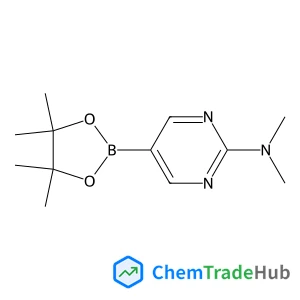
N,N-Dimethyl-5-(4,4,5,5-tetramethyl-1,3,2-dioxaborolan-2-yl)-2-pyrimidinamine
CAS Number:
1032759-30-0
Molecular Formula:
C12H20BN3O2

Recommended Suppliers






Disclaimer
This page provides academic journal information for reference and research purposes only. We are not affiliated with any journal publishers and do not handle publication submissions. For publication-related inquiries, please contact the respective journal publishers directly.
If you notice any inaccuracies in the information displayed, please contact us at support@chemtradehub.com. We will promptly review and address your concerns.