











Active stereo-control of the Cl + CH4(ν3 = 1) reaction: a three-dimensional perspective
Literature Information
Publication Date
2020-04-23
DOI
10.1039/D0CP01502D
Impact Factor
3.676
Authors
View Original
Abstract
The transition state in Cl + CH4 is of Cl–H–C collinear geometry. As the reactant CH4 is vibrationally excited by a linearly polarized infrared (IR) light to the antisymmetric-stretching state of ν3 = 1, all four C–H bonds are collectively excited and any one of the H-atoms can be reactive. Yet, a strong alignment of the excited CH4(ν3 = 1), as evidenced from the striking stereo-specificity in the Cl + CH4 reaction, was clearly revealed in a previous, exploratory study. Reported here is the full account of that investigation at two collisional energies of Ec = 4.8 and 2.7 kcal mol−1, using a crossed molecular-beam, product-imaging approach. By active control of the polarization direction of an IR laser under judiciously chosen beam-geometries, a complete set of polarization-dependent differential cross sections is disentangled from the CH3(00) product images. To our surprise, the quantitative results appear nearly identical to those obtained for the isotope-substituted reaction of Cl + CHD3(ν1 = 1) → HCl(ν) + CD3(00). A detailed discussion is presented to elucidate the underlying physics for such an intriguing similarity in stereo-reactivity between a spherical-top and a symmetric-top reactant.
Related Literature
Alloy-composition-dependent oxygen reduction reaction activity and electrochemical stability of Pt-based bimetallic systems: a model electrocatalyst study of Pt/PtxNi100−x(111)
Naoto Todoroki, Ryutaro Kawamura, Masato Asano, Ren Sasakawa, Shuntaro Takahashi, Toshimasa Wadayama
2018-04-03
Paper
DOI: 10.1039/C8CP01217B
A DFT study on Zr-SBA-15 catalyzed conversion of ethanol to 1,3-butadiene
2018-04-09
Paper
DOI: 10.1039/C7CP08620B
Newly proposed proton-abstraction roundabout with backside attack mechanism for the SN2 reaction at the nitrogen center in F− + NH2Cl
Yongfang Li, Dunyou Wang
2018-04-04
Paper
DOI: 10.1039/C8CP01201F
A non-tight chemomechanical coupling model for force-dependence of movement dynamics of molecular motors
Hong Chen
2018-01-17
Paper
DOI: 10.1039/C7CP05557A
An Sn-induced resonant level in β-As2Te3
Bartlomiej Wiendlocha, Jean-Baptiste Vaney, Christophe Candolfi, Anne Dauscher, Bertrand Lenoir, Janusz Tobola
2018-04-27
Paper
DOI: 10.1039/C8CP00431E
A catalytic role of surface silanol groups in CO2 capture on the amine-anchored silica support
Moses Cho, Joonho Park, Cafer T. Yavuz, Yousung Jung
2018-04-06
Paper
DOI: 10.1039/C7CP07973G
Coupling free radical catalysis, climate change, and human health
C. E. Clapp
2018-04-11
Perspective
DOI: 10.1039/C7CP08331A
Triarylmethyl-based 2D covalent networks: virtual screening of chemical functionalisation for optimising strain-induced property control
I. Alcón
2018-01-18
Paper
DOI: 10.1039/C7CP08076J
Exotic species with explicit noble metal–noble gas–noble metal linkages
Norberto Moreno, Albeiro Restrepo, C. Z. Hadad
2018-01-18
Paper
DOI: 10.1039/C7CP08085A
Kinetics of the a-C3H5 + O2 reaction, investigated by photoionization using synchrotron radiation
D. Schleier, P. Constantinidis, N. Faßheber, I. Fischer, G. Friedrichs, P. Hemberger, E. Reusch, B. Sztáray, K. Voronova
2018-01-11
Paper
DOI: 10.1039/C7CP07893E
You might also like
Compound Q&A
What are the main uses of 1-(3-Aminophenyl)-3-[(3R)-1-(3,3-dimethyl-2-oxobutyl)-2-oxo-5-(2-pyridinyl)-2,3-dihydro-1H-1,4-benzodiazepin-3-yl]urea (CAS: 155412-88-7)?
This compound is mainly used as an intermediate in the synthesis of antipsychoti...
155412-88-71-(3-Aminophenyl)-3-...
Compound Q&A
How should waste containing 1-(D-Ribofuranosyl)-1,4-dihydro-3-pyridinecarboxamide (CAS: 19132-12-8) be handled?
Waste containing 1-(D-Ribofuranosyl)-1,4-dihydro-3-pyridinecarboxamide (CAS: 191...
19132-12-81-(D-Ribofuranosyl)-...
Compound Q&A
What regulatory guidelines apply to 2-Methyl-2-propanyl 3-bromo-3-(hydroxymethyl)-1-azetidinecarboxylate (CAS: 2007919-81-3)?
2-Methyl-2-propanyl 3-bromo-3-(hydroxymethyl)-1-azetidinecarboxylate (CAS: 20079...
2007919-81-32-Methyl-2-propanyl ...
Compound Q&A
What is N-(4-Chloro-2-pyridinyl)acetamide (CAS: 245056-66-0)?
N-(4-Chloro-2-pyridinyl)acetamide (CAS: 245056-66-0) is a chemical compound with...
245056-66-0N-(4-Chloro-2-pyridi...
Compound Q&A
What is 5-Chloro-2-hydroxybenzoic acid (CAS: 321-14-2)?
5-Chloro-2-hydroxybenzoic acid, also known as 5-chlorosalicylic acid, is an arom...
321-14-25-Chloro-2-hydroxybe...
Compound Q&A
What precautions should be taken when handling 1,1-Dichloro-1-fluoroethane (CAS: 1717-00-6)?
When handling 1,1-Dichloro-1-fluoroethane (CAS: 1717-00-6), it is important to u...
1717-00-61,1-Dichloro-1-fluor...
Compound Q&A
What are the physical and chemical properties of Fmoc-(2S,3R)-3-phenylpyrrolidine-2-carboxylic acid (CAS: 281655-32-1)?
Fmoc-(2S,3R)-3-phenylpyrrolidine-2-carboxylic acid is a white crystalline solid ...
281655-32-1Fmoc-(2S,3R)-3-pheny...
Compound Q&A
What are the main uses of 4-Amino-5-bromo-2-pyridinecarboxylic acid (CAS: 1363381-01-4)?
4-Amino-5-bromo-2-pyridinecarboxylic acid is primarily used as a precursor in th...
1363381-01-44-Amino-5-bromo-2-py...
Compound Q&A
What precautions should be taken when handling (S)-tert-butyl 2-((2-(4-bromophenyl)-2-oxoethyl)carbamoyl)pyrrolidine-1-carboxylate (CAS: 1007881-98-2)?
Handling this compound should be done with personal protective equipment (PPE) i...
1007881-98-2(S)-tert-butyl 2-((2...
Compound Q&A
What precautions should be taken when handling 8-bromo-2,2-dimethyl-3,4-dihydro-2H-1,4-benzoxazin-3-one (CAS: 688363-73-7)?
When handling 8-bromo-2,2-dimethyl-3,4-dihydro-2H-1,4-benzoxazin-3-one, use prop...
688363-73-78-bromo-2,2-dimethyl...
Source Journal
Physical Chemistry Chemical Physics

CiteScore:
5.5
Self-citation Rate:
10.3%
Articles per Year:
3036
Physical Chemistry Chemical Physics (PCCP) is an international journal co-owned by 19 physical chemistry and physics societies from around the world. This journal publishes original, cutting-edge research in physical chemistry, chemical physics and biophysical chemistry. To be suitable for publication in PCCP, articles must include significant innovation and/or insight into physical chemistry; this is the most important criterion that reviewers and Editors will judge against when evaluating submissions. The journal has a broad scope and welcomes contributions spanning experiment, theory, computation and data science. Topical coverage includes spectroscopy, dynamics, kinetics, statistical mechanics, thermodynamics, electrochemistry, catalysis, surface science, quantum mechanics, quantum computing and machine learning. Interdisciplinary research areas such as polymers and soft matter, materials, nanoscience, energy, surfaces/interfaces, and biophysical chemistry are welcomed if they demonstrate significant innovation and/or insight into physical chemistry. Joined experimental/theoretical studies are particularly appreciated when complementary and based on up-to-date approaches.
Recommended Compounds
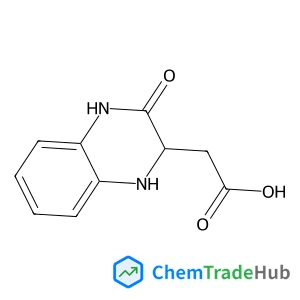
(3-Oxo-1,2,3,4-tetrahydro-2-quinoxalinyl)acetic acid
CAS Number:
136584-14-0
Molecular Formula:
C10H10N2O3
![Methyl 4-({[(2-methyl-2-propanyl)oxy]carbonyl}amino)bicyclo[2.2.2]octane-1-carboxylate structure](https://static.chemtradehub.com/structs/943/943845-74-7-b7e5.webp "Methyl 4-({[(2-methyl-2-propanyl)oxy]carbonyl}amino)bicyclo[2.2.2]octane-1-carboxylate structure")
Methyl 4-({[(2-methyl-2-propanyl)oxy]carbonyl}amino)bicyclo[2.2.2]octane-1-carboxylate
CAS Number:
943845-74-7
Molecular Formula:
C15H25NO4


Recommended Suppliers





Disclaimer
This page provides academic journal information for reference and research purposes only. We are not affiliated with any journal publishers and do not handle publication submissions. For publication-related inquiries, please contact the respective journal publishers directly.
If you notice any inaccuracies in the information displayed, please contact us at support@chemtradehub.com. We will promptly review and address your concerns.