












Interaction of water with oligo(ethylene glycol) terminated monolayers: wetting versus hydration
Literature Information
Publication Date
2020-03-27
DOI
10.1039/D0CP00906G
Impact Factor
3.676
Authors
Mustafa Sayin, Alexei Nefedov, Michael Zharnikov
View Original
Abstract
Biorepulsivity of oligo(ethylene glycol) (OEG) substituted self-assembled monolayers (SAMs), serving as model systems for analogous polymeric surfaces, is generally ascribed to the hydration effect. In this context, we applied temperature-programmed desorption to study interaction of water (D2O) with a series of OH-terminated, OEG-substituted alkanethiolate SAMs with variable length of the OEG strand, defining their biorepulsion behavior. Along with the ice overlayer (wetting phase), growing also on the surface of the analogous non-substituted films, a hydration phase, corresponding to the adsorption of D2O into the OEG matrix, was observed, with a higher desorption energy (12.4 kcal mol−1vs. 10.4 kcal mol−1) and a weight correlating with the length of the OEG strand and, consequently, with biorepulsivity. The formation of hydration phase was found to occur over an activation barrier, presumably by temperature-promoted diffusion from the wetting phase, with this process being additionally enforced by a pre-desorption annealing.
Related Literature
Barriometry – an enhanced database of accurate barrier heights for gas-phase reactions
Bun Chan, John M. Simmie
2018-01-08
Paper
DOI: 10.1039/C7CP08045J
Voltage and partial pressure dependent defect chemistry in (La,Sr)FeO3−δ thin films investigated by chemical capacitance measurements
Alexander Schmid, Ghislain M. Rupp, Jürgen Fleig
2018-04-05
Paper
DOI: 10.1039/C7CP07845E
The surprisingly high ligation energy of CO to ruthenium porphyrins
Niloufar Shafizadeh, Séverine Boyé-Péronne, Satchin Soorkia, Barbara K. Cunha de Miranda, Gustavo A. Garcia, Laurent Nahon, Shufeng Chen, Aurélien de la Lande, Lionel Poisson, Benoît Soep
2018-04-03
Paper
DOI: 10.1039/C8CP01190G
Electron paramagnetic resonance of a copper doped [(CH3)2NH2][Zn(HCOO)3] hybrid perovskite framework
Mantas Šimėnas, Aneta Ciupa, Gediminas Usevičius, Kęstutis Aidas, Daniel Klose, Gunnar Jeschke, Mirosław Mączka, Georg Völkel, Andreas Pöppl, Jūras Banys
2018-04-12
Paper
DOI: 10.1039/C8CP01426D
Hittorf's violet phosphorene as a promising candidate for optoelectronic and photocatalytic applications: first-principles characterization
Yi-Lin Lu, Wei Zhou, Shuhua Dai, Baozeng Zhou, Hui Zhao, Ping Wu
2018-03-28
Paper
DOI: 10.1039/C8CP01364K
A DFT study on Zr-SBA-15 catalyzed conversion of ethanol to 1,3-butadiene
2018-04-09
Paper
DOI: 10.1039/C7CP08620B
Surface modification effects on defect-related photoluminescence in colloidal CdS quantum dots
TaeGi Lee, Kunio Shimura, DaeGwi Kim
2018-04-13
Paper
DOI: 10.1039/C7CP07812A
Newly proposed proton-abstraction roundabout with backside attack mechanism for the SN2 reaction at the nitrogen center in F− + NH2Cl
Yongfang Li, Dunyou Wang
2018-04-04
Paper
DOI: 10.1039/C8CP01201F
Revealing reaction mechanisms of nanoconfined Li2S: implications for lithium–sulfur batteries
Zhixiao Liu, Wangyu Hu, Shiguo Zhang, Perla B. Balbuena, Partha P. Mukherjee
2018-04-04
Paper
DOI: 10.1039/C8CP01462K
Correction: The stability of biradicaloid versus closed-shell [E(μ-XR)]2 (E = P, As; X = N, P, As) rings. Does aromaticity play a role?
Rafael Grande-Aztatzi, Jose M. Mercero, Jesus M. Ugalde
2018-04-20
Correction
DOI: 10.1039/C8CP91727B
You might also like
Compound Q&A
What are the main uses of 1-(3-Aminophenyl)-3-[(3R)-1-(3,3-dimethyl-2-oxobutyl)-2-oxo-5-(2-pyridinyl)-2,3-dihydro-1H-1,4-benzodiazepin-3-yl]urea (CAS: 155412-88-7)?
This compound is mainly used as an intermediate in the synthesis of antipsychoti...
155412-88-71-(3-Aminophenyl)-3-...
Compound Q&A
How should waste containing 1-(D-Ribofuranosyl)-1,4-dihydro-3-pyridinecarboxamide (CAS: 19132-12-8) be handled?
Waste containing 1-(D-Ribofuranosyl)-1,4-dihydro-3-pyridinecarboxamide (CAS: 191...
19132-12-81-(D-Ribofuranosyl)-...
Compound Q&A
What regulatory guidelines apply to 2-Methyl-2-propanyl 3-bromo-3-(hydroxymethyl)-1-azetidinecarboxylate (CAS: 2007919-81-3)?
2-Methyl-2-propanyl 3-bromo-3-(hydroxymethyl)-1-azetidinecarboxylate (CAS: 20079...
2007919-81-32-Methyl-2-propanyl ...
Compound Q&A
What is N-(4-Chloro-2-pyridinyl)acetamide (CAS: 245056-66-0)?
N-(4-Chloro-2-pyridinyl)acetamide (CAS: 245056-66-0) is a chemical compound with...
245056-66-0N-(4-Chloro-2-pyridi...
Compound Q&A
What is 5-Chloro-2-hydroxybenzoic acid (CAS: 321-14-2)?
5-Chloro-2-hydroxybenzoic acid, also known as 5-chlorosalicylic acid, is an arom...
321-14-25-Chloro-2-hydroxybe...
Compound Q&A
What precautions should be taken when handling 1,1-Dichloro-1-fluoroethane (CAS: 1717-00-6)?
When handling 1,1-Dichloro-1-fluoroethane (CAS: 1717-00-6), it is important to u...
1717-00-61,1-Dichloro-1-fluor...
Compound Q&A
What are the physical and chemical properties of Fmoc-(2S,3R)-3-phenylpyrrolidine-2-carboxylic acid (CAS: 281655-32-1)?
Fmoc-(2S,3R)-3-phenylpyrrolidine-2-carboxylic acid is a white crystalline solid ...
281655-32-1Fmoc-(2S,3R)-3-pheny...
Compound Q&A
What are the main uses of 4-Amino-5-bromo-2-pyridinecarboxylic acid (CAS: 1363381-01-4)?
4-Amino-5-bromo-2-pyridinecarboxylic acid is primarily used as a precursor in th...
1363381-01-44-Amino-5-bromo-2-py...
Compound Q&A
What precautions should be taken when handling (S)-tert-butyl 2-((2-(4-bromophenyl)-2-oxoethyl)carbamoyl)pyrrolidine-1-carboxylate (CAS: 1007881-98-2)?
Handling this compound should be done with personal protective equipment (PPE) i...
1007881-98-2(S)-tert-butyl 2-((2...
Compound Q&A
What precautions should be taken when handling 8-bromo-2,2-dimethyl-3,4-dihydro-2H-1,4-benzoxazin-3-one (CAS: 688363-73-7)?
When handling 8-bromo-2,2-dimethyl-3,4-dihydro-2H-1,4-benzoxazin-3-one, use prop...
688363-73-78-bromo-2,2-dimethyl...
Source Journal
Physical Chemistry Chemical Physics

CiteScore:
5.5
Self-citation Rate:
10.3%
Articles per Year:
3036
Physical Chemistry Chemical Physics (PCCP) is an international journal co-owned by 19 physical chemistry and physics societies from around the world. This journal publishes original, cutting-edge research in physical chemistry, chemical physics and biophysical chemistry. To be suitable for publication in PCCP, articles must include significant innovation and/or insight into physical chemistry; this is the most important criterion that reviewers and Editors will judge against when evaluating submissions. The journal has a broad scope and welcomes contributions spanning experiment, theory, computation and data science. Topical coverage includes spectroscopy, dynamics, kinetics, statistical mechanics, thermodynamics, electrochemistry, catalysis, surface science, quantum mechanics, quantum computing and machine learning. Interdisciplinary research areas such as polymers and soft matter, materials, nanoscience, energy, surfaces/interfaces, and biophysical chemistry are welcomed if they demonstrate significant innovation and/or insight into physical chemistry. Joined experimental/theoretical studies are particularly appreciated when complementary and based on up-to-date approaches.
Recommended Compounds
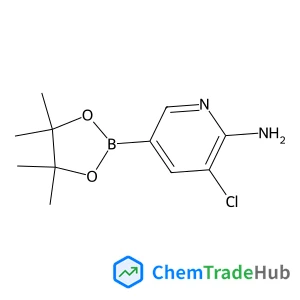
3-Chloro-5-(4,4,5,5-tetramethyl-1,3,2-dioxaborolan-2-yl)-2-pyridinamine
CAS Number:
1032758-99-8
Molecular Formula:
C11H16BClN2O2

2-(4-Chlorophenyl)-4-(dimethylamino)-2-(2-(dimethylamino)ethyl)butanenitrile
CAS Number:
1246816-57-8
Molecular Formula:
C16H24ClN3
Recommended Suppliers




Disclaimer
This page provides academic journal information for reference and research purposes only. We are not affiliated with any journal publishers and do not handle publication submissions. For publication-related inquiries, please contact the respective journal publishers directly.
If you notice any inaccuracies in the information displayed, please contact us at support@chemtradehub.com. We will promptly review and address your concerns.