


The electrochemical oxidation of toluene catalysed by Co(ii) in N-butyl-N-methylpyrrolidinium bis(trifluoromethylsulfonyl)imide‡
Literature Information
Publication Date
2015-10-29
DOI
10.1039/C5CP04151A
Impact Factor
3.676
Authors
S. Balaji, K. Kannan, I. S. Moon
View Original
Abstract
The electrochemical oxidation of toluene in N-butyl-N-methylpyrrolidinium bis(trifluoromethylsulfonyl)imide ([bmpyr]+[Ntf2]−) was investigated by using cyclic voltammetry and galvanostatic electrolysis in the presence of Co(II) at a Pt disc working electrode. Cyclic voltammetry (CV) investigations revealed that Co(II)–Co(III) oxidation is a diffusion controlled electron transfer process. The diffusion coefficient values of Co(II) were found to increase from 0.38 × 10⁻⁷ to 1.9 × 10⁻⁷ cm2 s−1 as the temperature was increased from 25 °C to 80 °C. The CV peak current for toluene electro-oxidation increased by nearly 7 fold in the presence of Co(II) demonstrating a good catalytic effect. Co(II) catalysed galvanostatic electrolysis of toluene at room temperature has shown that benzaldehyde was formed along with a small quantity of 3-methyl-1-hexanol.
Recommended Journals

Drug Discovery Today

Acta Materialia

Journal of Peptide Science

Russian Journal of Organic Chemistry

New Journal of Chemistry

Russian Journal of Coordination Chemistry

Current Opinion in Colloid & Interface Science

Russian Journal of General Chemistry

Organic Process Research & Development

Russian Journal of Applied Chemistry
Related Literature
Mechanism of nuclear spin initiated para-H2 to ortho-H2 conversion
G. Buntkowsky, B. Walaszek, A. Adamczyk, Y. Xu, H.-H. Limbach, B. Chaudret
2006-03-14
Paper
DOI: 10.1039/B601594H
REMPI-TOF studies of the translational anisotropy and the polarization of the O (1D2) photofragment angular momentum following ozone photolysis at 298 nm
W. Denzer, S. J. Horrocks, P. J. Pearson, G. A. D. Ritchie
2006-03-15
Paper
DOI: 10.1039/B517523B
Biomimetic synthesis of silica nanospheres depends on the aggregation and phase separation of polyamines in aqueous solution
Eike Brunner, Katharina Lutz, Manfred Sumper
2004-01-20
Paper
DOI: 10.1039/B313261G
The nature of water on surfaces of laboratory systems and implications for heterogeneous chemistry in the troposphere
Ann Louise Sumner, Erik J. Menke, Yael Dubowski, John T. Newberg, Reginald M. Penner, John C. Hemminger, Lisa M. Wingen, Theo Brauers, Barbara J. Finlayson-Pitts
2004-01-12
Paper
DOI: 10.1039/B308125G
The solubilisation behaviour of some dichloroalkanes in aqueous solutions of PEO–PPO–PEO triblock copolymers: a dynamic light scattering, fluorescence spectroscopy, and SANS study
M. Gradzielski
2006-04-11
Paper
DOI: 10.1039/B516242B
Pressure perturbation calorimetic studies of the solvation properties and the thermal unfolding of staphylococcal nuclease
Revanur Ravindra, Catherine Royer, Roland Winter
2004-01-23
Paper
DOI: 10.1039/B314172A
Zeta potential and photocatalytic activity of nitrogen doped TiO2 thin films
Ayako Ikezawa, Hiroki Tobimatsu, Hiroshi Irie, Kazuhito Hashimoto
2004-01-26
Paper
DOI: 10.1039/B314692H
Substituent effects on the electrocatalytic reduction of oxygen on quinone-modified glassy carbon electrodes
Fakhradin Mirkhalaf, Kaido Tammeveski, David J. Schiffrin
2004-02-23
Paper
DOI: 10.1039/B315963A
A spectroscopic study of the interaction catalase–cationic surfactant (n-decyltrimethylammonium bromide) in aqueous solutions at different pH and temperatures
Gerardo Prieto, María J. Suárez, Alfredo González-Pérez, Juan M. Ruso, Félix Sarmiento
2004-01-22
Paper
DOI: 10.1039/B308466C
You might also like
Compound Q&A
Is 6-(3-Fluorophenyl)picolinic acid (CAS: 887982-40-3) safe?
6-(3-Fluorophenyl)picolinic acid is generally considered safe for laboratory use...
887982-40-36-(3-Fluorophenyl)pi...
Compound Q&A
What industries use (3R)-3-Pyrrolidinol (CAS: 2799-21-5)?
(3R)-3-Pyrrolidinol is used in the pharmaceutical industry as a precursor for dr...
2799-21-5(3R)-3-Pyrrolidinol
Compound Q&A
What precautions should be taken when handling (4R,5R)-4,5-Diethoxycarbonyl-2,2-dimethyldioxolane (CAS: 59779-75-8)?
When handling (4R,5R)-4,5-Diethoxycarbonyl-2,2-dimethyldioxolane (CAS: 59779-75-...
59779-75-8(4R,5R)-4,5-Diethoxy...
Compound Q&A
How is 1-(6-Chloroimidazo[1,2-b]pyridazin-3-yl)ethanone (CAS: 90734-71-7) typically synthesized?
1-(6-Chloroimidazo[1,2-b]pyridazin-3-yl)ethanone is often synthesized via a mult...
90734-71-71-(6-Chloroimidazo[1...
Compound Q&A
What is the market or research trend for N-Ethyl-3,4-dimethylbenzylamine (CAS: 39180-83-1)?
The market for N-Ethyl-3,4-dimethylbenzylamine (CAS: 39180-83-1) remains steady,...
39180-83-1N-Ethyl-3,4-dimethyl...
Compound Q&A
What is Tert-butyl 3-(pyrrolidin-1-yl)azetidine-1-carboxylate (CAS: 1019008-21-9)?
Tert-butyl 3-(pyrrolidin-1-yl)azetidine-1-carboxylate is a chemical compound wit...
1019008-21-9Tert-butyl 3-(pyrrol...
Compound Q&A
What regulatory guidelines apply to 1-Bromo-3-chloro-2,4-dimethoxybenzene (CAS: 1228956-93-1)?
1-Bromo-3-chloro-2,4-dimethoxybenzene (CAS: 1228956-93-1) falls under the classi...
1228956-93-11-Bromo-3-chloro-2,4...
Compound Q&A
Is 8-Bromo-2-methyl-3,4-dihydroisoquinolin-1(2H)-one (CAS: 1368622-07-4) safe?
The safety of 8-Bromo-2-methyl-3,4-dihydroisoquinolin-1(2H)-one (CAS: 1368622-07...
1368622-07-48-Bromo-2-methyl-3,4...
Compound Q&A
Is Benzyl [(3S)-2,6-dioxo-3-piperidinyl]carbamate (CAS: 22785-43-9) safe?
Benzyl [(3S)-2,6-dioxo-3-piperidinyl]carbamate is generally safe when handled wi...
22785-43-9Benzyl [(3S)-2,6-dio...
Compound Q&A
How should 1-{[4-(4,4,5,5-Tetramethyl-1,3,2-dioxaborolan-2-yl)phenyl]sulfonyl}pyrrolidine (CAS: 928657-21-0) be stored?
1-{[4-(4,4,5,5-Tetramethyl-1,3,2-dioxaborolan-2-yl)phenyl]sulfonyl}pyrrolidine s...
928657-21-01-{[4-(4,4,5,5-Tetra...
Source Journal
Physical Chemistry Chemical Physics

CiteScore:
5.5
Self-citation Rate:
10.3%
Articles per Year:
3036
Physical Chemistry Chemical Physics (PCCP) is an international journal co-owned by 19 physical chemistry and physics societies from around the world. This journal publishes original, cutting-edge research in physical chemistry, chemical physics and biophysical chemistry. To be suitable for publication in PCCP, articles must include significant innovation and/or insight into physical chemistry; this is the most important criterion that reviewers and Editors will judge against when evaluating submissions. The journal has a broad scope and welcomes contributions spanning experiment, theory, computation and data science. Topical coverage includes spectroscopy, dynamics, kinetics, statistical mechanics, thermodynamics, electrochemistry, catalysis, surface science, quantum mechanics, quantum computing and machine learning. Interdisciplinary research areas such as polymers and soft matter, materials, nanoscience, energy, surfaces/interfaces, and biophysical chemistry are welcomed if they demonstrate significant innovation and/or insight into physical chemistry. Joined experimental/theoretical studies are particularly appreciated when complementary and based on up-to-date approaches.
Recommended Compounds
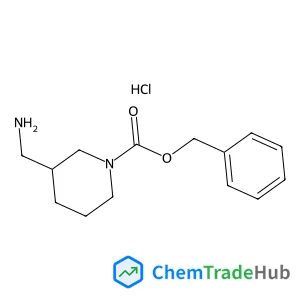
Benzyl 3-(aminomethyl)piperidine-1-carboxylate hydrochloride
CAS Number:
1186663-23-9
Molecular Formula:
C14H21ClN2O2
![4-[(2,4-Dihydroxyphenyl)diazenyl]-5-hydroxy-2,7-naphthalenedisulfonic acid structure](https://static.chemtradehub.com/structs/362/3627-01-8-79ac.webp "4-[(2,4-Dihydroxyphenyl)diazenyl]-5-hydroxy-2,7-naphthalenedisulfonic acid structure")
4-[(2,4-Dihydroxyphenyl)diazenyl]-5-hydroxy-2,7-naphthalenedisulfonic acid
CAS Number:
3627-01-8
Molecular Formula:
C16H12N2O9S2
Recommended Suppliers





Disclaimer
This page provides academic journal information for reference and research purposes only. We are not affiliated with any journal publishers and do not handle publication submissions. For publication-related inquiries, please contact the respective journal publishers directly.
If you notice any inaccuracies in the information displayed, please contact us at support@chemtradehub.com. We will promptly review and address your concerns.