












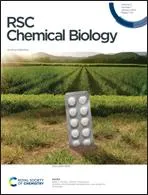
Wheat pathogen Zymoseptoria tritici N-myristoyltransferase inhibitors: on-target antifungal activity and an unusual metabolic defense mechanism
Literature Information
Publication Date
2020-05-13
DOI
10.1039/D0CB00020E
Impact Factor
0
Authors
Cory A. Ocasio, Benjamin Strutton, Jo Mattocks, Andrew J. Corran
View Original
Abstract
Zymoseptoria tritici is the causative agent of Septoria tritici blotch (STB), which costs billions of dollars annually to major wheat-producing countries in terms of both fungicide use and crop loss. Agricultural pathogenic fungi have acquired resistance to most commercially available fungicide classes, and the rate of discovery and development of new fungicides has stalled, demanding new approaches and insights. Here we investigate a potential mechanism of targeting an important wheat pathogen Z. tritici via inhibition of N-myristoyltransferase (NMT). We characterize Z. tritici NMT biochemically for the first time, profile the in vivo Z. tritici myristoylated proteome and identify and validate the first Z. tritici NMT inhibitors. Proteomic investigation of the downstream effects of NMT inhibition identified an unusual and novel mechanism of defense against chemical toxicity in Z. tritici through the application of comparative bioinformatics to deconvolute function from the previously largely unannotated Z. tritici proteome. Research into novel fungicidal modes-of-action is essential to satisfy an urgent unmet need for novel fungicide targets, and we anticipate that this study will serve as a useful proteomics and bioinformatics resource for researchers studying Z. tritici.
Related Literature
Conformational studies of poly(vinylidene fluoride), poly(trifluoroethylene) and poly(vinylidene fluoride-co-trifluoroethylene) using density functional theory
Martin Bohlén, Kim Bolton
2014-05-15
Paper
DOI: 10.1039/C4CP01012D
Modification of the surface chemistry of single- and multi-walled carbon nanotubes by HNO3 and H2SO4 hydrothermal oxidation for application in direct contact membrane distillation
Sergio Morales-Torres, Tânia L. S. Silva, Luisa M. Pastrana-Martínez, Ana T. S. C. Brandão, José L. Figueiredo, Adrián M. T. Silva
2014-04-17
Paper
DOI: 10.1039/C4CP00615A
Graphene oxide as an anti-shrinkage additive for resorcinol–formaldehyde composite aerogels
Kang Guo, Huaihe Song, Xiaohong Chen, Xian Du, Liang Zhong
2014-03-26
Paper
DOI: 10.1039/C4CP00592A
Quantum study of boron nitride nanotubes functionalized with anticancer molecules
Eric Duverger, Tijani Gharbi, Eric Delabrousse, Fabien Picaud
2014-07-16
Paper
DOI: 10.1039/C4CP01660B
Optical manipulation of single molecules in the living cell
Kamilla Norregaard, Liselotte Jauffred, Kirstine Berg-Sørensen, Lene B. Oddershede
2014-03-10
Review Article
DOI: 10.1039/C4CP00208C
A QM/MM MD study of the pH-dependent ring-opening catalysis and lid motif flexibility in glucosamine 6-phosphate deaminase
Yuan Zhao, Nanhao Chen, Ruibo Wu, Zexing Cao
2014-07-15
Paper
DOI: 10.1039/C4CP01609B
Chemically-bound xenon in fibrous silica
Jaroslaw Kalinowski, Markku Räsänen
2014-04-30
Paper
DOI: 10.1039/C4CP01355G
The effect of nitrogen doping on mercury oxidation/chemical adsorption on the CuCo2O4(110) surface: a molecular-level description
Zhijian Mei, Ruiqing Zhang, Zhemin Shen, Wenhua Wang
2014-05-23
Paper
DOI: 10.1039/C4CP01362J
Superbasicity of silylene derivatives achieved via non-covalent intramolecular cation⋯π interactions and exploited as molecular containers for CO2
Rabindranath Lo, Mrinal Kanti Si
2014-05-07
Paper
DOI: 10.1039/C4CP01394H
Charge carrier mobility in organic molecular materials probed by electromagnetic waves
Shu Seki, Akinori Saeki, Tsuneaki Sakurai, Daisuke Sakamaki
2014-04-08
Perspective
DOI: 10.1039/C4CP00473F
You might also like
Compound Q&A
What are the main uses of 1-(3-Aminophenyl)-3-[(3R)-1-(3,3-dimethyl-2-oxobutyl)-2-oxo-5-(2-pyridinyl)-2,3-dihydro-1H-1,4-benzodiazepin-3-yl]urea (CAS: 155412-88-7)?
This compound is mainly used as an intermediate in the synthesis of antipsychoti...
155412-88-71-(3-Aminophenyl)-3-...
Compound Q&A
How should waste containing 1-(D-Ribofuranosyl)-1,4-dihydro-3-pyridinecarboxamide (CAS: 19132-12-8) be handled?
Waste containing 1-(D-Ribofuranosyl)-1,4-dihydro-3-pyridinecarboxamide (CAS: 191...
19132-12-81-(D-Ribofuranosyl)-...
Compound Q&A
What regulatory guidelines apply to 2-Methyl-2-propanyl 3-bromo-3-(hydroxymethyl)-1-azetidinecarboxylate (CAS: 2007919-81-3)?
2-Methyl-2-propanyl 3-bromo-3-(hydroxymethyl)-1-azetidinecarboxylate (CAS: 20079...
2007919-81-32-Methyl-2-propanyl ...
Compound Q&A
What is N-(4-Chloro-2-pyridinyl)acetamide (CAS: 245056-66-0)?
N-(4-Chloro-2-pyridinyl)acetamide (CAS: 245056-66-0) is a chemical compound with...
245056-66-0N-(4-Chloro-2-pyridi...
Compound Q&A
What is 5-Chloro-2-hydroxybenzoic acid (CAS: 321-14-2)?
5-Chloro-2-hydroxybenzoic acid, also known as 5-chlorosalicylic acid, is an arom...
321-14-25-Chloro-2-hydroxybe...
Compound Q&A
What precautions should be taken when handling 1,1-Dichloro-1-fluoroethane (CAS: 1717-00-6)?
When handling 1,1-Dichloro-1-fluoroethane (CAS: 1717-00-6), it is important to u...
1717-00-61,1-Dichloro-1-fluor...
Compound Q&A
What are the physical and chemical properties of Fmoc-(2S,3R)-3-phenylpyrrolidine-2-carboxylic acid (CAS: 281655-32-1)?
Fmoc-(2S,3R)-3-phenylpyrrolidine-2-carboxylic acid is a white crystalline solid ...
281655-32-1Fmoc-(2S,3R)-3-pheny...
Compound Q&A
What are the main uses of 4-Amino-5-bromo-2-pyridinecarboxylic acid (CAS: 1363381-01-4)?
4-Amino-5-bromo-2-pyridinecarboxylic acid is primarily used as a precursor in th...
1363381-01-44-Amino-5-bromo-2-py...
Compound Q&A
What precautions should be taken when handling (S)-tert-butyl 2-((2-(4-bromophenyl)-2-oxoethyl)carbamoyl)pyrrolidine-1-carboxylate (CAS: 1007881-98-2)?
Handling this compound should be done with personal protective equipment (PPE) i...
1007881-98-2(S)-tert-butyl 2-((2...
Compound Q&A
What precautions should be taken when handling 8-bromo-2,2-dimethyl-3,4-dihydro-2H-1,4-benzoxazin-3-one (CAS: 688363-73-7)?
When handling 8-bromo-2,2-dimethyl-3,4-dihydro-2H-1,4-benzoxazin-3-one, use prop...
688363-73-78-bromo-2,2-dimethyl...
Source Journal
Recommended Compounds
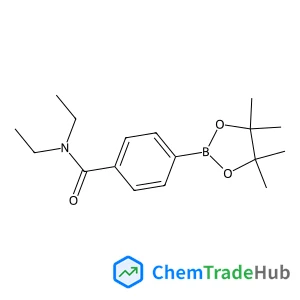
N,N-Diethyl-4-(4,4,5,5-tetramethyl-1,3,2-dioxaborolan-2-yl)benzamide
CAS Number:
325142-99-2
Molecular Formula:
C17H26BNO3
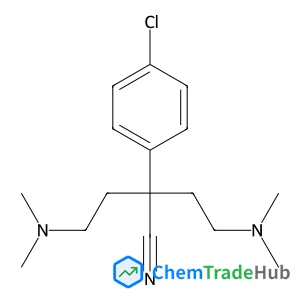
2-(4-Chlorophenyl)-4-(dimethylamino)-2-(2-(dimethylamino)ethyl)butanenitrile
CAS Number:
1246816-57-8
Molecular Formula:
C16H24ClN3
![Pyrazolo[1,5-a]pyridine-3-carbothioamide structure](https://static.chemtradehub.com/structs/885/885275-44-5-aae0.webp "Pyrazolo[1,5-a]pyridine-3-carbothioamide structure")
Recommended Suppliers




Disclaimer
This page provides academic journal information for reference and research purposes only. We are not affiliated with any journal publishers and do not handle publication submissions. For publication-related inquiries, please contact the respective journal publishers directly.
If you notice any inaccuracies in the information displayed, please contact us at support@chemtradehub.com. We will promptly review and address your concerns.