











The effect of nitrogen doping on mercury oxidation/chemical adsorption on the CuCo2O4(110) surface: a molecular-level description
Literature Information
Publication Date
2014-05-23
DOI
10.1039/C4CP01362J
Impact Factor
3.676
Authors
Zhijian Mei, Ruiqing Zhang, Zhemin Shen, Wenhua Wang
View Original
Abstract
Based on density functional theory (DFT) calculations, the detailed mercury oxidation/chemical adsorption mechanisms on the N-doped CuCo2O4(110) surface are studied. The DFT calculations show that Ow (bonded with one Cu2+ ion and one Co3+ ion) is far more active than Os (bonded with three Co3+ ions) and the mercury oxidation/chemical adsorption activation energy (Ea) on the virgin CuCo2O4(110) surface involving Ow is 0.85 eV. The physically adsorbed mercury overcomes the Ea and enters the energy well that plays an important role in mercury oxidation/chemical adsorption. Nitrogen doping can greatly increase the activity of Ow and decrease the activity of Os at the same time, which greatly affect the mercury oxidation/chemical adsorption abilities on the CuCo2O4(110) surface, and the Ea variation of mercury oxidation/chemical adsorption is as follows: 0.85 eV (virgin CuCo2O4(110)) → 0.76 eV (one N-doped CuCo2O4(110)) → 0.69 eV (two N-doped CuCo2O4(110)) → 0.48 eV (three N-doped CuCo2O4(110)). In addition, N-doping can decrease the adsorption energy of mercury and mercuric oxide. The effect of N-doping on the bonding mechanism of mercury adsorption on the CuCo2O4(110) surface is analyzed by the local density of state (LDOS) and the natural bonding orbital (NBO). The calculation results correspond well to the experimental data.
Related Literature
A sinter-resistant catalyst using an alumina support recycled from AlP fumigation residue: trash to treasure
Jinshi Dong, Jun Wang, Jianqiang Wang, Guanghao Cheng, Tianming Huang
2018-03-27
Paper
DOI: 10.1039/C8CP00111A
Rationalisation of the optical signatures of nor-dihydroxanthene-hemicyanine fused near-infrared fluorophores by first-principle tools
Cloé Azarias, Isabelle Navizet, Paul Fleurat-Lessard, Boris Le Guennic, Jean-Alexandre Richard, Denis Jacquemin
2018-04-03
Paper
DOI: 10.1039/C8CP01587B
A thermostated cell for electrochemistry: minimising natural convection and investigating the role of evaporation and radiation
Xiuting Li, Christopher Batchelor-McAuley, Javor K. Novev, Richard G. Compton
2018-04-10
Paper
DOI: 10.1039/C8CP01360H
A DFT study on Zr-SBA-15 catalyzed conversion of ethanol to 1,3-butadiene
2018-04-09
Paper
DOI: 10.1039/C7CP08620B
The influence of the size and symmetry of cations and anions on the physicochemical behavior of organic ionic plastic crystal electrolytes mixed with sodium salts
F. Makhlooghiazad, J. Guazzagaloppa, L. A. O’Dell, R. Yunis, A. Basile, P. C. Howlett, M. Forsyth
2018-01-25
Paper
DOI: 10.1039/C7CP06971E
Comparing ammonia diffusion in NH3-SCR zeolite catalysts: a quasielastic neutron scattering and molecular dynamics simulation study
M. Sarwar, J. Armstrong, A. P. E. York, I. Hitchcock
2018-03-29
Paper
DOI: 10.1039/C8CP01022F
Hittorf's violet phosphorene as a promising candidate for optoelectronic and photocatalytic applications: first-principles characterization
Yi-Lin Lu, Wei Zhou, Shuhua Dai, Baozeng Zhou, Hui Zhao, Ping Wu
2018-03-28
Paper
DOI: 10.1039/C8CP01364K
Modifying bis(triflimide) ionic liquids by dissolving early transition metal carbamates
Cinzia Chiappe, Christian Silvio Pomelli
2018-01-18
Paper
DOI: 10.1039/C7CP07289A
An Sn-induced resonant level in β-As2Te3
Bartlomiej Wiendlocha, Jean-Baptiste Vaney, Christophe Candolfi, Anne Dauscher, Bertrand Lenoir, Janusz Tobola
2018-04-27
Paper
DOI: 10.1039/C8CP00431E
Newly proposed proton-abstraction roundabout with backside attack mechanism for the SN2 reaction at the nitrogen center in F− + NH2Cl
Yongfang Li, Dunyou Wang
2018-04-04
Paper
DOI: 10.1039/C8CP01201F
You might also like
Compound Q&A
What are the main uses of 1-(3-Aminophenyl)-3-[(3R)-1-(3,3-dimethyl-2-oxobutyl)-2-oxo-5-(2-pyridinyl)-2,3-dihydro-1H-1,4-benzodiazepin-3-yl]urea (CAS: 155412-88-7)?
This compound is mainly used as an intermediate in the synthesis of antipsychoti...
155412-88-71-(3-Aminophenyl)-3-...
Compound Q&A
How should waste containing 1-(D-Ribofuranosyl)-1,4-dihydro-3-pyridinecarboxamide (CAS: 19132-12-8) be handled?
Waste containing 1-(D-Ribofuranosyl)-1,4-dihydro-3-pyridinecarboxamide (CAS: 191...
19132-12-81-(D-Ribofuranosyl)-...
Compound Q&A
What regulatory guidelines apply to 2-Methyl-2-propanyl 3-bromo-3-(hydroxymethyl)-1-azetidinecarboxylate (CAS: 2007919-81-3)?
2-Methyl-2-propanyl 3-bromo-3-(hydroxymethyl)-1-azetidinecarboxylate (CAS: 20079...
2007919-81-32-Methyl-2-propanyl ...
Compound Q&A
What is N-(4-Chloro-2-pyridinyl)acetamide (CAS: 245056-66-0)?
N-(4-Chloro-2-pyridinyl)acetamide (CAS: 245056-66-0) is a chemical compound with...
245056-66-0N-(4-Chloro-2-pyridi...
Compound Q&A
What is 5-Chloro-2-hydroxybenzoic acid (CAS: 321-14-2)?
5-Chloro-2-hydroxybenzoic acid, also known as 5-chlorosalicylic acid, is an arom...
321-14-25-Chloro-2-hydroxybe...
Compound Q&A
What precautions should be taken when handling 1,1-Dichloro-1-fluoroethane (CAS: 1717-00-6)?
When handling 1,1-Dichloro-1-fluoroethane (CAS: 1717-00-6), it is important to u...
1717-00-61,1-Dichloro-1-fluor...
Compound Q&A
What are the physical and chemical properties of Fmoc-(2S,3R)-3-phenylpyrrolidine-2-carboxylic acid (CAS: 281655-32-1)?
Fmoc-(2S,3R)-3-phenylpyrrolidine-2-carboxylic acid is a white crystalline solid ...
281655-32-1Fmoc-(2S,3R)-3-pheny...
Compound Q&A
What are the main uses of 4-Amino-5-bromo-2-pyridinecarboxylic acid (CAS: 1363381-01-4)?
4-Amino-5-bromo-2-pyridinecarboxylic acid is primarily used as a precursor in th...
1363381-01-44-Amino-5-bromo-2-py...
Compound Q&A
What precautions should be taken when handling (S)-tert-butyl 2-((2-(4-bromophenyl)-2-oxoethyl)carbamoyl)pyrrolidine-1-carboxylate (CAS: 1007881-98-2)?
Handling this compound should be done with personal protective equipment (PPE) i...
1007881-98-2(S)-tert-butyl 2-((2...
Compound Q&A
What precautions should be taken when handling 8-bromo-2,2-dimethyl-3,4-dihydro-2H-1,4-benzoxazin-3-one (CAS: 688363-73-7)?
When handling 8-bromo-2,2-dimethyl-3,4-dihydro-2H-1,4-benzoxazin-3-one, use prop...
688363-73-78-bromo-2,2-dimethyl...
Source Journal
Physical Chemistry Chemical Physics

CiteScore:
5.5
Self-citation Rate:
10.3%
Articles per Year:
3036
Physical Chemistry Chemical Physics (PCCP) is an international journal co-owned by 19 physical chemistry and physics societies from around the world. This journal publishes original, cutting-edge research in physical chemistry, chemical physics and biophysical chemistry. To be suitable for publication in PCCP, articles must include significant innovation and/or insight into physical chemistry; this is the most important criterion that reviewers and Editors will judge against when evaluating submissions. The journal has a broad scope and welcomes contributions spanning experiment, theory, computation and data science. Topical coverage includes spectroscopy, dynamics, kinetics, statistical mechanics, thermodynamics, electrochemistry, catalysis, surface science, quantum mechanics, quantum computing and machine learning. Interdisciplinary research areas such as polymers and soft matter, materials, nanoscience, energy, surfaces/interfaces, and biophysical chemistry are welcomed if they demonstrate significant innovation and/or insight into physical chemistry. Joined experimental/theoretical studies are particularly appreciated when complementary and based on up-to-date approaches.
Recommended Compounds
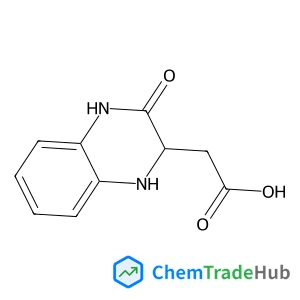
(3-Oxo-1,2,3,4-tetrahydro-2-quinoxalinyl)acetic acid
CAS Number:
136584-14-0
Molecular Formula:
C10H10N2O3

N,N-Diethyl-4-(4,4,5,5-tetramethyl-1,3,2-dioxaborolan-2-yl)benzamide
CAS Number:
325142-99-2
Molecular Formula:
C17H26BNO3
Recommended Suppliers




Disclaimer
This page provides academic journal information for reference and research purposes only. We are not affiliated with any journal publishers and do not handle publication submissions. For publication-related inquiries, please contact the respective journal publishers directly.
If you notice any inaccuracies in the information displayed, please contact us at support@chemtradehub.com. We will promptly review and address your concerns.