












A QM/MM MD study of the pH-dependent ring-opening catalysis and lid motif flexibility in glucosamine 6-phosphate deaminase
Literature Information
Publication Date
2014-07-15
DOI
10.1039/C4CP01609B
Impact Factor
3.676
Authors
Yuan Zhao, Nanhao Chen, Ruibo Wu, Zexing Cao
View Original
Abstract
The glucosamine 6-phosphate deaminase (NagB), which catalyzes the conversion of D-glucosamine 6-phosphate (GlcN6P) into D-fructose 6-phosphate (F6P) and ammonia, determines the final metabolic fate of N-acetylglucosamine (GlcNAc). Here using state-of-the-art ab initio QM/MM MD simulations, we have explored the plausible mechanisms for the enzymatic ring-opening of GlcN6P in the basic environment. Two different proton-shuttle mechanisms have been proposed. Calculations show that the protonated state of the amino group in the substrate dominates the concerted and stepwise catalytic pathways and a catalytic triad plays an important role in mediating the proton transfer and the resulting ring-opening process. The free energy barrier for the rate-determining step in the low-energy stepwise reaction is 17.9 kcal mol−1. In acidic solution, the lid motif prefers a closed state while it always stays in the open state in basic solution upon substrate binding, which is basically dominated by the protonated state of the residue His145.
Related Literature
Examination of inequivalent wetting on the crystal habit surfaces of RS-ibuprofen using grid-based molecular modelling
I. Rosbottom, J. H. Pickering, B. Etbon, R. B. Hammond, K. J. Roberts
2018-04-17
Paper
DOI: 10.1039/C7CP08354H
An Sn-induced resonant level in β-As2Te3
Bartlomiej Wiendlocha, Jean-Baptiste Vaney, Christophe Candolfi, Anne Dauscher, Bertrand Lenoir, Janusz Tobola
2018-04-27
Paper
DOI: 10.1039/C8CP00431E
A non-tight chemomechanical coupling model for force-dependence of movement dynamics of molecular motors
Hong Chen
2018-01-17
Paper
DOI: 10.1039/C7CP05557A
A novel nonlinear nano-scale wear law for metallic brake pads
Sandeep P. Patil, Sri Harsha Chilakamarri, Bernd Markert
2018-04-12
Paper
DOI: 10.1039/C8CP01061G
Molecular structure and adsorption of dimethyl sulfoxide at the air/aqueous solution interface probed by non-resonant second harmonic generation
Qianshun Wei, Dexia Zhou, Hongtao Bian
2018-03-27
Paper
DOI: 10.1039/C8CP00099A
Correction: The stability of biradicaloid versus closed-shell [E(μ-XR)]2 (E = P, As; X = N, P, As) rings. Does aromaticity play a role?
Rafael Grande-Aztatzi, Jose M. Mercero, Jesus M. Ugalde
2018-04-20
Correction
DOI: 10.1039/C8CP91727B
Electron-density distributions in selected ferrocenyl-pyrazolyl late transition-metal complexes
M. A. Peck, G. R. Hearne, C. Obuah, J. Darkwa
2018-03-27
Paper
DOI: 10.1039/C8CP01135D
Two-photon spectroscopy of the NaLi triplet ground state
Sepehr Ebadi
2018-01-22
Paper
DOI: 10.1039/C7CP08481A
Full-dimensional quantum mechanics calculations for the spectroscopic characterization of the isomerization transition states of HOCO/DOCO systems
Dandan Ma, Haisheng Ren, Jianyi Ma
2018-01-19
Paper
DOI: 10.1039/C7CP07673H
Multi-fuel surrogate chemical kinetic mechanisms for real world applications
Charles K. Westbrook, Marco Mehl, William J. Pitz, Goutham Kukkadapu, Scott Wagnon, Kuiwen Zhang
2018-01-24
Perspective
DOI: 10.1039/C7CP07901J
You might also like
Compound Q&A
What are the main uses of 1-(3-Aminophenyl)-3-[(3R)-1-(3,3-dimethyl-2-oxobutyl)-2-oxo-5-(2-pyridinyl)-2,3-dihydro-1H-1,4-benzodiazepin-3-yl]urea (CAS: 155412-88-7)?
This compound is mainly used as an intermediate in the synthesis of antipsychoti...
155412-88-71-(3-Aminophenyl)-3-...
Compound Q&A
How should waste containing 1-(D-Ribofuranosyl)-1,4-dihydro-3-pyridinecarboxamide (CAS: 19132-12-8) be handled?
Waste containing 1-(D-Ribofuranosyl)-1,4-dihydro-3-pyridinecarboxamide (CAS: 191...
19132-12-81-(D-Ribofuranosyl)-...
Compound Q&A
What regulatory guidelines apply to 2-Methyl-2-propanyl 3-bromo-3-(hydroxymethyl)-1-azetidinecarboxylate (CAS: 2007919-81-3)?
2-Methyl-2-propanyl 3-bromo-3-(hydroxymethyl)-1-azetidinecarboxylate (CAS: 20079...
2007919-81-32-Methyl-2-propanyl ...
Compound Q&A
What is N-(4-Chloro-2-pyridinyl)acetamide (CAS: 245056-66-0)?
N-(4-Chloro-2-pyridinyl)acetamide (CAS: 245056-66-0) is a chemical compound with...
245056-66-0N-(4-Chloro-2-pyridi...
Compound Q&A
What is 5-Chloro-2-hydroxybenzoic acid (CAS: 321-14-2)?
5-Chloro-2-hydroxybenzoic acid, also known as 5-chlorosalicylic acid, is an arom...
321-14-25-Chloro-2-hydroxybe...
Compound Q&A
What precautions should be taken when handling 1,1-Dichloro-1-fluoroethane (CAS: 1717-00-6)?
When handling 1,1-Dichloro-1-fluoroethane (CAS: 1717-00-6), it is important to u...
1717-00-61,1-Dichloro-1-fluor...
Compound Q&A
What are the physical and chemical properties of Fmoc-(2S,3R)-3-phenylpyrrolidine-2-carboxylic acid (CAS: 281655-32-1)?
Fmoc-(2S,3R)-3-phenylpyrrolidine-2-carboxylic acid is a white crystalline solid ...
281655-32-1Fmoc-(2S,3R)-3-pheny...
Compound Q&A
What are the main uses of 4-Amino-5-bromo-2-pyridinecarboxylic acid (CAS: 1363381-01-4)?
4-Amino-5-bromo-2-pyridinecarboxylic acid is primarily used as a precursor in th...
1363381-01-44-Amino-5-bromo-2-py...
Compound Q&A
What precautions should be taken when handling (S)-tert-butyl 2-((2-(4-bromophenyl)-2-oxoethyl)carbamoyl)pyrrolidine-1-carboxylate (CAS: 1007881-98-2)?
Handling this compound should be done with personal protective equipment (PPE) i...
1007881-98-2(S)-tert-butyl 2-((2...
Compound Q&A
What precautions should be taken when handling 8-bromo-2,2-dimethyl-3,4-dihydro-2H-1,4-benzoxazin-3-one (CAS: 688363-73-7)?
When handling 8-bromo-2,2-dimethyl-3,4-dihydro-2H-1,4-benzoxazin-3-one, use prop...
688363-73-78-bromo-2,2-dimethyl...
Source Journal
Physical Chemistry Chemical Physics

CiteScore:
5.5
Self-citation Rate:
10.3%
Articles per Year:
3036
Physical Chemistry Chemical Physics (PCCP) is an international journal co-owned by 19 physical chemistry and physics societies from around the world. This journal publishes original, cutting-edge research in physical chemistry, chemical physics and biophysical chemistry. To be suitable for publication in PCCP, articles must include significant innovation and/or insight into physical chemistry; this is the most important criterion that reviewers and Editors will judge against when evaluating submissions. The journal has a broad scope and welcomes contributions spanning experiment, theory, computation and data science. Topical coverage includes spectroscopy, dynamics, kinetics, statistical mechanics, thermodynamics, electrochemistry, catalysis, surface science, quantum mechanics, quantum computing and machine learning. Interdisciplinary research areas such as polymers and soft matter, materials, nanoscience, energy, surfaces/interfaces, and biophysical chemistry are welcomed if they demonstrate significant innovation and/or insight into physical chemistry. Joined experimental/theoretical studies are particularly appreciated when complementary and based on up-to-date approaches.
Recommended Compounds
![tert-Butyl N-[(2-chloropyridin-4-yl)methyl]carbamate structure](https://static.chemtradehub.com/structs/916/916210-27-0-9f95.webp "tert-Butyl N-[(2-chloropyridin-4-yl)methyl]carbamate structure")
tert-Butyl N-[(2-chloropyridin-4-yl)methyl]carbamate
CAS Number:
916210-27-0
Molecular Formula:
C11H15ClN2O2

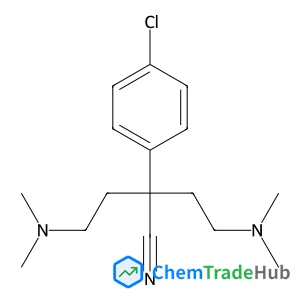
2-(4-Chlorophenyl)-4-(dimethylamino)-2-(2-(dimethylamino)ethyl)butanenitrile
CAS Number:
1246816-57-8
Molecular Formula:
C16H24ClN3
Recommended Suppliers




Disclaimer
This page provides academic journal information for reference and research purposes only. We are not affiliated with any journal publishers and do not handle publication submissions. For publication-related inquiries, please contact the respective journal publishers directly.
If you notice any inaccuracies in the information displayed, please contact us at support@chemtradehub.com. We will promptly review and address your concerns.