












Superbasicity of silylene derivatives achieved via non-covalent intramolecular cation⋯π interactions and exploited as molecular containers for CO2
Literature Information
Publication Date
2014-05-07
DOI
10.1039/C4CP01394H
Impact Factor
3.676
Authors
Rabindranath Lo, Mrinal Kanti Si
View Original
Abstract
We have reported for the first time designed silylene superbases involving intramolecular H+⋯π interaction using density functional theory (DFT) calculations. The non-covalent interactions augment the proton affinity values by ∼13 kcal mol−1 in the designed superbase (1) compared to the acyclic silylene, [:Si(NMe2)2]. These divalent Si(II) compounds can act as powerful neutral organic superbases in gas and solvent phases. The DFT calculations performed at the B3LYP/6-311+G**//B3LYP/6-31+G* level of theory showed that the gas phase proton affinity of the paracyclophane based silylene superbase (8) reaches up to ∼271.0 kcal mol−1, which is the highest in paracyclophane Si(II) compounds. In tetrahydrofuran solvent medium, the calculated proton affinity of 8 was found to be 301.4 kcal mol−1. The paracyclophane-based silylene systems are used for binding with small alkali metal ions. The calculated results showed that these systems selectively bind to lithium ions over sodium ions due to the small size of lithium ions which is well fitted in the space between the silicon atom and the phenyl ring. Furthermore, we have used the lithiated silylene 1 and 9 (which exhibits bis-protonation) for gas storage (CO and CO2). The calculated results showed both the lithiated silylene 1 and 9 bind preferentially to CO2 than CO. The calculated gravimetric density of CO2 is found to be 26.97 wt% for 9-Li2–(CO2)4. The energy decomposition analysis (EDA) has been performed to investigate the role of various contributing factors to the total binding strength of the CO2 or CO molecules with lithiated silylene superbases. EDA reveals that the electrostatic energy and polarization energy are the major driving force for higher total interaction energy of the lithiated-silylene–CO2 complex than the lithiated-silylene–CO complex. The lithiated silylene systems showed a higher binding energy with CO2 than the previously reported imidazopyridamine at the same level of theory. These results suggest that the lithiated silylene systems can be used as a more efficient CO2 storage material than the aforementioned system. The calculated desorption energies per CO2 and CO (ΔEDE) also indicate the recyclable property of the materials.
Related Literature
A novel nonlinear nano-scale wear law for metallic brake pads
Sandeep P. Patil, Sri Harsha Chilakamarri, Bernd Markert
2018-04-12
Paper
DOI: 10.1039/C8CP01061G
Dissociative electron attachment and electronic excitation in Fe(CO)5
M. Allan, M. Lacko, P. Papp, Š. Matejčík, M. Zlatar, I. I. Fabrikant, J. Kočišek, J. Fedor
2018-04-03
Paper
DOI: 10.1039/C8CP01387J
Electron-stimulated reactions in nanoscale water films adsorbed on α-Al2O3(0001)
Nikolay G. Petrik, Greg A. Kimmel
2018-04-11
Paper
DOI: 10.1039/C8CP01284A
The effect of aluminum and platinum additives on hydrogen adsorption on mesoporous silicates
Gérôme Melaet, Vitalie Stavila, Lennie Klebanoff
2018-04-12
Paper
DOI: 10.1039/C7CP07015B
H-Abstraction reactions by OH, HO2, O, O2 and benzyl radical addition to O2 and their implications for kinetic modelling of toluene oxidation
M. Pelucchi, C. Cavallotti, T. Faravelli, S. J. Klippenstein
2018-01-25
Paper
DOI: 10.1039/C7CP07779C
A catalytic role of surface silanol groups in CO2 capture on the amine-anchored silica support
Moses Cho, Joonho Park, Cafer T. Yavuz, Yousung Jung
2018-04-06
Paper
DOI: 10.1039/C7CP07973G
Structure and dynamics of water at water–graphene and water–hexagonal boron-nitride sheet interfaces revealed by ab initio sum-frequency generation spectroscopy
Tatsuhiko Ohto, Hirokazu Tada, Yuki Nagata
2018-04-20
Paper
DOI: 10.1039/C8CP01351A
Defects and impurities induced structural and electronic changes in pyrite CoS2: first principles studies
Shengwen Li, Yanning Zhang, Xiaobin Niu
2018-03-28
Paper
DOI: 10.1039/C8CP00443A
Ultrafast stimulated emission of nitrophenolates in organic and aqueous solutions
N. C. Michenfelder, H. A. Ernst, C. Schweigert, M. Olzmann, A.-N. Unterreiner
2018-01-10
Paper
DOI: 10.1039/C7CP07774B
You might also like
Compound Q&A
What are the main uses of 1-(3-Aminophenyl)-3-[(3R)-1-(3,3-dimethyl-2-oxobutyl)-2-oxo-5-(2-pyridinyl)-2,3-dihydro-1H-1,4-benzodiazepin-3-yl]urea (CAS: 155412-88-7)?
This compound is mainly used as an intermediate in the synthesis of antipsychoti...
155412-88-71-(3-Aminophenyl)-3-...
Compound Q&A
How should waste containing 1-(D-Ribofuranosyl)-1,4-dihydro-3-pyridinecarboxamide (CAS: 19132-12-8) be handled?
Waste containing 1-(D-Ribofuranosyl)-1,4-dihydro-3-pyridinecarboxamide (CAS: 191...
19132-12-81-(D-Ribofuranosyl)-...
Compound Q&A
What regulatory guidelines apply to 2-Methyl-2-propanyl 3-bromo-3-(hydroxymethyl)-1-azetidinecarboxylate (CAS: 2007919-81-3)?
2-Methyl-2-propanyl 3-bromo-3-(hydroxymethyl)-1-azetidinecarboxylate (CAS: 20079...
2007919-81-32-Methyl-2-propanyl ...
Compound Q&A
What is N-(4-Chloro-2-pyridinyl)acetamide (CAS: 245056-66-0)?
N-(4-Chloro-2-pyridinyl)acetamide (CAS: 245056-66-0) is a chemical compound with...
245056-66-0N-(4-Chloro-2-pyridi...
Compound Q&A
What is 5-Chloro-2-hydroxybenzoic acid (CAS: 321-14-2)?
5-Chloro-2-hydroxybenzoic acid, also known as 5-chlorosalicylic acid, is an arom...
321-14-25-Chloro-2-hydroxybe...
Compound Q&A
What precautions should be taken when handling 1,1-Dichloro-1-fluoroethane (CAS: 1717-00-6)?
When handling 1,1-Dichloro-1-fluoroethane (CAS: 1717-00-6), it is important to u...
1717-00-61,1-Dichloro-1-fluor...
Compound Q&A
What are the physical and chemical properties of Fmoc-(2S,3R)-3-phenylpyrrolidine-2-carboxylic acid (CAS: 281655-32-1)?
Fmoc-(2S,3R)-3-phenylpyrrolidine-2-carboxylic acid is a white crystalline solid ...
281655-32-1Fmoc-(2S,3R)-3-pheny...
Compound Q&A
What are the main uses of 4-Amino-5-bromo-2-pyridinecarboxylic acid (CAS: 1363381-01-4)?
4-Amino-5-bromo-2-pyridinecarboxylic acid is primarily used as a precursor in th...
1363381-01-44-Amino-5-bromo-2-py...
Compound Q&A
What precautions should be taken when handling (S)-tert-butyl 2-((2-(4-bromophenyl)-2-oxoethyl)carbamoyl)pyrrolidine-1-carboxylate (CAS: 1007881-98-2)?
Handling this compound should be done with personal protective equipment (PPE) i...
1007881-98-2(S)-tert-butyl 2-((2...
Compound Q&A
What precautions should be taken when handling 8-bromo-2,2-dimethyl-3,4-dihydro-2H-1,4-benzoxazin-3-one (CAS: 688363-73-7)?
When handling 8-bromo-2,2-dimethyl-3,4-dihydro-2H-1,4-benzoxazin-3-one, use prop...
688363-73-78-bromo-2,2-dimethyl...
Source Journal
Physical Chemistry Chemical Physics

CiteScore:
5.5
Self-citation Rate:
10.3%
Articles per Year:
3036
Physical Chemistry Chemical Physics (PCCP) is an international journal co-owned by 19 physical chemistry and physics societies from around the world. This journal publishes original, cutting-edge research in physical chemistry, chemical physics and biophysical chemistry. To be suitable for publication in PCCP, articles must include significant innovation and/or insight into physical chemistry; this is the most important criterion that reviewers and Editors will judge against when evaluating submissions. The journal has a broad scope and welcomes contributions spanning experiment, theory, computation and data science. Topical coverage includes spectroscopy, dynamics, kinetics, statistical mechanics, thermodynamics, electrochemistry, catalysis, surface science, quantum mechanics, quantum computing and machine learning. Interdisciplinary research areas such as polymers and soft matter, materials, nanoscience, energy, surfaces/interfaces, and biophysical chemistry are welcomed if they demonstrate significant innovation and/or insight into physical chemistry. Joined experimental/theoretical studies are particularly appreciated when complementary and based on up-to-date approaches.
Recommended Compounds
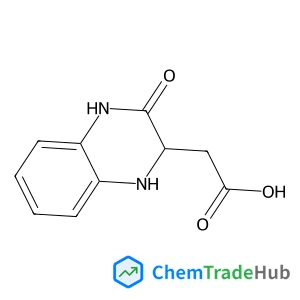
(3-Oxo-1,2,3,4-tetrahydro-2-quinoxalinyl)acetic acid
CAS Number:
136584-14-0
Molecular Formula:
C10H10N2O3
Recommended Suppliers





Disclaimer
This page provides academic journal information for reference and research purposes only. We are not affiliated with any journal publishers and do not handle publication submissions. For publication-related inquiries, please contact the respective journal publishers directly.
If you notice any inaccuracies in the information displayed, please contact us at support@chemtradehub.com. We will promptly review and address your concerns.