













HIV detection from human serum with paper-based isotachophoretic RNA extraction and reverse transcription recombinase polymerase amplification
Literature Information
Publication Date
2021-04-06
DOI
10.1039/D0AN02483J
Impact Factor
4.616
Authors
Andrew T. Bender, Benjamin P. Sullivan, Jane Y. Zhang, David C. Juergens, Lorraine Lillis, David S. Boyle
View Original
Abstract
The number of people living with HIV continues to increase with the current total near 38 million, of which about 26 million are receiving antiretroviral therapy (ART). These treatment regimens are highly effective when properly managed, requiring routine viral load monitoring to assess successful viral suppression. Efforts to expand access by decentralizing HIV nucleic acid testing in low- and middle-income countries (LMICs) has been hampered by the cost and complexity of current tests. Sample preparation of blood samples has traditionally relied on cumbersome RNA extraction methods, and it continues to be a key bottleneck for developing low-cost POC nucleic acid tests. We present a microfluidic paper-based analytical device (μPAD) for extracting RNA and detecting HIV in serum, leveraging low-cost materials, simple buffers, and an electric field. We detect HIV virions and MS2 bacteriophage internal control in human serum using a novel lysis and RNase inactivation method, paper-based isotachophoresis (ITP) for RNA extraction, and duplexed reverse transcription recombinase polymerase amplification (RT-RPA) for nucleic acid amplification. We design a specialized ITP system to extract and concentrate RNA, while excluding harsh reagents used for lysis and RNase inactivation. We found the ITP μPAD can extract and purify 5000 HIV RNA copies per mL of serum. We then demonstrate detection of HIV virions and MS2 bacteriophage in human serum within 45-minutes.
Related Literature
Synthetic studies towards congeners of phomactin A. Re-examination of the structure of Sch 49028
John W. C. Cheing, William P. D. Goldring, Gerald Pattenden
2003-10-11
Communication
DOI: 10.1039/B310753A
Patterning of DNA nanostructures on silicon surface by electron beam lithography of self-assembled monolayer
Guo-Jun Zhang, Takashi Tanii
2004-03-05
Communication
DOI: 10.1039/B315278B
Synthesis and X-ray structures of silver and gold guanidinate-like complexes. A Au(ii) complex with a 2.47 Å Au–Au distance
Michael D. Irwin, Hanan E. Abdou, Ahmed A. Mohamed, John P. Fackler, Jr.
2003-10-24
Communication
DOI: 10.1039/B309724M
Organization of branched rod–coil molecules into a 3-D tetragonally perforated lamellar mesophase
Nam-Keun Oh, Wang-Cheol Zin, Jun-Hwan Im, Ja-Hyoung Ryu, Myongsoo Lee
2004-04-01
Communication
DOI: 10.1039/B317109D
Porphyrin ring contraction: a one-pot reaction leading to divalent corroles
Christophe Jeandon, Romain Ruppert, Henry J. Callot
2004-04-02
Communication
DOI: 10.1039/B400812J
Regioselective uncatalysed hydrophosphination of alkenes: a facile route to P-alkylated phosphine derivatives
Olivier Delacroix, Annie-Claude Gaumont
2003-10-29
Communication
DOI: 10.1039/B311892D
A tyrosine-modified hypocrellin B with affinity for and photodamaging ability towards calf thymus DNA
Sheng Qin Xia, Jia Hong Zhou, Jing Rong Chen, Xue Song Wang, Bao Wen Zhang
2003-10-23
Communication
DOI: 10.1039/B309024H
Electrophilic terminal phosphinidene complex–Lewis base adducts: Chemistry between carbon–halide bond activation and weak Lewis base adduct formation
Arif Ali Khan, Cathleen Wismach, Peter G. Jones, Rainer Streubel
2003-10-22
Communication
DOI: 10.1039/B309443J
Dynamic combinatorial libraries of metalloporphyrins: templated amplification of disulfide-linked oligomers
Amy L. Kieran, Andrew D. Bond, Ana M. Belenguer, Jeremy K. M. Sanders
2003-09-30
Communication
DOI: 10.1039/B310438A
Thiazole orange as fluorescent universal base in peptide nucleic acids
Olaf Köhler, Oliver Seitz
2003-10-21
Communication
DOI: 10.1039/B308299G
You might also like
Compound Q&A
What is the market or research trend for N-(4-Methoxybenzyl)-2-pyridinamine (CAS: 52818-63-0)?
N-(4-Methoxybenzyl)-2-pyridinamine (CAS: 52818-63-0) is increasingly being used ...
52818-63-0N-(4-Methoxybenzyl)-...
Compound Q&A
What precautions should be taken when handling Ethyl 4-(2-chlorophenyl)-1,3-thiazole-2-carboxylate (CAS: 1050507-06-6)?
When handling Ethyl 4-(2-chlorophenyl)-1,3-thiazole-2-carboxylate, appropriate p...
1050507-06-6Ethyl 4-(2-chlorophe...
Compound Q&A
What regulatory guidelines apply to diethyldiselane (CAS: 628-39-7)?
Diethyldiselane (CAS: 628-39-7) is classified under the Globally Harmonized Syst...
628-39-7Diethyldiselane
Compound Q&A
What is the market or research trend for oxocopper (CAS: 12053-18-8)?
The market for oxocopper (CAS: 12053-18-8) is primarily driven by its use in cat...
12053-18-8oxocopper; oxo-(oxoc...
Compound Q&A
What is the market or research trend for 5-{[(2-Methyl-2-propanyl)oxy]carbonyl}-5-azaspiro[2.4]heptane-7-carboxylic acid?
The market for 5-{[(2-Methyl-2-propanyl)oxy]carbonyl}-5-azaspiro[2.4]heptane-7-c...
1268519-54-55-{[(2-Methyl-2-prop...
Compound Q&A
What is 2-(1-Pyrrolidinyl)-4-pyridinamine (CAS: 35981-63-6)?
2-(1-Pyrrolidinyl)-4-pyridinamine is a chemical compound with the CAS number 359...
35981-63-62-(1-Pyrrolidinyl)-4...
Compound Q&A
What are the physical and chemical properties of 2-(3-Pyridinyl)-1-azabicyclo[2.2.2]octane (CAS: 91556-75-1)?
2-(3-Pyridinyl)-1-azabicyclo[2.2.2]octane (CAS: 91556-75-1) is a crystalline sol...
91556-75-12-(3-Pyridinyl)-1-az...
Compound Q&A
How is (S)-Alpha-allyl-proline hydrochloride (CAS: 129704-91-2) typically synthesized?
(S)-Alpha-allyl-proline hydrochloride is usually synthesized via a Wittig reacti...
129704-91-2(S)-Alpha-allyl-prol...
Compound Q&A
What is 3-Methyl-1,2-oxazole-5-carboxylic acid (CAS: 4857-42-5)?
3-Methyl-1,2-oxazole-5-carboxylic acid (CAS: 4857-42-5) is an organic compound w...
4857-42-53-Methyl-1,2-oxazole...
Compound Q&A
How is Lys-SMCC-DM1 (CAS: 1281816-04-3) typically synthesized?
Lys-SMCC-DM1 is synthesized via a multi-step process involving the coupling of S...
1281816-04-3Lys-SMCC-DM1
Source Journal
Analyst

CiteScore:
7.8
Self-citation Rate:
5.6%
Articles per Year:
653
Analyst publishes analytical and bioanalytical research that reports premier fundamental discoveries and inventions, and the applications of those discoveries, unconfined by traditional discipline barriers.
Recommended Compounds
![(2R,6S)-6-[(Benzyloxy)methyl]-4-{[(2-methyl-2-propanyl)oxy]carbonyl}-2-morpholinecarboxylic acid structure](https://static.chemtradehub.com/structs/109/1093085-91-6-3382.webp "(2R,6S)-6-[(Benzyloxy)methyl]-4-{[(2-methyl-2-propanyl)oxy]carbonyl}-2-morpholinecarboxylic acid structure")
(2R,6S)-6-[(Benzyloxy)methyl]-4-{[(2-methyl-2-propanyl)oxy]carbonyl}-2-morpholinecarboxylic acid
CAS Number:
1093085-91-6
Molecular Formula:
C18H25NO6
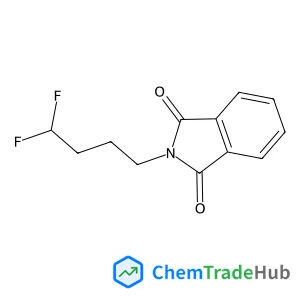
2-(4,4-Difluorobutyl)-1H-isoindole-1,3(2H)-dione
CAS Number:
1265341-14-7
Molecular Formula:
C12H11F2NO2
Recommended Suppliers



Disclaimer
This page provides academic journal information for reference and research purposes only. We are not affiliated with any journal publishers and do not handle publication submissions. For publication-related inquiries, please contact the respective journal publishers directly.
If you notice any inaccuracies in the information displayed, please contact us at support@chemtradehub.com. We will promptly review and address your concerns.