













Strain-mediated bandgap engineering of straight and bent semiconductor nanowires
Literature Information
Publication Date
2021-02-24
DOI
10.1039/D1CP00457C
Impact Factor
3.676
Authors
Bryan Lim, Xiang Yuan Cui, Simon P. Ringer
View Original
Abstract
Accurate simulation of semiconductor nanowires (NWs) under strain is challenging, especially for bent NWs. Here, we propose a simple yet efficient unit-cell model to simulate strain-mediated bandgap modulation in both straight and bent NWs. This is with consideration that uniaxlly bent NWs experience continuous compressive and tensile strains through their cross-sections. A systematic investigation of a series of III–V and II–VI semiconductors NWs in both wurtzite and zinc blende polytypes is performed using hybrid density functional theory methods. The results reveal three common trend in bandgap evolution upon application of strain. Existing experimental measurements corroborate with our predictions concerning bandgap evolution as well as direct-indirect bandgap transitions upon strain. By examining the variation of previous theoretical studies, our result further highlights the significance of geometrical relaxtion in NW simulation. This simplified model is expected to be applicable to investigations of the electronic, optoelectronic, and sensorial properties of all semiconductor NWs.
Related Literature
A three-dimensional hierarchical TiO2 urchin as a photoelectrochemical anode with omnidirectional anti-reflectance properties
Weina Ren, Haifeng Zhang, Dezhi Kong, Bo Liu, Yaping Yang
2014-09-12
Communication
DOI: 10.1039/C4CP03043E
Nanoscale phononic interconnects in THz frequencies
Mahesh R. Neupane, M. M. Sigalas, N. Aravantinos-Zafiris, Roger K. Lake
2014-09-19
Paper
DOI: 10.1039/C4CP02328E
Tuning electronic and magnetic properties of silicene with magnetic superhalogens
Tianshan Zhao, Shunhong Zhang, Yoshiyuki Kawazoe, Puru Jena
2014-08-07
Paper
DOI: 10.1039/C4CP02758B
Silver nanoparticles linked by a Pt-containing organometallic dithiol bridge: study of local structure and interface by XAFS and SR-XPS
C. Battocchio, I. Fratoddi, L. Fontana, E. Bodo, F. Porcaro, C. Meneghini, S. Nappini, S. Mobilio, M. V. Russo, G. Polzonetti
2014-04-24
Paper
DOI: 10.1039/C4CP01264J
Monophasic ligand-free alloy nanoparticle synthesis determinants during pulsed laser ablation of bulk alloy and consolidated microparticles in water
Anne Neumeister, Jurij Jakobi, Christoph Rehbock, Janine Moysig, Stephan Barcikowski
2014-09-15
Paper
DOI: 10.1039/C4CP03316G
Hydrogen-bond memory and water-skin supersolidity resolving the Mpemba paradox
Yongli Huang, Zengsheng Ma, Yichun Zhou, Ji Zhou, Weitao Zheng, Qing Jiang, Chang Q. Sun
2014-09-09
Paper
DOI: 10.1039/C4CP03669G
Thermochemical CO2 splitting via redox cycling of ceria reticulated foam structures with dual-scale porosities
Philipp Furler, Jonathan Scheffe, Daniel Marxer, Michal Gorbar
2014-04-08
Paper
DOI: 10.1039/C4CP01172D
Peculiar surface–interface properties of nanocrystalline ceria–cobalt oxides with enhanced oxygen storage capacity
Nan Qiu, Jing Zhang
2014-09-04
Paper
DOI: 10.1039/C4CP03390F
Single-molecule surface-enhanced Raman spectroscopy with nanowatt excitation
Brendan L. Darby, Pablo G. Etchegoin, Eric C. Le Ru
2014-09-19
Paper
DOI: 10.1039/C4CP03422H
Polymorphic transformations and optical properties of graphene-based Ag-doped titania nanostructures
Anand Kumar Tripathi, Promod Kumar, Balasubramaniyan R., Manish Kumar Singh, Jin Suk Chung, Seung Hyun Hur, Arvind Agarwal
2014-09-17
Paper
DOI: 10.1039/C4CP02982H
You might also like
Compound Q&A
What is the market or research trend for N-(4-Methoxybenzyl)-2-pyridinamine (CAS: 52818-63-0)?
N-(4-Methoxybenzyl)-2-pyridinamine (CAS: 52818-63-0) is increasingly being used ...
52818-63-0N-(4-Methoxybenzyl)-...
Compound Q&A
What precautions should be taken when handling Ethyl 4-(2-chlorophenyl)-1,3-thiazole-2-carboxylate (CAS: 1050507-06-6)?
When handling Ethyl 4-(2-chlorophenyl)-1,3-thiazole-2-carboxylate, appropriate p...
1050507-06-6Ethyl 4-(2-chlorophe...
Compound Q&A
What regulatory guidelines apply to diethyldiselane (CAS: 628-39-7)?
Diethyldiselane (CAS: 628-39-7) is classified under the Globally Harmonized Syst...
628-39-7Diethyldiselane
Compound Q&A
What is the market or research trend for oxocopper (CAS: 12053-18-8)?
The market for oxocopper (CAS: 12053-18-8) is primarily driven by its use in cat...
12053-18-8oxocopper; oxo-(oxoc...
Compound Q&A
What is the market or research trend for 5-{[(2-Methyl-2-propanyl)oxy]carbonyl}-5-azaspiro[2.4]heptane-7-carboxylic acid?
The market for 5-{[(2-Methyl-2-propanyl)oxy]carbonyl}-5-azaspiro[2.4]heptane-7-c...
1268519-54-55-{[(2-Methyl-2-prop...
Compound Q&A
What is 2-(1-Pyrrolidinyl)-4-pyridinamine (CAS: 35981-63-6)?
2-(1-Pyrrolidinyl)-4-pyridinamine is a chemical compound with the CAS number 359...
35981-63-62-(1-Pyrrolidinyl)-4...
Compound Q&A
What are the physical and chemical properties of 2-(3-Pyridinyl)-1-azabicyclo[2.2.2]octane (CAS: 91556-75-1)?
2-(3-Pyridinyl)-1-azabicyclo[2.2.2]octane (CAS: 91556-75-1) is a crystalline sol...
91556-75-12-(3-Pyridinyl)-1-az...
Compound Q&A
How is (S)-Alpha-allyl-proline hydrochloride (CAS: 129704-91-2) typically synthesized?
(S)-Alpha-allyl-proline hydrochloride is usually synthesized via a Wittig reacti...
129704-91-2(S)-Alpha-allyl-prol...
Compound Q&A
What is 3-Methyl-1,2-oxazole-5-carboxylic acid (CAS: 4857-42-5)?
3-Methyl-1,2-oxazole-5-carboxylic acid (CAS: 4857-42-5) is an organic compound w...
4857-42-53-Methyl-1,2-oxazole...
Compound Q&A
How is Lys-SMCC-DM1 (CAS: 1281816-04-3) typically synthesized?
Lys-SMCC-DM1 is synthesized via a multi-step process involving the coupling of S...
1281816-04-3Lys-SMCC-DM1
Source Journal
Physical Chemistry Chemical Physics

CiteScore:
5.5
Self-citation Rate:
10.3%
Articles per Year:
3036
Physical Chemistry Chemical Physics (PCCP) is an international journal co-owned by 19 physical chemistry and physics societies from around the world. This journal publishes original, cutting-edge research in physical chemistry, chemical physics and biophysical chemistry. To be suitable for publication in PCCP, articles must include significant innovation and/or insight into physical chemistry; this is the most important criterion that reviewers and Editors will judge against when evaluating submissions. The journal has a broad scope and welcomes contributions spanning experiment, theory, computation and data science. Topical coverage includes spectroscopy, dynamics, kinetics, statistical mechanics, thermodynamics, electrochemistry, catalysis, surface science, quantum mechanics, quantum computing and machine learning. Interdisciplinary research areas such as polymers and soft matter, materials, nanoscience, energy, surfaces/interfaces, and biophysical chemistry are welcomed if they demonstrate significant innovation and/or insight into physical chemistry. Joined experimental/theoretical studies are particularly appreciated when complementary and based on up-to-date approaches.
Recommended Compounds
![1,10-bis(3,5-dimethylphenyl)-12-hydroxy-4,5,6,7-tetrahydroiindeno[7,1-de:1',7'-fg][1,3,2]dioxaphosphocine 12-oxide structure](https://static.chemtradehub.com/structs/141/1412439-82-7-b9a9.webp "1,10-bis(3,5-dimethylphenyl)-12-hydroxy-4,5,6,7-tetrahydroiindeno[7,1-de:1',7'-fg][1,3,2]dioxaphosphocine 12-oxide structure")
1,10-bis(3,5-dimethylphenyl)-12-hydroxy-4,5,6,7-tetrahydroiindeno[7,1-de:1',7'-fg][1,3,2]dioxaphosphocine 12-oxide
CAS Number:
1412439-82-7
Molecular Formula:
C33H31O4P
![1-[6-(1H-Imidazol-1-yl)-3-pyridinyl]methanamine structure](https://static.chemtradehub.com/structs/914/914637-08-4-8825.webp "1-[6-(1H-Imidazol-1-yl)-3-pyridinyl]methanamine structure")

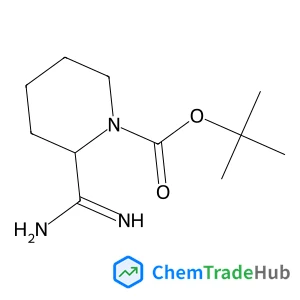
2-Methyl-2-propanyl 2-carbamimidoyl-1-piperidinecarboxylate
CAS Number:
1258640-98-0
Molecular Formula:
C11H21N3O2
Recommended Suppliers




Disclaimer
This page provides academic journal information for reference and research purposes only. We are not affiliated with any journal publishers and do not handle publication submissions. For publication-related inquiries, please contact the respective journal publishers directly.
If you notice any inaccuracies in the information displayed, please contact us at support@chemtradehub.com. We will promptly review and address your concerns.