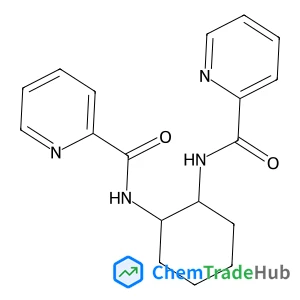
N,N'-(1R,2R)-1,2-Cyclohexanediyldi(2-pyridinecarboxamide)
CAS Number:
218290-24-5
Molecular Formula:
C18H20N4O2
M. Huchede, Q. Gu, G. Gauthier, V. Bellière-Baca, C. Michel, J. M. M. Millet
Reaction of 3-hydroxybutanone in air has been studied with and without a catalyst under atmospheric pressure and at temperatures between 523 and 673 K. The results revealed that the oxidative dehydrogenation reaction into butane-2,3-dione is thermodynamically preferred to the dehydration reaction, which did not occur, and to the oxidation into acetic acid, which occurs partially. The oxidative dehydrogenation proceeds via homogeneous radical mediated pathways in air and almost total conversion with a selectivity of about 85% can be obtained at 738 K. DFT calculations have been performed to provide insights into the homogeneous pathways. O2 and its derivatives are considered to take part in the reaction as H acceptors. The first step is the de-protonation of the secondary carbon atom, then mainly followed by the de-protonation of the hydroxyl group to finally obtain butane-2,3-dione. The cleavage of the intermediate radical leading to acetic acid is possible but not the most favorable. Tungsten oxides with bronze type structures and containing V and Nb have been studied as catalysts and turned out to be efficient to accelerate the reaction but did not lead to a significant increase in selectivity to butane-2,3-dione.
Nicholas S. Holmes, Jonathan W. Adams, John N. Crowley
DOI: 10.1039/B100247N
Martin K. Beyer, Christian B. Berg, Vladimir E. Bondybey
DOI: 10.1039/B100538N
Martín Pérez-Rodríguez, David Attwood, Juan M. Ruso, Pablo Taboada, Luis M. Varela, Víctor Mosquera
DOI: 10.1039/B100929J
Derek H. H. Chan, Amy A. Cockram, Rebecca R. Gibson, Emily L. Kynaston, Christopher Lindsay, Philip Taylor, Steven P. Armes
DOI: 10.1039/D1PY01008E
C. Atterbury, R. A. Kennedy, C. A. Mayhew, R. P. Tuckett
DOI: 10.1039/B102504J
Hermann Stoll
DOI: 10.1039/B100549I
Jie Dong
DOI: 10.1039/D1PY00699A
Kun-Young Kim, Ho-Jin Lee, Alfred Karpfen, Jeunghee Park, Chang-Ju Yoon, Young-Sang Choi
DOI: 10.1039/B101187L
6-Bromo-2-methylimidazo[1,2-a]pyrimidine (CAS: 1111638-05-1) falls under various...
While there are no direct alternatives, similar compounds like 1-Pyrrolidineetha...
4-Methyl-2,6-bis(2-methyl-2-propanyl)phenyl methylcarbamate (CAS: 1918-11-2) is ...
2-(3-Bromo-4-fluorophenyl)-1,3-dioxolane (CAS: 77771-04-1) should be stored in a...
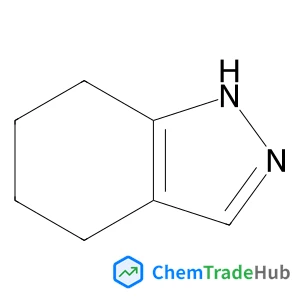
4,5,6,7-Tetrahydro-1H-indazole hydrochloride is a white crystalline solid with a...
(2R)-1-Methoxy-3-phenyl-2-propanamine is a chiral organic compound with the CAS ...
Ethyl 1-(1-phenylethyl)-1H-imidazole-5-carboxylate is used in various industries...
4-[(1E,3S)-1-(4-Hydroxyphenyl)-1,4-pentadien-3-yl]phenol (CAS: 17676-24-3) falls...
(S)-3-Amino-5-phenylpentanoic acid hydrochloride is primarily used in the pharma...
7-Methoxy-1-benzothiophene-2-carboxylic acid is typically synthesized by reactin...

Reaction Chemistry & Engineering is an interdisciplinary journal reporting cutting-edge research focused on enhancing the understanding and efficiency of reactions. Reaction engineering leverages the interface where fundamental molecular chemistry meets chemical engineering and technology. Challenges in chemistry can be overcome by the application of new technologies, while engineers may find improved solutions for process development from the latest developments in reaction chemistry. Reaction Chemistry & Engineering is a unique forum for researchers whose interests span the broad areas of chemical engineering and chemical sciences to come together in solving problems of importance to wider society. All papers should be written to be approachable by readers across the engineering and chemical sciences. Papers that consider multiple scales, from the laboratory up to and including plant scale, are particularly encouraged.
![9H-Fluoren-9-ylmethyl {15-[(2,5-dioxo-1-pyrrolidinyl)oxy]-15-oxo-3,6,9,12-tetraoxapentadec-1-yl}carbamate structure](https://static.chemtradehub.com/structs/131/1314378-14-7-4316.webp "9H-Fluoren-9-ylmethyl {15-[(2,5-dioxo-1-pyrrolidinyl)oxy]-15-oxo-3,6,9,12-tetraoxapentadec-1-yl}carbamate structure")