


Adsorption of a cationic amphiphilic drug on human serum albumin: characterization of the complex
Literature Information
Publication Date
2001-04-04
DOI
10.1039/B100929J
Impact Factor
3.676
Authors
Martín Pérez-Rodríguez, David Attwood, Juan M. Ruso, Pablo Taboada, Luis M. Varela, Víctor Mosquera
View Original
Abstract
The complex formed by the interaction of the amphiphilic drug verapamil hydrochloride and human serum albumin (HSA) in water at 25°C was investigated using a range of physico-chemical techniques. The colloidal dispersion was considered as a binary system in which water and verapamil molecules are regarded as the solvent for the HSA–verapamil complex. Measurements of the solution conductivity and the electrophoretic mobility of the complexes showed an ionic adsorption of the drug on the protein surface leading to surface saturation at a verapamil concentration between 10 and 15 mmol kg−1. Measurements of the size of the complex and the thickness of the adsorbed layer by dynamic light scattering showed a gradual change in hydrodynamic radius of the complex with increasing drug concentration typical of a saturation rather than a denaturation process, the magnitude of the change being insufficient to account for any appreciable extension or unfolding of the HSA molecule. The interaction potential between the HSA–verapamil complexes and their stability were determined from the dependence of the diffusion coefficients on protein concentration by application of the DLVO colloidal stability theory. The results indicate decreasing stability of the colloidal dispersion of the drug–protein complexes with increase in the concentration of added drug.
Recommended Journals

Heteroatom Chemistry

Journal of the Indian Institute of Science

Bioorganic & Medicinal Chemistry

Herald of the Russian Academy of Sciences

Main Group Chemistry

NDT & E International

Biocatalysis and Biotransformation

Acta Metallurgica Sinica-English Letters

Chinese Journal of Chemistry

Bioorganic & Medicinal Chemistry Letters
Related Literature
Enhanced carbohydrate structural selectivity in ion mobility-mass spectrometry analyses by boronic acid derivatization
Larissa S. Fenn, John A. McLean
2008-09-22
Communication
DOI: 10.1039/B810421B
Highly enantioselective carbon–carbon bond formation by Cu-catalyzed asymmetric [2,3]-sigmatropic rearrangement: application to the syntheses of seven-membered oxacycles and six-membered carbocycles
Gullapalli Kumaraswamy, Kadivendi Sadaiah, Duggirala Subrahmanya Ramakrishna, Naresh Police, Balasubramanian Sridhar, Jagadeesh Bharatam
2008-09-17
Communication
DOI: 10.1039/B810770J
Stabilization of CeO2nanoparticles in a CO2 rich solvent
Martin J. Hollamby, Kieran Trickett, Ana Vesperinas, Carl Rivett, David C. Steytler, Zoe Schnepp, Jon Jones, Richard K. Heenan, Robert M. Richardson, Otto Glatter, Julian Eastoe
2008-09-29
Communication
DOI: 10.1039/B811563J
Diborylenetetraaminoperylenes (DIBOTAP): a new class of highly fluorescent functional polycyclic aromatic hydrocarbons with N–B–N units
Till Riehm, Gabriele De Paoli, Hubert Wadepohl, Luisa De Cola, Lutz H. Gade
2008-09-19
Communication
DOI: 10.1039/B811864G
Single-molecule fluorescence spectroelectrochemistry of cresyl violet
Chenghong Lei, Dehong Hu, Eric J. Ackerman
2008-09-12
Communication
DOI: 10.1039/B812161C
Electron-rich heteroaromatic conjugated bipyridine based ruthenium sensitizer for efficient dye-sensitized solar cells
Alessandro Abbotto, Claudia Barolo, Luca Bellotto, Filippo De Angelis, Michael Grätzel, Norberto Manfredi, Chiara Marinzi, Simona Fantacci, Jun-Ho Yum, Mohammad K. Nazeeruddin
2008-09-16
Communication
DOI: 10.1039/B811378E
Synthesis, characterization and oxidizing properties of a diorgano tellurone carrying bulky aromatic substituents
Makoto Oba, Yasunori Okada, Kozaburo Nishiyama, Shigeru Shimada, Wataru Ando
2008-09-17
Communication
DOI: 10.1039/B811112J
A metallopolymer case-history: polymer, ring or ligand reaction?
Edwin C. Constable, Kate Harris, Catherine E. Housecroft, Markus Neuburger, Silvia Schaffner
2008-09-17
Communication
DOI: 10.1039/B811204E
(κ2-P,S)Pt(benzyl) complexes derived from 1/3-PiPr2-2-StBu-indene: facile synthesis of carbanion- and borate-containing zwitterions
Kevin D. Hesp, Robert McDonald, Michael J. Ferguson, Gabriele Schatte, Mark Stradiotto
2008-10-06
Communication
DOI: 10.1039/B813421A
Reversible fluorescence modulation through energy transfer with ABC triblock copolymer micelles as scaffolds
Jian Chen, Fang Zeng, Shuizhu Wu, Jianqing Zhao, Qiming Chen, Zhen Tong
2008-09-25
Communication
DOI: 10.1039/B810677K
You might also like
Compound Q&A
What are the main uses of 1H-Indazole-6-carbonitrile (CAS: 141290-59-7)?
1H-Indazole-6-carbonitrile finds applications in pharmaceuticals, where it serve...
141290-59-71H-Indazole-6-carbon...
Compound Q&A
How should waste containing Dioctyl (2E)-2-butenedioate (CAS: 2997-85-5) be handled?
Waste containing Dioctyl (2E)-2-butenedioate (CAS: 2997-85-5) should be collecte...
2997-85-5Dioctyl (2E)-2-buten...
Compound Q&A
What industries use Sodium [(1,2-benzoxazol-3-ylmethyl)sulfonyl]azanide (CAS: 68291-98-5)?
Sodium [(1,2-benzoxazol-3-ylmethyl)sulfonyl]azanide is primarily used in pharmac...
68291-98-5Sodium [(1,2-benzoxa...
Compound Q&A
Are there alternatives to Dimethyl 4-(4,4,5,5-tetramethyl-1,3,2-dioxaborolan-2-yl)-2,6-pyridinedicarboxylate (CAS: 741709-66-0) in synthesis?
Dimethyl 4-(4,4,5,5-tetramethyl-1,3,2-dioxaborolan-2-yl)-2,6-pyridinedicarboxyla...
741709-66-0Dimethyl 4-(4,4,5,5-...
Compound Q&A
How should waste containing 2-Fluoro-6-hydrazinopyridine (CAS: 80714-39-2) be handled?
Waste containing 2-Fluoro-6-hydrazinopyridine (CAS: 80714-39-2) should be manage...
80714-39-22-Fluoro-6-hydrazino...
Compound Q&A
What is 6-Formyl-2-pyridinecarboxylic acid (CAS: 499214-11-8)?
6-Formyl-2-pyridinecarboxylic acid is an organic compound with the molecular for...
499214-11-86-Formyl-2-pyridinec...
Compound Q&A
What is the market or research trend for 3-(3,4-dimethoxyphenyl)-2,5-dimethyl-N-(2-morpholin-4-ylethyl)pyrazolo[1,5-a]pyrimidin-7-amine (CAS: 900874-91-1)?
Research trends for this compound indicate a focus on its potential applications...
900874-91-13-(3,4-dimethoxyphen...
Compound Q&A
How is 9H-Tribenzo[b,d,f]azepine (CAS: 29875-73-8) typically synthesized?
9H-Tribenzo[b,d,f]azepine is typically synthesized via a multi-step process invo...
29875-73-89H-Tribenzo[b,d,f]az...
Compound Q&A
How is 1-Cyclopropyl-7-ethoxy-6-fluoro-8-methoxy-4-oxo-1,4-dihydro-3-quinolinecarboxylic acid (CAS: 1797982-51-4) typically synthesized?
1-Cyclopropyl-7-ethoxy-6-fluoro-8-methoxy-4-oxo-1,4-dihydro-3-quinolinecarboxyli...
1797982-51-41-Cyclopropyl-7-etho...
Compound Q&A
How should waste containing Methyl 3-oxo-1,2,3,4-tetrahydro-6-quinoxalinecarboxylate (CAS: 671820-52-3) be handled?
Waste containing Methyl 3-oxo-1,2,3,4-tetrahydro-6-quinoxalinecarboxylate (CAS: ...
671820-52-3Methyl 3-oxo-1,2,3,4...
Source Journal
Physical Chemistry Chemical Physics

CiteScore:
5.5
Self-citation Rate:
10.3%
Articles per Year:
3036
Physical Chemistry Chemical Physics (PCCP) is an international journal co-owned by 19 physical chemistry and physics societies from around the world. This journal publishes original, cutting-edge research in physical chemistry, chemical physics and biophysical chemistry. To be suitable for publication in PCCP, articles must include significant innovation and/or insight into physical chemistry; this is the most important criterion that reviewers and Editors will judge against when evaluating submissions. The journal has a broad scope and welcomes contributions spanning experiment, theory, computation and data science. Topical coverage includes spectroscopy, dynamics, kinetics, statistical mechanics, thermodynamics, electrochemistry, catalysis, surface science, quantum mechanics, quantum computing and machine learning. Interdisciplinary research areas such as polymers and soft matter, materials, nanoscience, energy, surfaces/interfaces, and biophysical chemistry are welcomed if they demonstrate significant innovation and/or insight into physical chemistry. Joined experimental/theoretical studies are particularly appreciated when complementary and based on up-to-date approaches.
Recommended Compounds
![(3aS,6aS)-1-Methyloctahydropyrrolo[3,4-b]pyrrole structure](https://static.chemtradehub.com/structs/877/877212-98-1-9157.webp "(3aS,6aS)-1-Methyloctahydropyrrolo[3,4-b]pyrrole structure")
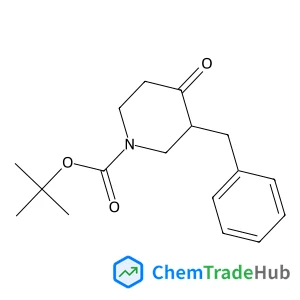
2-Methyl-2-propanyl 3-benzyl-4-oxo-1-piperidinecarboxylate
CAS Number:
193274-82-7
Molecular Formula:
C17H23NO3
Recommended Suppliers





Disclaimer
This page provides academic journal information for reference and research purposes only. We are not affiliated with any journal publishers and do not handle publication submissions. For publication-related inquiries, please contact the respective journal publishers directly.
If you notice any inaccuracies in the information displayed, please contact us at support@chemtradehub.com. We will promptly review and address your concerns.