












Self-assembly of azaphthalocyanine–oligodeoxynucleotide conjugates into J-dimers: towards biomolecular logic gates
Literature Information
Publication Date
2019-12-13
DOI
10.1039/C9QO01364D
Impact Factor
5.281
Authors
Jiri Demuth, Miroslav Miletin, Radim Kucera, Ales Ruzicka, Antonin Libra, Veronika Novakova, Petr Zimcik
View Original
Abstract
The formation of J-dimers is rarely reported in the scientific literature, even though these architectures often have important consequences for various applications. Octasubstituted azaphthalocyanines (AzaPcs) bearing dialkylamino substituents form very stable (KD > 1010 M−1 in toluene) J-dimers by the coordination of the peripheral amino nitrogens to the central zinc(II) cation of the second molecule. For AzaPc 1, bearing N,N-diethylamino substituents, this self-assembly occurs even after the attachment of the AzaPcs to oligodeoxynucleotide (ODN) chains in buffers. The J-dimers of ODNs are stable even after hybridization with complementary antisense ODNs and can be dissociated only by exposure to coordinating molecules (e.g., pyridine). An ODN probe labeled with both fluorescein and AzaPc 1 formed a unique supramolecular assembly (F-ODN-1)2 resembling the figure “8” in which the two end-labeled ODN chains are joined together at a central connection point. The connection is formed by a heterotetramer composed of the J-dimer of AzaPc 1 and two molecules of fluorescein where the fluorescence is highly quenched. The AzaPc J-dimer in this probe can be utilized as a dark quencher in real-time PCR assays and has quenching properties superior to those of AzaPcs that formed only the monomer. Additionally, the selective dissociation of the molecules in the heterotetramer by hybridization with an antisense strand or by the introduction of a coordinating molecule (pyridine) leads to changes in the absorption spectra and fluorescence intensities that were utilized in designing OR, AND, and NOT Boolean operators for biomolecular logic gates based on the combination of these two distinct switching mechanisms.
Related Literature
Collision-induced non-adiabatic transitions between the ion-pair states of molecular iodine: A challenge for experiment and theory
Timur V. Tscherbul, Alexei A. Buchachenko, Mikhail E. Akopyan, Sergey A. Poretsky, Anatoly M. Pravilov, Thomas A. Stephenson
2004-05-18
Invited Article
DOI: 10.1039/B402655A
Use of a nondirect-product basis for treating singularities in triatomic rotational–vibrational calculations
Viktor Szalay, Brian T. Sutcliffe
2007-05-24
Paper
DOI: 10.1039/B701911D
Comparison of surface structures of poly(ethyl methacrylate) and poly(ethyl acrylate) in different chemical environments
Chunyan Chen, Matthew L. Clarke, Jie Wang
2005-05-06
Paper
DOI: 10.1039/B501910A
The sum-rule relation among phenomenological transport coefficients and its consequences in the analysis of collective diffusion problems
2004-05-05
Review Article
DOI: 10.1039/B316170F
A hierarchy of global coupling induced cluster patterns during the oscillatory H2-electrooxidation reaction on a Pt ring-electrode
Hamilton Varela, Carsten Beta, Antoine Bonnefont
2005-05-13
Paper
DOI: 10.1039/B502027A
Side-hole to anti-hole conversion in time-resolved transient spectral hole-burning of emerald: ground state level versus excited state population storage in low magnetic fields
Brendan F. Hayward, Hans Riesen
2005-06-09
Paper
DOI: 10.1039/B502079D
Diffusion in a model metallic glass: Heterogeneity and ageing
H. R. Schober
2004-05-12
Paper
DOI: 10.1039/B403557G
Linear relationship between activation energies and reaction energies for coverage-dependent dissociation reactions on rhodium surfaces
Oliver R. Inderwildi, Dirk Lebiedz, Jürgen Warnatz
2005-06-01
Communication
DOI: 10.1039/B506773A
You might also like
Compound Q&A
How should waste containing (6-Bromo-2-naphthyl)oxy](dimethyl)(2-methyl-2-propanyl)silane be handled?
Waste containing (6-Bromo-2-naphthyl)oxy](dimethyl)(2-methyl-2-propanyl)silane (...
100751-65-3[(6-Bromo-2-naphthyl...
Compound Q&A
How is 7-Fluoro-4-isoquinolinecarboxylic acid (CAS: 1841081-40-0) typically synthesized?
7-Fluoro-4-isoquinolinecarboxylic acid can be synthesized via a multi-step proce...
1841081-40-07-Fluoro-4-isoquinol...
Compound Q&A
What are the physical and chemical properties of 2,3,5,6-Tetrabromothieno[3,2-b]thiophene (CAS: 124638-53-5)?
2,3,5,6-Tetrabromothieno[3,2-b]thiophene is a crystalline compound with a high m...
124638-53-52,3,5,6-Tetrabromoth...
Compound Q&A
Is 1-[4-(Benzylamino)-7,8-dihydro-5H-pyrano[4,3-d]pyrimidin-2-yl]-2-methyl-1H-indole-4-carboxamide (CAS: 1542705-92-9) safe?
1-[4-(Benzylamino)-7,8-dihydro-5H-pyrano[4,3-d]pyrimidin-2-yl]-2-methyl-1H-indol...
1542705-92-91-[4-(Benzylamino)-7...
Compound Q&A
What is the market or research trend for imidazo[5,1-d]-1,2,3,5-tetrazine-8-carboxylic acid, 3,4-dihydro-3-methyl-4-oxo- (CAS: 113942-30-6)?
The market for imidazo[5,1-d]-1,2,3,5-tetrazine-8-carboxylic acid, 3,4-dihydro-3...
113942-30-6Imidazo[5,1-d]-1,2,3...
Compound Q&A
What is 3-(Triisopropylsilyl)propiolaldehyde (CAS: 163271-80-5)?
3-(Triisopropylsilyl)propiolaldehyde is a synthetic organic compound with the CA...
163271-80-53-(Triisopropylsilyl...
Compound Q&A
What regulatory guidelines apply to 6-Nitro-2H-1,4-benzoxazin-3(4H)-one (CAS: 81721-87-1)?
6-Nitro-2H-1,4-benzoxazin-3(4H)-one (CAS: 81721-87-1) is subject to various regu...
81721-87-16-Nitro-2H-1,4-benzo...
Compound Q&A
How should waste containing (3-Fluorophenyl)(4-{[(2-methyl-2-propanyl)oxy]carbonyl}-1-piperazinyl)acetic acid (CAS: 885272-91-3) be handled?
Waste containing (3-Fluorophenyl)(4-{[(2-methyl-2-propanyl)oxy]carbonyl}-1-piper...
885272-91-3(3-Fluorophenyl)(4-{...
Compound Q&A
What are the physical and chemical properties of N,N'-4,4'-Biphenyldiyldiisonicotinamide (CAS: 55119-40-9)?
N,N'-4,4'-Biphenyldiyldiisonicotinamide is a white crystalline solid with a mole...
55119-40-9N,N'-4,4'-Biphenyldi...
Compound Q&A
What industries use 6-Bromo-8-fluoro-2-quinazolinol (CAS: 1036756-15-6)?
6-Bromo-8-fluoro-2-quinazolinol is primarily used in the pharmaceutical industry...
1036756-15-66-Bromo-8-fluoro-2-q...
Source Journal
Organic Chemistry Frontiers

CiteScore:
7.8
Self-citation Rate:
8.7%
Articles per Year:
724
Organic Chemistry Frontiers publishes high-quality research from across organic chemistry. Emphases are placed on studies that make significant contributions to the field of organic chemistry by reporting either new or significantly improved protocols or methodologies. Topics include, but are not limited to the following: Organic synthesis Development of synthetic methodologies Catalysis Natural products Functional organic materials Supramolecular and macromolecular chemistry Physical and computational organic chemistry
Recommended Compounds
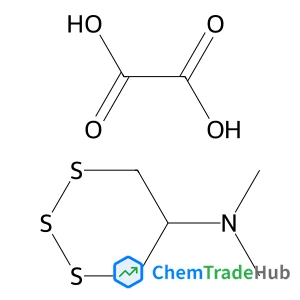
Oxalic acid compound with cyclohexylsulfamothioic O-acid (11)
CAS Number:
31895-22-4
Molecular Formula:
C7H13NO4S3
![10-(1-Azabicyclo[2.2.2]oct-3-ylmethyl)-10H-phenothiazine structure](https://static.chemtradehub.com/structs/292/29216-28-2-1d81.webp "10-(1-Azabicyclo[2.2.2]oct-3-ylmethyl)-10H-phenothiazine structure")
10-(1-Azabicyclo[2.2.2]oct-3-ylmethyl)-10H-phenothiazine
CAS Number:
29216-28-2
Molecular Formula:
C20H22N2S
Recommended Suppliers






Disclaimer
This page provides academic journal information for reference and research purposes only. We are not affiliated with any journal publishers and do not handle publication submissions. For publication-related inquiries, please contact the respective journal publishers directly.
If you notice any inaccuracies in the information displayed, please contact us at support@chemtradehub.com. We will promptly review and address your concerns.