













Use of a nondirect-product basis for treating singularities in triatomic rotational–vibrational calculations
Literature Information
Publication Date
2007-05-24
DOI
10.1039/B701911D
Impact Factor
3.676
Authors
Viktor Szalay, Brian T. Sutcliffe
View Original
Abstract
A technique has been developed which in principle allows the determination of the full rotational–vibrational eigenspectrum of triatomic molecules by treating the important singularities present in the triatomic rotational–vibrational kinetic energy operator given in Jacobi coordinates and the R1 embedding. The singular term related to the diatom-type coordinate, R1, deemed to be unimportant for spectroscopic applications, is given no special attention. The work extends a previous [J. Chem. Phys., 2005, 122, 024101] vibration-only approach and employs a generalized finite basis representation (GFBR) resulting in a nonsymmetric Hamiltonian matrix [J. Chem. Phys., 2006, 124, 014110]. The basis set to be used is obtained by taking the direct product of a 1-D DVR basis, related to R1, with a 5-D nondirect-product basis, the latter formed by coupling Bessel-DVR functions depending on the distance-type coordinate causing the singularity, associated Legendre polynomials depending on the Jacobi angle, and rotational functions depending on the three Euler angles. The robust implicitly restarted Arnoldi method within the ARPACK package is used for the determination of a number of eigenvalues of the nonsymmetric Hamiltonian matrix. The suitability of the proposed approach is shown by the determination of the rotational–vibrational energy levels of the ground electronic state of H3+ somewhat above its barrier to linearity. Convergence of the eigenenergies is checked by an alternative approach, employing a Hamiltonian expressed in Radau coordinates, a standard direct-product basis, and no treatment of the singularities.
Related Literature
Toward ultrasensitive and fast colorimetric detection of indoor formaldehyde across the visible region using cetyltrimethylammonium chloride-capped bone-shaped gold nanorods as “chromophores”
Wei Duan, Ao Liu, Qing Li, Zhiwei Li, Cong-ying Wen, Zhixiong Cai, Shiming Tang, Xiyou Li
2019-06-06
Paper
DOI: 10.1039/C9AN00694J
Microfluidic compartments with sensing microbeads for dynamic monitoring of cytokine and exosome release from single cells
Kyung Jin Son, Ali Rahimian, Christian Siltanen, Tushar Patel, Alexander Revzin
2015-10-05
Paper
DOI: 10.1039/C5AN01648G
Fluorescence polarization-based detection of cancer-related mutations using target-initiated rolling circle amplification
Woo Young Kwon, Byung Seok Cha, Seokjoon Kim, Sung Hyun Hwang, Ji Min Kim, Kalishwaralal Kalimuthu, Hyun Gyu Park, Ki Soo Park
2019-06-18
Communication
DOI: 10.1039/C9AN00429G
Mass spectrometry of modified RNAs: recent developments
Collin Wetzel, Patrick A. Limbach
2015-10-21
Minireview
DOI: 10.1039/C5AN01797A
EM∩IM: software for relating ion mobility mass spectrometry and electron microscopy data
2015-11-23
Communication
DOI: 10.1039/C5AN01636C
A new approach to preparation of antisense oligonucleotide samples with microextraction by packed sorbent
Łukasz Nuckowski, Anna Kaczmarkiewicz, Sylwia Studzińska, Bogusław Buszewski
2019-06-17
Paper
DOI: 10.1039/C9AN00740G
An electrochemical sensor for the detection of p-nitrophenol based on a cyclodextrin-decorated gold nanoparticle–mesoporous carbon hybrid
Yongying Zhou, Jin Zhao, Shenghua Li, Minjie Guo, Zhi Fan
2019-05-30
Paper
DOI: 10.1039/C9AN00722A
You might also like
Compound Q&A
How should waste containing (6-Bromo-2-naphthyl)oxy](dimethyl)(2-methyl-2-propanyl)silane be handled?
Waste containing (6-Bromo-2-naphthyl)oxy](dimethyl)(2-methyl-2-propanyl)silane (...
100751-65-3[(6-Bromo-2-naphthyl...
Compound Q&A
How is 7-Fluoro-4-isoquinolinecarboxylic acid (CAS: 1841081-40-0) typically synthesized?
7-Fluoro-4-isoquinolinecarboxylic acid can be synthesized via a multi-step proce...
1841081-40-07-Fluoro-4-isoquinol...
Compound Q&A
What are the physical and chemical properties of 2,3,5,6-Tetrabromothieno[3,2-b]thiophene (CAS: 124638-53-5)?
2,3,5,6-Tetrabromothieno[3,2-b]thiophene is a crystalline compound with a high m...
124638-53-52,3,5,6-Tetrabromoth...
Compound Q&A
Is 1-[4-(Benzylamino)-7,8-dihydro-5H-pyrano[4,3-d]pyrimidin-2-yl]-2-methyl-1H-indole-4-carboxamide (CAS: 1542705-92-9) safe?
1-[4-(Benzylamino)-7,8-dihydro-5H-pyrano[4,3-d]pyrimidin-2-yl]-2-methyl-1H-indol...
1542705-92-91-[4-(Benzylamino)-7...
Compound Q&A
What is the market or research trend for imidazo[5,1-d]-1,2,3,5-tetrazine-8-carboxylic acid, 3,4-dihydro-3-methyl-4-oxo- (CAS: 113942-30-6)?
The market for imidazo[5,1-d]-1,2,3,5-tetrazine-8-carboxylic acid, 3,4-dihydro-3...
113942-30-6Imidazo[5,1-d]-1,2,3...
Compound Q&A
What is 3-(Triisopropylsilyl)propiolaldehyde (CAS: 163271-80-5)?
3-(Triisopropylsilyl)propiolaldehyde is a synthetic organic compound with the CA...
163271-80-53-(Triisopropylsilyl...
Compound Q&A
What regulatory guidelines apply to 6-Nitro-2H-1,4-benzoxazin-3(4H)-one (CAS: 81721-87-1)?
6-Nitro-2H-1,4-benzoxazin-3(4H)-one (CAS: 81721-87-1) is subject to various regu...
81721-87-16-Nitro-2H-1,4-benzo...
Compound Q&A
How should waste containing (3-Fluorophenyl)(4-{[(2-methyl-2-propanyl)oxy]carbonyl}-1-piperazinyl)acetic acid (CAS: 885272-91-3) be handled?
Waste containing (3-Fluorophenyl)(4-{[(2-methyl-2-propanyl)oxy]carbonyl}-1-piper...
885272-91-3(3-Fluorophenyl)(4-{...
Compound Q&A
What are the physical and chemical properties of N,N'-4,4'-Biphenyldiyldiisonicotinamide (CAS: 55119-40-9)?
N,N'-4,4'-Biphenyldiyldiisonicotinamide is a white crystalline solid with a mole...
55119-40-9N,N'-4,4'-Biphenyldi...
Compound Q&A
What industries use 6-Bromo-8-fluoro-2-quinazolinol (CAS: 1036756-15-6)?
6-Bromo-8-fluoro-2-quinazolinol is primarily used in the pharmaceutical industry...
1036756-15-66-Bromo-8-fluoro-2-q...
Source Journal
Physical Chemistry Chemical Physics

CiteScore:
5.5
Self-citation Rate:
10.3%
Articles per Year:
3036
Physical Chemistry Chemical Physics (PCCP) is an international journal co-owned by 19 physical chemistry and physics societies from around the world. This journal publishes original, cutting-edge research in physical chemistry, chemical physics and biophysical chemistry. To be suitable for publication in PCCP, articles must include significant innovation and/or insight into physical chemistry; this is the most important criterion that reviewers and Editors will judge against when evaluating submissions. The journal has a broad scope and welcomes contributions spanning experiment, theory, computation and data science. Topical coverage includes spectroscopy, dynamics, kinetics, statistical mechanics, thermodynamics, electrochemistry, catalysis, surface science, quantum mechanics, quantum computing and machine learning. Interdisciplinary research areas such as polymers and soft matter, materials, nanoscience, energy, surfaces/interfaces, and biophysical chemistry are welcomed if they demonstrate significant innovation and/or insight into physical chemistry. Joined experimental/theoretical studies are particularly appreciated when complementary and based on up-to-date approaches.
Recommended Compounds

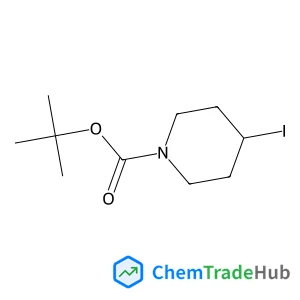
2-Methyl-2-propanyl 4-iodo-1-piperidinecarboxylate
CAS Number:
301673-14-3
Molecular Formula:
C10H18INO2


Recommended Suppliers





Disclaimer
This page provides academic journal information for reference and research purposes only. We are not affiliated with any journal publishers and do not handle publication submissions. For publication-related inquiries, please contact the respective journal publishers directly.
If you notice any inaccuracies in the information displayed, please contact us at support@chemtradehub.com. We will promptly review and address your concerns.