












Side-hole to anti-hole conversion in time-resolved transient spectral hole-burning of emerald: ground state level versus excited state population storage in low magnetic fields
Literature Information
Publication Date
2005-06-09
DOI
10.1039/B502079D
Impact Factor
3.676
Authors
Brendan F. Hayward, Hans Riesen
View Original
Abstract
Time-resolved transient spectral hole-burning experiments in zero field and in low magnetic fields B∥c are reported for the chromium(III) R1-line, 2Ā(2E) ← 2Ā(4A2) of Chatham lab created emerald, Be3Al2Si6O18 ∶ Cr(III) (0.0017% per weight), in the temperature range of 3 to 12 K. In low magnetic fields and temperatures >5 K conversion of side-holes to anti-holes is observed with progressing time. Anti-holes are due to the population stored in ground state levels. The dynamics of the hole pattern can be well modelled by a set of coupled differential equations for the levels of the 4A2 and 2E multiplets. The measurements allow the simultaneous determination of g-factors and spin–lattice relaxation rates in the excited state and the ground state. At 6 K the relaxation times between the split ±1/2 2Ā(2E) excited state levels and ±3/2 2Ā(4A2) levels of the ground state are about 0.16 ms and 9 ms, respectively. From the temperature dependence it follows that the spin–lattice relaxation rates are dominated by Orbach processes in the experimental temperature range.
Related Literature
Multiplexed ELISA screening assay for nine paralytic shellfish toxins in human plasma
Padmanabhan Eangoor, Amruta Sanjay Indapurkar, Mani Deepika Vakkalanka, Jennifer Sporty Knaack
2019-07-03
Paper
DOI: 10.1039/C9AN00494G
A reversed-phase/hydrophilic bifunctional interaction mixed-mode monolithic column with biphenyl and quaternary ammonium stationary phases for capillary electrochromatography
Changjun Hu, Zhentao Li
2019-06-03
Paper
DOI: 10.1039/C9AN00428A
Subcutaneous and transcutaneous monitoring of murine hindlimb ischemia by in vivo Raman spectroscopy
Rida Al-Rifai, Samar Kheirallah, Nicole Bouland, Gaël Poitevin, Abdelilah Beljebbar
2019-07-03
Paper
DOI: 10.1039/C8AN02449A
Bipolar electrode-electrochemiluminescence (ECL) biosensor based on a hybridization chain reaction
Meisheng Wu, Ning Xu, Jingtang Qiao, Jinghan Chen, Longsheng Jin
2019-06-26
Paper
DOI: 10.1039/C9AN01022J
Toward ultrasensitive and fast colorimetric detection of indoor formaldehyde across the visible region using cetyltrimethylammonium chloride-capped bone-shaped gold nanorods as “chromophores”
Wei Duan, Ao Liu, Qing Li, Zhiwei Li, Cong-ying Wen, Zhixiong Cai, Shiming Tang, Xiyou Li
2019-06-06
Paper
DOI: 10.1039/C9AN00694J
Real-time imaging of cancer cell chemotaxis in paper-based scaffolds
Rachael M. Kenney, Matthew W. Boyce, Andrew S. Truong, C. Robert Bagnell
2015-11-09
Paper
DOI: 10.1039/C5AN01787D
Facile multi-dimensional profiling of chemical gradients at the millimetre scale
Chih-Lin Chen, Kai-Ta Hsieh, Ching-Fong Hsu
2015-10-27
Paper
DOI: 10.1039/C5AN01807B
Electrochemistry-based approaches to low cost, high sensitivity, automated, multiplexed protein immunoassays for cancer diagnostics
Chandra K. Dixit, Karteek Kadimisetty, Brunah A. Otieno, Chi Tang, Spundana Malla, Colleen E. Krause
2015-10-14
Critical Review
DOI: 10.1039/C5AN01829C
A dandelion-like liposomes-encoded magnetic bead probe-based toehold-mediated DNA circuit for the amplification detection of MiRNA
Yancong Kong, Xiaowen Liu, Chunxue Liu, Qingwang Xue, Xia Li, Huaisheng Wang
2019-06-25
Paper
DOI: 10.1039/C9AN00887J
Serum protein biomarkers relevant to hepatocellular carcinoma and their detection
Eric Waidely, Abdul-Rahman Obaid Al-Yuobi, A. S. Bashammakh, Mohammad S. El-Shahawi, Roger M. Leblanc
2015-11-11
Critical Review
DOI: 10.1039/C5AN01884F
You might also like
Compound Q&A
How should waste containing (6-Bromo-2-naphthyl)oxy](dimethyl)(2-methyl-2-propanyl)silane be handled?
Waste containing (6-Bromo-2-naphthyl)oxy](dimethyl)(2-methyl-2-propanyl)silane (...
100751-65-3[(6-Bromo-2-naphthyl...
Compound Q&A
How is 7-Fluoro-4-isoquinolinecarboxylic acid (CAS: 1841081-40-0) typically synthesized?
7-Fluoro-4-isoquinolinecarboxylic acid can be synthesized via a multi-step proce...
1841081-40-07-Fluoro-4-isoquinol...
Compound Q&A
What are the physical and chemical properties of 2,3,5,6-Tetrabromothieno[3,2-b]thiophene (CAS: 124638-53-5)?
2,3,5,6-Tetrabromothieno[3,2-b]thiophene is a crystalline compound with a high m...
124638-53-52,3,5,6-Tetrabromoth...
Compound Q&A
Is 1-[4-(Benzylamino)-7,8-dihydro-5H-pyrano[4,3-d]pyrimidin-2-yl]-2-methyl-1H-indole-4-carboxamide (CAS: 1542705-92-9) safe?
1-[4-(Benzylamino)-7,8-dihydro-5H-pyrano[4,3-d]pyrimidin-2-yl]-2-methyl-1H-indol...
1542705-92-91-[4-(Benzylamino)-7...
Compound Q&A
What is the market or research trend for imidazo[5,1-d]-1,2,3,5-tetrazine-8-carboxylic acid, 3,4-dihydro-3-methyl-4-oxo- (CAS: 113942-30-6)?
The market for imidazo[5,1-d]-1,2,3,5-tetrazine-8-carboxylic acid, 3,4-dihydro-3...
113942-30-6Imidazo[5,1-d]-1,2,3...
Compound Q&A
What is 3-(Triisopropylsilyl)propiolaldehyde (CAS: 163271-80-5)?
3-(Triisopropylsilyl)propiolaldehyde is a synthetic organic compound with the CA...
163271-80-53-(Triisopropylsilyl...
Compound Q&A
What regulatory guidelines apply to 6-Nitro-2H-1,4-benzoxazin-3(4H)-one (CAS: 81721-87-1)?
6-Nitro-2H-1,4-benzoxazin-3(4H)-one (CAS: 81721-87-1) is subject to various regu...
81721-87-16-Nitro-2H-1,4-benzo...
Compound Q&A
How should waste containing (3-Fluorophenyl)(4-{[(2-methyl-2-propanyl)oxy]carbonyl}-1-piperazinyl)acetic acid (CAS: 885272-91-3) be handled?
Waste containing (3-Fluorophenyl)(4-{[(2-methyl-2-propanyl)oxy]carbonyl}-1-piper...
885272-91-3(3-Fluorophenyl)(4-{...
Compound Q&A
What are the physical and chemical properties of N,N'-4,4'-Biphenyldiyldiisonicotinamide (CAS: 55119-40-9)?
N,N'-4,4'-Biphenyldiyldiisonicotinamide is a white crystalline solid with a mole...
55119-40-9N,N'-4,4'-Biphenyldi...
Compound Q&A
What industries use 6-Bromo-8-fluoro-2-quinazolinol (CAS: 1036756-15-6)?
6-Bromo-8-fluoro-2-quinazolinol is primarily used in the pharmaceutical industry...
1036756-15-66-Bromo-8-fluoro-2-q...
Source Journal
Physical Chemistry Chemical Physics

CiteScore:
5.5
Self-citation Rate:
10.3%
Articles per Year:
3036
Physical Chemistry Chemical Physics (PCCP) is an international journal co-owned by 19 physical chemistry and physics societies from around the world. This journal publishes original, cutting-edge research in physical chemistry, chemical physics and biophysical chemistry. To be suitable for publication in PCCP, articles must include significant innovation and/or insight into physical chemistry; this is the most important criterion that reviewers and Editors will judge against when evaluating submissions. The journal has a broad scope and welcomes contributions spanning experiment, theory, computation and data science. Topical coverage includes spectroscopy, dynamics, kinetics, statistical mechanics, thermodynamics, electrochemistry, catalysis, surface science, quantum mechanics, quantum computing and machine learning. Interdisciplinary research areas such as polymers and soft matter, materials, nanoscience, energy, surfaces/interfaces, and biophysical chemistry are welcomed if they demonstrate significant innovation and/or insight into physical chemistry. Joined experimental/theoretical studies are particularly appreciated when complementary and based on up-to-date approaches.
Recommended Compounds
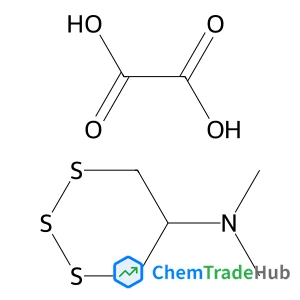
Oxalic acid compound with cyclohexylsulfamothioic O-acid (11)
CAS Number:
31895-22-4
Molecular Formula:
C7H13NO4S3

Recommended Suppliers





Disclaimer
This page provides academic journal information for reference and research purposes only. We are not affiliated with any journal publishers and do not handle publication submissions. For publication-related inquiries, please contact the respective journal publishers directly.
If you notice any inaccuracies in the information displayed, please contact us at support@chemtradehub.com. We will promptly review and address your concerns.