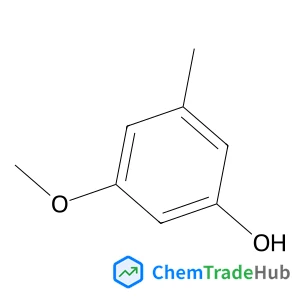
Oxalic acid compound with cyclohexylsulfamothioic O-acid (11)
CAS Number:
31895-22-4
Molecular Formula:
C7H13NO4S3
H. R. Schober
We report results of molecular dynamics simulations of a binary Lennard-Jones system at zero pressure in the undercooled liquid and glassy states. We first follow the evolution of diffusivity and dynamic heterogeneity with temperature and show their correlation. In a second step we follow the ageing of a quenched glass. As diffusivity decreases with ageing, heterogeneity increases. We conclude that the heterogeneity is a property of the inherent diffusion of the relaxed state. The variations with ageing time can be explained by annealing of quenched defect structures. This annealing has the same decay constants for both diffusivity and heterogeneity of both components.
Hui Ding, Chen Chen, Haicheng Zhao, Ying Yue, Chunyang Han
DOI: 10.1039/C9AN00853E
Cheng Jin, Jin Li, Xiaobing Zhang
DOI: 10.1039/C5AN01918D
Rida Al-Rifai, Samar Kheirallah, Nicole Bouland, Gaël Poitevin, Abdelilah Beljebbar
DOI: 10.1039/C8AN02449A
Yingying Xiong, Yunlong Chen, Lin Ding, Xiaoqiang Liu, Huangxian Ju
DOI: 10.1039/C9AN00572B
Eric Waidely, Abdul-Rahman Obaid Al-Yuobi, A. S. Bashammakh, Mohammad S. El-Shahawi, Roger M. Leblanc
DOI: 10.1039/C5AN01884F
Waste containing (6-Bromo-2-naphthyl)oxy](dimethyl)(2-methyl-2-propanyl)silane (...
7-Fluoro-4-isoquinolinecarboxylic acid can be synthesized via a multi-step proce...
2,3,5,6-Tetrabromothieno[3,2-b]thiophene is a crystalline compound with a high m...
1-[4-(Benzylamino)-7,8-dihydro-5H-pyrano[4,3-d]pyrimidin-2-yl]-2-methyl-1H-indol...
The market for imidazo[5,1-d]-1,2,3,5-tetrazine-8-carboxylic acid, 3,4-dihydro-3...
3-(Triisopropylsilyl)propiolaldehyde is a synthetic organic compound with the CA...
6-Nitro-2H-1,4-benzoxazin-3(4H)-one (CAS: 81721-87-1) is subject to various regu...
Waste containing (3-Fluorophenyl)(4-{[(2-methyl-2-propanyl)oxy]carbonyl}-1-piper...
N,N'-4,4'-Biphenyldiyldiisonicotinamide is a white crystalline solid with a mole...
6-Bromo-8-fluoro-2-quinazolinol is primarily used in the pharmaceutical industry...

Physical Chemistry Chemical Physics (PCCP) is an international journal co-owned by 19 physical chemistry and physics societies from around the world. This journal publishes original, cutting-edge research in physical chemistry, chemical physics and biophysical chemistry. To be suitable for publication in PCCP, articles must include significant innovation and/or insight into physical chemistry; this is the most important criterion that reviewers and Editors will judge against when evaluating submissions. The journal has a broad scope and welcomes contributions spanning experiment, theory, computation and data science. Topical coverage includes spectroscopy, dynamics, kinetics, statistical mechanics, thermodynamics, electrochemistry, catalysis, surface science, quantum mechanics, quantum computing and machine learning. Interdisciplinary research areas such as polymers and soft matter, materials, nanoscience, energy, surfaces/interfaces, and biophysical chemistry are welcomed if they demonstrate significant innovation and/or insight into physical chemistry. Joined experimental/theoretical studies are particularly appreciated when complementary and based on up-to-date approaches.