












Isolation and structure determination of two new nosiheptide-type compounds provide insights into the function of the cytochrome P450 oxygenase NocV in nocathiacin biosynthesis
Literature Information
Publication Date
2020-01-07
DOI
10.1039/C9QO01328H
Impact Factor
5.281
Authors
Xuebing Bai, Heng Guo, Dandan Chen, Qian Yang
View Original
Abstract
Thiopeptides, which are a class of sulfur-rich, ribosomally synthesized and post-translationally modified peptides (RiPPs), have great potential in the treatment of diseases caused by oral pathogens. Nocathiacin I (NOC-I) and nosiheptide (NOS) are two structurally similar thiopeptide members that feature an indolic side ring. In the structure of NOC-I, this side ring is further rigidified through the formation of an ether linkage; however, the related biosynthetic process remains poorly understood. Here, we report that NocV, a cytochrome P450 protein found to be unique in the biosynthetic pathway of NOC-I, is responsible for the establishment of the intramolecular ether linkage through two oxidation steps. This observation benefited from the heterologous overexpression of the gene nocV in an engineered Streptomyces strain producing the bicyclic NOS intermediate NOS1260, and subsequent isolation and structure characterization of two functionalized products. The product NOS-V1 contains a new hydroxyl group at Cα of the residue Glu6, in contrast with the other product NOS-V2, in which this hydroxyl group is further coupled with the C4 methyl group of the indolic moiety to form an ether linkage. These findings provide insights into the catalytic logic of NocV in the biosynthesis of NOC-I, during which this cytochrome P450 protein appears to act in tandem on two positions in NOS1260 by selectively hydroxylating Glu6 and then oxidatively coupling the indolic moiety. Rigidifying the side ring via ether bond formation has a positive impact on the antibacterial properties of NOS-type thiopeptides, evidenced by the improved activity of NOC-V2 against various tested oral pathogens compared with NOS1260.
Related Literature
Oxidative selenofunctionalization of allenes: convenient access to 2-(phenylselanyl)-but-2-enals and 4-oxo-3-(phenylselanyl)pent-2-enoates‡
Benito Alcaide, Pedro Almendros, Teresa Martínez del Campo, Laura Martín, Guillermo Palop, Mireia Toledano-Pinedo
2019-05-24
Research Article
DOI: 10.1039/C9QO00561G
Highly efficient enantioselective synthesis of bispiro[benzofuran-oxindole-pyrrolidine]s through organocatalytic cycloaddition
Boyu Li, Fengyun Gao, Xing Feng, Mengmeng Sun, Yifei Guo, Dongwa Wen, Yabo Deng, Jinqi Huang, Kairong Wang, Wenjin Yan
2019-03-18
Research Article
DOI: 10.1039/C9QO00241C
Efficient and practical synthesis of unsymmetrical disulfides via base-catalyzed aerobic oxidative dehydrogenative coupling of thiols
Xu Qiu, Xiaoxue Yang, Yiqun Zhang, Ning Jiao
2019-04-22
Research Article
DOI: 10.1039/C9QO00239A
Structurally diverse diketopiperazine alkaloids from the marine-derived fungus Aspergillus versicolor SCSIO 41016
Huaming Tao, Xiuping Lin, Bin Yang, Xuefeng Zhou
2019-01-30
Research Article
DOI: 10.1039/C8QO01147H
Encapsulation of dihydrogenphosphate ions as a cyclic dimer to the cavities of site-specifically modified indolocarbazole-pyridine foldamers‡
Chaeeun Lee, Hyemi Lee, Seungwon Lee, Hae-Geun Jeon, Kyu-Sung Jeong
2018-12-28
Research Article
DOI: 10.1039/C8QO01307A
Copper-catalysed C(sp3)–N coupling initiated by selective C–C bond cleavage of cyclobutanone oxime esters
Qing-Qiang Min, Na Li, Guang-Le Chen
2019-02-27
Research Article
DOI: 10.1039/C9QO00235A
Synthesis of chiral seven-membered cyclic sulfonamides through palladium-catalyzed arylation of cyclic imines
Lei Shi, Fan-Jie Meng, Yaming Li
2019-03-22
Research Article
DOI: 10.1039/C8QO01323C
You might also like
Compound Q&A
How should waste containing (6-Bromo-2-naphthyl)oxy](dimethyl)(2-methyl-2-propanyl)silane be handled?
Waste containing (6-Bromo-2-naphthyl)oxy](dimethyl)(2-methyl-2-propanyl)silane (...
100751-65-3[(6-Bromo-2-naphthyl...
Compound Q&A
How is 7-Fluoro-4-isoquinolinecarboxylic acid (CAS: 1841081-40-0) typically synthesized?
7-Fluoro-4-isoquinolinecarboxylic acid can be synthesized via a multi-step proce...
1841081-40-07-Fluoro-4-isoquinol...
Compound Q&A
What are the physical and chemical properties of 2,3,5,6-Tetrabromothieno[3,2-b]thiophene (CAS: 124638-53-5)?
2,3,5,6-Tetrabromothieno[3,2-b]thiophene is a crystalline compound with a high m...
124638-53-52,3,5,6-Tetrabromoth...
Compound Q&A
Is 1-[4-(Benzylamino)-7,8-dihydro-5H-pyrano[4,3-d]pyrimidin-2-yl]-2-methyl-1H-indole-4-carboxamide (CAS: 1542705-92-9) safe?
1-[4-(Benzylamino)-7,8-dihydro-5H-pyrano[4,3-d]pyrimidin-2-yl]-2-methyl-1H-indol...
1542705-92-91-[4-(Benzylamino)-7...
Compound Q&A
What is the market or research trend for imidazo[5,1-d]-1,2,3,5-tetrazine-8-carboxylic acid, 3,4-dihydro-3-methyl-4-oxo- (CAS: 113942-30-6)?
The market for imidazo[5,1-d]-1,2,3,5-tetrazine-8-carboxylic acid, 3,4-dihydro-3...
113942-30-6Imidazo[5,1-d]-1,2,3...
Compound Q&A
What is 3-(Triisopropylsilyl)propiolaldehyde (CAS: 163271-80-5)?
3-(Triisopropylsilyl)propiolaldehyde is a synthetic organic compound with the CA...
163271-80-53-(Triisopropylsilyl...
Compound Q&A
What regulatory guidelines apply to 6-Nitro-2H-1,4-benzoxazin-3(4H)-one (CAS: 81721-87-1)?
6-Nitro-2H-1,4-benzoxazin-3(4H)-one (CAS: 81721-87-1) is subject to various regu...
81721-87-16-Nitro-2H-1,4-benzo...
Compound Q&A
How should waste containing (3-Fluorophenyl)(4-{[(2-methyl-2-propanyl)oxy]carbonyl}-1-piperazinyl)acetic acid (CAS: 885272-91-3) be handled?
Waste containing (3-Fluorophenyl)(4-{[(2-methyl-2-propanyl)oxy]carbonyl}-1-piper...
885272-91-3(3-Fluorophenyl)(4-{...
Compound Q&A
What are the physical and chemical properties of N,N'-4,4'-Biphenyldiyldiisonicotinamide (CAS: 55119-40-9)?
N,N'-4,4'-Biphenyldiyldiisonicotinamide is a white crystalline solid with a mole...
55119-40-9N,N'-4,4'-Biphenyldi...
Compound Q&A
What industries use 6-Bromo-8-fluoro-2-quinazolinol (CAS: 1036756-15-6)?
6-Bromo-8-fluoro-2-quinazolinol is primarily used in the pharmaceutical industry...
1036756-15-66-Bromo-8-fluoro-2-q...
Source Journal
Organic Chemistry Frontiers

CiteScore:
7.8
Self-citation Rate:
8.7%
Articles per Year:
724
Organic Chemistry Frontiers publishes high-quality research from across organic chemistry. Emphases are placed on studies that make significant contributions to the field of organic chemistry by reporting either new or significantly improved protocols or methodologies. Topics include, but are not limited to the following: Organic synthesis Development of synthetic methodologies Catalysis Natural products Functional organic materials Supramolecular and macromolecular chemistry Physical and computational organic chemistry
Recommended Compounds
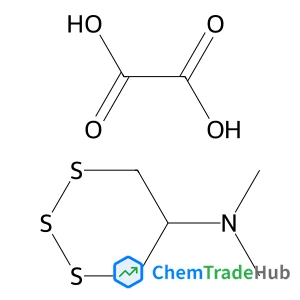
Oxalic acid compound with cyclohexylsulfamothioic O-acid (11)
CAS Number:
31895-22-4
Molecular Formula:
C7H13NO4S3
Recommended Suppliers






Disclaimer
This page provides academic journal information for reference and research purposes only. We are not affiliated with any journal publishers and do not handle publication submissions. For publication-related inquiries, please contact the respective journal publishers directly.
If you notice any inaccuracies in the information displayed, please contact us at support@chemtradehub.com. We will promptly review and address your concerns.