


A pore-expanded supramolecular organic framework and its enrichment of photosensitizers and catalysts for visible-light-induced hydrogen production
Literature Information
Publication Date
2019-04-16
DOI
10.1039/C9QO00382G
Impact Factor
5.281
Authors
Meng Yan, Xu-Bo Liu, Zhong-Zheng Gao, Yi-Peng Wu, Jun-Li Hou, Hui Wang, Dan-Wei Zhang, Yi Liu, Zhan-Ting Li
View Original
Abstract
A pore-expanded three-dimensional supramolecular organic framework SOF-bpb, with a previously unattained aperture size of 3.6 nm, has been constructed in water from the co-assembly of cucurbit[8]uril (CB[8]) and a tetraphenylmethane-cored 1,4-bis(pyridin-4-yl)-benzene-appended building block M1. The periodicity of SOF-bpb in water and in the solid state has been confirmed using synchrotron X-ray scattering and diffraction experiments. SOF-bpb can adsorb anionic and neutral Ru2+ complex photosensitizers and anionic Wells–Dawson-type and Keggin-type polyoxometalates (POMs). The adsorption leads to an important enrichment effect, which remarkably increases the catalytic efficiency of the Ru2+ complex–POM systems for visible light-induced reduction of protons to produce H2. The expanded aperture of SOF-bpb also facilitates light absorption of the adsorbed Ru2+ complex photosensitizers and electron transfer between excited complexes and the POM catalysts, leading to enhanced photocatalytic activities as compared with the prototypical SOF that has an aperture size of 2.1 nm.
Recommended Journals

Critical Reviews in Solid State and Materials Sciences

Heteroatom Chemistry

Medicinal Chemistry Research

Journal of the Indian Institute of Science

Journal of Chemical Sciences

Polycyclic Aromatic Compounds

Journal of Asian Natural Products Research

Colloid Journal

Atomization and Sprays

Chinese Journal of Chemistry
Related Literature
Recent advances in (reactive) melt processing of cellulose acetate and related biodegradable bio-compositions
Robert Quintana, Olivier Persenaire, Leila Bonnaud, Philippe Dubois
2011-11-28
Minireview
DOI: 10.1039/C1PY00421B
UCST-driven self-assembly and crosslinking of diblock copolymer micelles
Peter J. Roth, Thomas P. Davis, Andrew B. Lowe
2012-05-31
Paper
DOI: 10.1039/C2PY20204B
Organoboron star polymersvia arm-first RAFT polymerization: synthesis, luminescent behavior, and aqueous self-assembly
Fei Cheng, Edward M. Bonder, Ami Doshi, Frieder Jäkle
2012-01-03
Communication
DOI: 10.1039/C2PY00556E
Emulsifier-free, organotellurium-mediated living radical emulsion polymerization (emulsion TERP) of methyl methacrylate with dimethyl ditelluride as the catalyst
Yukiya Kitayama, Hirotaka Moribe, Kazuya Kishida
2012-03-30
Paper
DOI: 10.1039/C2PY20105D
Aromatic-aliphatic random and block copolyesters: synthesis, sequence distribution and thermal properties
Wen-Da Li, Jian-Bing Zeng, Xiao-Jie Lou, Jing-Jing Zhang, Yu-Zhong Wang
2012-03-26
Paper
DOI: 10.1039/C2PY20068F
Bioinspired dual self-folding of single polymer chains via reversible hydrogen bonding
Ozcan Altintas, Peter Gerstel
2011-11-11
Paper
DOI: 10.1039/C1PY00392E
One-step RAFT synthesis of well-defined amphiphilic star polymers and their self-assembly in aqueous solution
Christoph Herfurth, Paula Malo de Molina, Christoph Wieland, Sarah Rogers, Michael Gradzielski
2012-04-26
Paper
DOI: 10.1039/C2PY20126G
Three new conjugated polymers based on benzo[2,1-b:3,4-b′]dithiophene: synthesis, characterization, photoinduced charge transfer and theoretical calculation studies
Shaojie Chen, Qiuyu Zhang, Hepeng Zhang, Junwei Gu, Mingliang Ma, Tiejun Xin, Yanyang Zhou, Jian Zhou, Qing Liu
2012-06-07
Paper
DOI: 10.1039/C2PY20122D
You might also like
Compound Q&A
Are there alternatives to 1-(4-Chlorophenyl)-N-hydroxymethanimine (CAS: 3848-36-0) in synthesis?
When considering alternatives to 1-(4-Chlorophenyl)-N-hydroxymethanimine (CAS: 3...
3848-36-01-(4-Chlorophenyl)-N...
Compound Q&A
How should (1R,9S,10S,12S,14E,16S,19R,20R,21S,22R)-3,9,21-Trihydroxy-5,10,12,14,16,20,22-heptamethyl-23,24-dioxatetracyclo[17.3.1.1~6,9~.0~2,7~]tetracosa-2,5,7,14-tetraen-4-one (CAS: 183202-73-5) be stored?
This compound should be stored in a cool, dry place away from direct sunlight. I...
183202-73-5(1R,9S,10S,12S,14E,1...
Compound Q&A
How is 3-(4-Bromophenyl)-5-(2-fluorophenyl)-1,2,4-oxadiazole (CAS: 419553-16-5) typically synthesized?
3-(4-Bromophenyl)-5-(2-fluorophenyl)-1,2,4-oxadiazole is synthesized through a m...
419553-16-53-(4-Bromophenyl)-5-...
Compound Q&A
How is 5-Chloro-2-(4-chlorophenyl)-4-methyl-6-[3-(1-piperidinyl)propoxy]pyrimidine (CAS: 1639220-19-1) typically synthesized?
5-Chloro-2-(4-chlorophenyl)-4-methyl-6-[3-(1-piperidinyl)propoxy]pyrimidine (CAS...
1639220-19-15-Chloro-2-(4-chloro...
Compound Q&A
What industries use 2-Chloro-4-(difluoromethoxy)pyridine (CAS: 1206978-15-5)?
2-Chloro-4-(difluoromethoxy)pyridine is used in the pharmaceutical industry for ...
1206978-15-52-Chloro-4-(difluoro...
Compound Q&A
What regulatory guidelines apply to 3-Chloro-6-methylpyridazine (CAS: 1121-79-5)?
3-Chloro-6-methylpyridazine (CAS: 1121-79-5) is classified under the Globally Ha...
1121-79-53-Chloro-6-methylpyr...
Compound Q&A
Are there alternatives to Methyl 4,5-dimethyl-2-nitrobenzoate in synthesis?
Several alternatives can be used in the synthesis of Methyl 4,5-dimethyl-2-nitro...
90922-74-0Methyl 4,5-dimethyl-...
Compound Q&A
Are there alternatives to (2E,2'E)-3,3'-(1,4-Phenylene)bisacrylaldehyde in synthesis?
Alternatives to (2E,2'E)-3,3'-(1,4-Phenylene)bisacrylaldehyde include other acry...
63405-68-5(2E,2'E)-3,3'-(1,4-P...
Compound Q&A
What is 3-Amino-5-chloropyridin-2-ol hydrochloride (CAS: 1261906-29-9)?
3-Amino-5-chloropyridin-2-ol hydrochloride is an organic compound with the CAS n...
1261906-29-93-Amino-5-chloropyri...
Compound Q&A
What precautions should be taken when handling 6,7-Difluoro-2,3-dihydro-4H-chromen-4-one (CAS: 1092349-93-3)?
When handling 6,7-Difluoro-2,3-dihydro-4H-chromen-4-one, it is essential to wear...
1092349-93-36,7-Difluoro-2,3-dih...
Source Journal
Organic Chemistry Frontiers

CiteScore:
7.8
Self-citation Rate:
8.7%
Articles per Year:
724
Organic Chemistry Frontiers publishes high-quality research from across organic chemistry. Emphases are placed on studies that make significant contributions to the field of organic chemistry by reporting either new or significantly improved protocols or methodologies. Topics include, but are not limited to the following: Organic synthesis Development of synthetic methodologies Catalysis Natural products Functional organic materials Supramolecular and macromolecular chemistry Physical and computational organic chemistry
Recommended Compounds
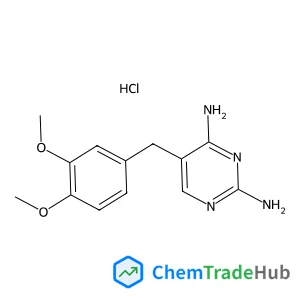
5-(3,4-Dimethoxybenzyl)-2,4-pyrimidinediamine hydrochloride (1:1)
CAS Number:
2507-23-5
Molecular Formula:
C13H17ClN4O2
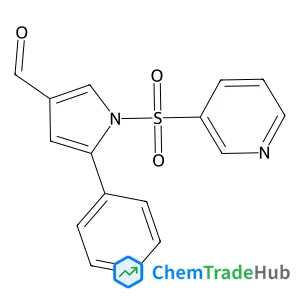
5-Phenyl-1-(pyridin-3-ylsulfonyl)-1H-pyrrole-3-carbaldehyde
CAS Number:
881676-90-0
Molecular Formula:
C16H12N2O3S
Recommended Suppliers





Disclaimer
This page provides academic journal information for reference and research purposes only. We are not affiliated with any journal publishers and do not handle publication submissions. For publication-related inquiries, please contact the respective journal publishers directly.
If you notice any inaccuracies in the information displayed, please contact us at support@chemtradehub.com. We will promptly review and address your concerns.