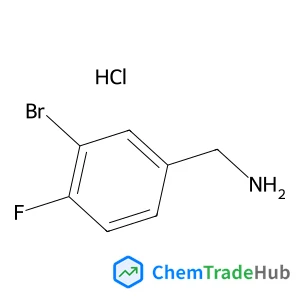
1-(3-Bromo-4-fluorophenyl)methanamine hydrochloride (1:1)
CAS Number:
202865-68-7
Molecular Formula:
C7H8BrClFN
Yukiya Kitayama, Hirotaka Moribe, Kazuya Kishida
Emulsifier-free, organotellurium-mediated living radical emulsion polymerization (emulsion TERP) of methyl methacrylate (MMA) using poly(methacrylic acid) (PMAA)–methyltellanyl (TeMe) (PMAA30-TeMe) (degree of polymerization of PMAA, 30) was carried out at 60 °C with 1000 rpm stirring. The emulsion TERP of MMA did not successfully proceed with maintaining a living manner because of a low chain transfer rate constant relative to propagation rate constant. Moreover, even in the coexistence of (TeBu)2, the emulsion TERP of MMA also did not proceed with living nature. On the other hand, it in the coexistence of (TeMe)2 proceeded with good control/livingness. The difference was caused by the different in the solubility in water between (TeBu)2 and (TeMe)2. Because (TeBu)2 is difficult to dissolve in the aqueous phase, it did not work as a catalyst in the aqueous phase, resulting in a homogeneous nucleation. On the other hand, because (TeMe)2, which is more hydrophilic than (TeBu)2, works as an efficient catalyst in the aqueous phase, resulting in the self-assembly nucleation.
Jaipal Gupta, Daniel J. Keddie, Chaoying Wan, David M. Haddleton, Tony McNally
DOI: 10.1039/C6PY00522E
Qun Luo, Junkai Wang, Yi Lin, Changquan Tang, Junyan Dou, Hongwei Tan, Qingdong Zheng, Chang-Qi Ma, Zheng Cui
DOI: 10.1039/C6PY02161A
Khama Rani Ghosh, Sukanta Kumar Saha
DOI: 10.1039/C4PY00673A
Zhenghai Shi, Fang Guo, Rui Tan, Hui Niu, Tingting Li, Yang Li
DOI: 10.1039/C6PY02097F
Jinying Peng, Chun Tian, Lifen Zhang, Zhenping Cheng, Xiulin Zhu
DOI: 10.1039/C6PY02133F
Mariolino Carta, Matthew Croad, Keith Bugler, Kadhum J. Msayib, Neil B. McKeown
DOI: 10.1039/C4PY00608A
Merve Mocan, Joris de Grooth, Anton H. Hofman, Hanne M. van der Kooij, Katja Loos, Wiebe M. de Vos, Marleen Kamperman
DOI: 10.1039/C7PY00023E
Sanjib Banerjee, Bhausaheb V. Tawade, Vincent Ladmiral, Lionel X. Dupuy, Bruno Améduri
DOI: 10.1039/C7PY00209B
Yu Liu, Xiaochuan Shui, Meng Wang, Chenguang Zhang, Yuechuan Wang
DOI: 10.1039/C6PY02104B
When considering alternatives to 1-(4-Chlorophenyl)-N-hydroxymethanimine (CAS: 3...
This compound should be stored in a cool, dry place away from direct sunlight. I...
3-(4-Bromophenyl)-5-(2-fluorophenyl)-1,2,4-oxadiazole is synthesized through a m...
5-Chloro-2-(4-chlorophenyl)-4-methyl-6-[3-(1-piperidinyl)propoxy]pyrimidine (CAS...
2-Chloro-4-(difluoromethoxy)pyridine is used in the pharmaceutical industry for ...
3-Chloro-6-methylpyridazine (CAS: 1121-79-5) is classified under the Globally Ha...
Several alternatives can be used in the synthesis of Methyl 4,5-dimethyl-2-nitro...
Alternatives to (2E,2'E)-3,3'-(1,4-Phenylene)bisacrylaldehyde include other acry...
3-Amino-5-chloropyridin-2-ol hydrochloride is an organic compound with the CAS n...
When handling 6,7-Difluoro-2,3-dihydro-4H-chromen-4-one, it is essential to wear...

Polymer Chemistry welcomes submissions in all areas of polymer science that have a strong focus on macromolecular chemistry. Manuscripts may cover a broad range of fields, yet no direct application focus is required.