












Three new conjugated polymers based on benzo[2,1-b:3,4-b′]dithiophene: synthesis, characterization, photoinduced charge transfer and theoretical calculation studies
Literature Information
Publication Date
2012-06-07
DOI
10.1039/C2PY20122D
Impact Factor
5.582
Authors
Shaojie Chen, Qiuyu Zhang, Hepeng Zhang, Junwei Gu, Mingliang Ma, Tiejun Xin, Yanyang Zhou, Jian Zhou, Qing Liu
View Original
Abstract
Three new conjugated polymers have been designed and synthesized via the alternate copolymerization of the electron-donating monomer benzodithiophene (BDT) and three different electron-accepting monomers: 5,8-dibromoquinoxaline, 5,8-dibromo-2,3-diphenylquinoxaline, 10,13-dibromodibenzo[a,c]phenazine. The synthesized polymers show good solubility in common organic solvents as well as broader absorptions in the visible region and narrower optical band gaps compared to homopolymers made from BDT units. It is found that the absorptions of the copolymers are red-shifted by increasing the electron-withdrawing ability of the co-monomer. In particular, the absorption edge of the P3 film extends to 778 nm, whereas that of the P1 film is only at 636 nm. Theoretical calculation studies of structure–property relations indicated that polymer chains with better coplanarity or π–π* delocalization will lead to lower band gaps. Photoinduced charge transfer (PCT) studies disclosed that exciton dissociation of photoexcited PX (X = 1, 2, 3) via electron-transfer may occur at the interface with CHL-C60, enabling the photogeneration of electrons and holes. The P3/CHL-C60 blended film was chosen as a representative sample to test the applicability of the polymer P3 for energy conversion, a 1.76% PCE was finally obtained.
Related Literature
Facile one-pot access to π-conjugated polymers via sequential bromination/direct arylation polycondensation
Hitoshi Saito, Jieran Chen, Junpei Kuwabara, Takeshi Yasuda, Takaki Kanbara
2017-04-25
Paper
DOI: 10.1039/C7PY00332C
Synthesis and properties of pyrrolo[3,4-c]pyrrole-1,3-dione based polymer semiconductors and their performance in organic thin film transistors
Chang Guo, Bin Sun, Yuning Li
2014-05-27
Paper
DOI: 10.1039/C4PY00372A
Copolymers of carbazole and phenazine derivatives: minor structural modification, but totally different photodetector performance
Shuang Li, Xianyu Deng, Lei Feng, Xincheng Miao, Kuangyi Tang, Qianqian Li, Zhen Li
2016-12-21
Paper
DOI: 10.1039/C6PY01733A
Zirconocene-catalyzed stereoselective cyclocopolymerization of 2-methyl-1,5-hexadiene with propylene
Manuela Bader, Gabriel Theurkauff, Katty Den Dauw, Christian Lamotte, Olivier Lhost, Evgueni Kirillov, Jean-François Carpentier
2014-06-27
Paper
DOI: 10.1039/C4PY00612G
Tumor-targeted aggregation of pH-sensitive nanocarriers for enhanced retention and rapid intracellular drug release
Wei Wu, Qiujing Zhang, Jiantao Wang, Miao Chen, Shuai Li, Zaifu Lin, Jianshu Li
2014-05-30
Paper
DOI: 10.1039/C4PY00575A
Rational design of soluble and clickable polymers prepared by conventional free radical polymerization of acetylene-functionalized acrylate
Yu Liu, Xiaochuan Shui, Meng Wang, Chenguang Zhang, Yuechuan Wang
2017-02-23
Paper
DOI: 10.1039/C6PY02104B
A photo-responsive polymeric azopyridine ligand with metal-complexation sensitivity: application to coordination equilibrium studies on the polymer complexes of a cobalt(ii) Schiff base
T. Suzuki, T. Moriya, R. Endo, N. Iwasaki
2016-12-16
Paper
DOI: 10.1039/C6PY02036D
Hyperbranched PEG-based multi-NHS polymer and bioconjugation with BSA
Sigen A, Qian Xu, Dezhong Zhou, Yongsheng Gao, Jeddah Marie Vasquez, Udo Greiser, Wenguang Liu
2017-01-04
Communication
DOI: 10.1039/C6PY01719C
You might also like
Compound Q&A
Are there alternatives to 1-(4-Chlorophenyl)-N-hydroxymethanimine (CAS: 3848-36-0) in synthesis?
When considering alternatives to 1-(4-Chlorophenyl)-N-hydroxymethanimine (CAS: 3...
3848-36-01-(4-Chlorophenyl)-N...
Compound Q&A
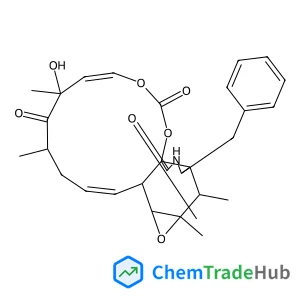
How should (1R,9S,10S,12S,14E,16S,19R,20R,21S,22R)-3,9,21-Trihydroxy-5,10,12,14,16,20,22-heptamethyl-23,24-dioxatetracyclo[17.3.1.1~6,9~.0~2,7~]tetracosa-2,5,7,14-tetraen-4-one (CAS: 183202-73-5) be stored?
This compound should be stored in a cool, dry place away from direct sunlight. I...
183202-73-5(1R,9S,10S,12S,14E,1...
Compound Q&A
How is 3-(4-Bromophenyl)-5-(2-fluorophenyl)-1,2,4-oxadiazole (CAS: 419553-16-5) typically synthesized?
3-(4-Bromophenyl)-5-(2-fluorophenyl)-1,2,4-oxadiazole is synthesized through a m...
419553-16-53-(4-Bromophenyl)-5-...
Compound Q&A
How is 5-Chloro-2-(4-chlorophenyl)-4-methyl-6-[3-(1-piperidinyl)propoxy]pyrimidine (CAS: 1639220-19-1) typically synthesized?
5-Chloro-2-(4-chlorophenyl)-4-methyl-6-[3-(1-piperidinyl)propoxy]pyrimidine (CAS...
1639220-19-15-Chloro-2-(4-chloro...
Compound Q&A
What industries use 2-Chloro-4-(difluoromethoxy)pyridine (CAS: 1206978-15-5)?
2-Chloro-4-(difluoromethoxy)pyridine is used in the pharmaceutical industry for ...
1206978-15-52-Chloro-4-(difluoro...
Compound Q&A
What regulatory guidelines apply to 3-Chloro-6-methylpyridazine (CAS: 1121-79-5)?
3-Chloro-6-methylpyridazine (CAS: 1121-79-5) is classified under the Globally Ha...
1121-79-53-Chloro-6-methylpyr...
Compound Q&A
Are there alternatives to Methyl 4,5-dimethyl-2-nitrobenzoate in synthesis?
Several alternatives can be used in the synthesis of Methyl 4,5-dimethyl-2-nitro...
90922-74-0Methyl 4,5-dimethyl-...
Compound Q&A
Are there alternatives to (2E,2'E)-3,3'-(1,4-Phenylene)bisacrylaldehyde in synthesis?
Alternatives to (2E,2'E)-3,3'-(1,4-Phenylene)bisacrylaldehyde include other acry...
63405-68-5(2E,2'E)-3,3'-(1,4-P...
Compound Q&A
What is 3-Amino-5-chloropyridin-2-ol hydrochloride (CAS: 1261906-29-9)?
3-Amino-5-chloropyridin-2-ol hydrochloride is an organic compound with the CAS n...
1261906-29-93-Amino-5-chloropyri...
Compound Q&A
What precautions should be taken when handling 6,7-Difluoro-2,3-dihydro-4H-chromen-4-one (CAS: 1092349-93-3)?
When handling 6,7-Difluoro-2,3-dihydro-4H-chromen-4-one, it is essential to wear...
1092349-93-36,7-Difluoro-2,3-dih...
Source Journal
Polymer Chemistry

CiteScore:
8.6
Self-citation Rate:
7.3%
Articles per Year:
457
Polymer Chemistry welcomes submissions in all areas of polymer science that have a strong focus on macromolecular chemistry. Manuscripts may cover a broad range of fields, yet no direct application focus is required.
Recommended Compounds
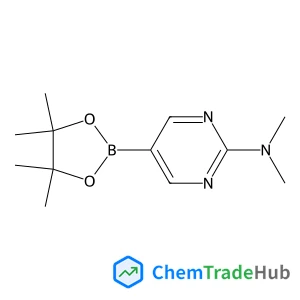
N,N-Dimethyl-5-(4,4,5,5-tetramethyl-1,3,2-dioxaborolan-2-yl)-2-pyrimidinamine
CAS Number:
1032759-30-0
Molecular Formula:
C12H20BN3O2
Recommended Suppliers






Disclaimer
This page provides academic journal information for reference and research purposes only. We are not affiliated with any journal publishers and do not handle publication submissions. For publication-related inquiries, please contact the respective journal publishers directly.
If you notice any inaccuracies in the information displayed, please contact us at support@chemtradehub.com. We will promptly review and address your concerns.