












UCST-driven self-assembly and crosslinking of diblock copolymer micelles
Literature Information
Publication Date
2012-05-31
DOI
10.1039/C2PY20204B
Impact Factor
5.582
Authors
Peter J. Roth, Thomas P. Davis, Andrew B. Lowe
View Original
Abstract
The upper critical solution temperature (UCST) behaviour of poly[oligo(ethylene glycol) monomethylether methacrylate] (POEGMA) in 1-octanol was exploited to self-assemble and crosslink micellar aggregates. Four diblock copolymers, POEGMA-block-poly(N-isopropylacrylamide) (POEGMA-b-PNIPAM), POEGMA-b-poly(N,N-diethylacrylamide) (POEGMA-b-PDEAM), and two examples of POEGMA-b-[PNIPAM-co-poly(pentafluorophenyl acrylate)] (POEGMA-b-(PNIPAM-co-PPFPA)), containing different amounts of activated PFP esters, were found to reversibly self-assemble into well-defined spherical micelles upon cooling in 1-octanol, as evidenced by dynamic light scattering (DLS) and electron microscopy. Transition temperatures, measured by turbidity and DLS, were around room temperature and the PNIPAM and PDEAM blocks did not significantly influence the critical temperature of the POEGMA block compared to homo POEGMA. The aggregates exhibited an inverted morphology compared to PNIPAM core–POEGMA shell micelles accessible through a thermally triggered self-assembly in water exploiting the lower critical solution temperature (LCST) behaviour of PNIPAM. Inverted micelles with PNIPAM-co-PPFPA coronae in 1-octanol were shell crosslinked using a diamine and subsequently transferred into water. This procedure yielded cage-like structures with swollen POEGMA cores and crosslinked PNIPAM shells. The shells reversibly collapsed onto the cores when heated above the LCST of PNIPAM, providing particles with novel architecture and the potential to host and release guest molecules by a thermal trigger.
Related Literature
Heterogeneous organocatalysts composed of microporous polymer networks assembled by Tröger's base formation
Mariolino Carta, Matthew Croad, Keith Bugler, Kadhum J. Msayib, Neil B. McKeown
2014-06-20
Paper
DOI: 10.1039/C4PY00608A
Peripherally diketopyrrolopyrrole-functionalized dendritic oligothiophenes – synthesis, molecular structure, properties and applications
Qun Luo, Junkai Wang, Yi Lin, Changquan Tang, Junyan Dou, Hongwei Tan, Qingdong Zheng, Chang-Qi Ma, Zheng Cui
2017-01-10
Paper
DOI: 10.1039/C6PY02161A
The para-fluoro-thiol ligation in water
Parvesh Wadhwani, Rouven Müller
2017-01-16
Communication
DOI: 10.1039/C6PY02108E
Catch and release: photocleavable cationic diblock copolymers as a potential platform for nucleic acid delivery
Matthew D. Green, Abbygail A. Foster, Chad T. Greco, Raghunath Roy, Rachel M. Lehr, Thomas H. Epps, III, Millicent O. Sullivan
2014-06-05
Communication
DOI: 10.1039/C4PY00638K
Control over the assembly and rheology of supramolecular networks via multi-responsive double hydrophilic copolymers
Jérémy Brassinne, Charles-André Fustin, Jean-François Gohy
2017-01-30
Paper
DOI: 10.1039/C6PY02143C
Visible-light-induced living radical polymerization using in situ bromine-iodine transformation as an internal boost
Xiaodong Liu, Qinghua Xu, Lifen Zhang, Zhenping Cheng, Xiulin Zhu
2017-03-24
Paper
DOI: 10.1039/C7PY00366H
Self-healable polymer gels with multi-responsiveness of gel–sol–gel transition and degradability
Ruixue Chang, Heng An, Xu Li, Ruyi Zhou, Jianglei Qin, Yuelan Tian, Kuilin Deng
2017-01-10
Paper
DOI: 10.1039/C6PY02122K
Unusual thermal phase transition behavior of an ionic liquid and poly(ionic liquid) in water with significantly different LCST and dynamic mechanism
Wenlong Li, Peiyi Wu
2014-05-16
Paper
DOI: 10.1039/C4PY00593G
You might also like
Compound Q&A
Are there alternatives to 1-(4-Chlorophenyl)-N-hydroxymethanimine (CAS: 3848-36-0) in synthesis?
When considering alternatives to 1-(4-Chlorophenyl)-N-hydroxymethanimine (CAS: 3...
3848-36-01-(4-Chlorophenyl)-N...
Compound Q&A
How should (1R,9S,10S,12S,14E,16S,19R,20R,21S,22R)-3,9,21-Trihydroxy-5,10,12,14,16,20,22-heptamethyl-23,24-dioxatetracyclo[17.3.1.1~6,9~.0~2,7~]tetracosa-2,5,7,14-tetraen-4-one (CAS: 183202-73-5) be stored?
This compound should be stored in a cool, dry place away from direct sunlight. I...
183202-73-5(1R,9S,10S,12S,14E,1...
Compound Q&A
How is 3-(4-Bromophenyl)-5-(2-fluorophenyl)-1,2,4-oxadiazole (CAS: 419553-16-5) typically synthesized?
3-(4-Bromophenyl)-5-(2-fluorophenyl)-1,2,4-oxadiazole is synthesized through a m...
419553-16-53-(4-Bromophenyl)-5-...
Compound Q&A
How is 5-Chloro-2-(4-chlorophenyl)-4-methyl-6-[3-(1-piperidinyl)propoxy]pyrimidine (CAS: 1639220-19-1) typically synthesized?
5-Chloro-2-(4-chlorophenyl)-4-methyl-6-[3-(1-piperidinyl)propoxy]pyrimidine (CAS...
1639220-19-15-Chloro-2-(4-chloro...
Compound Q&A
What industries use 2-Chloro-4-(difluoromethoxy)pyridine (CAS: 1206978-15-5)?
2-Chloro-4-(difluoromethoxy)pyridine is used in the pharmaceutical industry for ...
1206978-15-52-Chloro-4-(difluoro...
Compound Q&A
What regulatory guidelines apply to 3-Chloro-6-methylpyridazine (CAS: 1121-79-5)?
3-Chloro-6-methylpyridazine (CAS: 1121-79-5) is classified under the Globally Ha...
1121-79-53-Chloro-6-methylpyr...
Compound Q&A
Are there alternatives to Methyl 4,5-dimethyl-2-nitrobenzoate in synthesis?
Several alternatives can be used in the synthesis of Methyl 4,5-dimethyl-2-nitro...
90922-74-0Methyl 4,5-dimethyl-...
Compound Q&A
Are there alternatives to (2E,2'E)-3,3'-(1,4-Phenylene)bisacrylaldehyde in synthesis?
Alternatives to (2E,2'E)-3,3'-(1,4-Phenylene)bisacrylaldehyde include other acry...
63405-68-5(2E,2'E)-3,3'-(1,4-P...
Compound Q&A
What is 3-Amino-5-chloropyridin-2-ol hydrochloride (CAS: 1261906-29-9)?
3-Amino-5-chloropyridin-2-ol hydrochloride is an organic compound with the CAS n...
1261906-29-93-Amino-5-chloropyri...
Compound Q&A
What precautions should be taken when handling 6,7-Difluoro-2,3-dihydro-4H-chromen-4-one (CAS: 1092349-93-3)?
When handling 6,7-Difluoro-2,3-dihydro-4H-chromen-4-one, it is essential to wear...
1092349-93-36,7-Difluoro-2,3-dih...
Source Journal
Polymer Chemistry

CiteScore:
8.6
Self-citation Rate:
7.3%
Articles per Year:
457
Polymer Chemistry welcomes submissions in all areas of polymer science that have a strong focus on macromolecular chemistry. Manuscripts may cover a broad range of fields, yet no direct application focus is required.
Recommended Compounds
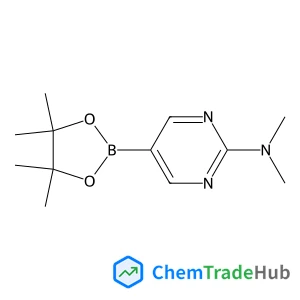
N,N-Dimethyl-5-(4,4,5,5-tetramethyl-1,3,2-dioxaborolan-2-yl)-2-pyrimidinamine
CAS Number:
1032759-30-0
Molecular Formula:
C12H20BN3O2
![2-{[(1R,2S)-2-Aminocyclohexyl]amino}-4-{[3-(2H-1,2,3-triazol-2-yl)phenyl]amino}-5-pyrimidinecarboxamide structure](https://static.chemtradehub.com/structs/137/1370261-96-3-40df.webp "2-{[(1R,2S)-2-Aminocyclohexyl]amino}-4-{[3-(2H-1,2,3-triazol-2-yl)phenyl]amino}-5-pyrimidinecarboxamide structure")
2-{[(1R,2S)-2-Aminocyclohexyl]amino}-4-{[3-(2H-1,2,3-triazol-2-yl)phenyl]amino}-5-pyrimidinecarboxamide
CAS Number:
1370261-96-3
Molecular Formula:
C19H23N9O
Recommended Suppliers





Disclaimer
This page provides academic journal information for reference and research purposes only. We are not affiliated with any journal publishers and do not handle publication submissions. For publication-related inquiries, please contact the respective journal publishers directly.
If you notice any inaccuracies in the information displayed, please contact us at support@chemtradehub.com. We will promptly review and address your concerns.