


Fluorous effect-induced emission of azido substituted poly(vinylidene fluoride) with high photostability and film formation
Literature Information
Publication Date
2019-12-27
DOI
10.1039/C9PY01622H
Impact Factor
5.582
Authors
Zhicheng Zhang, Jie Xiong, Gang He, Dongfeng Dang, Yunchuan Xie, Qing Wang
View Original
Abstract
In this work, we describe the first example of poly(vinylidene fluoride) (PVDF)-based luminescent fluoropolymers (ASFPs) with unconventional azido groups attached as chromophores, which display a strong excitation-dependent emission behaviour in both solution and solid-state. The fluorous effect, which refers to the influence of the strong electron withdrawing effect of neighbouring fluorine atoms on the energy gaps of azido groups and the non-radiative relaxation pathway depression by lower-frequency carbon–fluorine stretching modes, is responsible for the formation of the stable excited state and the retention of high fluorescence efficiency (photoluminescence quantum yields ≥ 10%). The excellent photostability, good solution processability, and independent emission to aggregation of ASFPs allow them to find promising applications as aqueous and oil tolerant fluorescent inks, high mechanical strength films, and multicolour imaging fluorescent nanofibers.
Recommended Journals

Russian Journal of General Chemistry

Russian Journal of Bioorganic Chemistry

Saudi Pharmaceutical Journal

Journal of Natural Medicines

New Journal of Chemistry

Current Opinion in Solid State & Materials Science

Chemical Communications

Crystallography Reports

Russian Journal of Organic Chemistry

Russian Journal of Applied Chemistry
Related Literature
First synthesis of 2′,3′-epimino-carbocyclic nucleosides
Minoru Ishikura, Atsushi Murakami, Nobuya Katagiri
2003-01-07
Communication
DOI: 10.1039/B210963H
Synthesis of (R)-2-methyl-4-deoxy and (R)-2-methyl-4,5-dideoxy analogues of 6-phosphogluconate as potential inhibitors of 6-phosphogluconate dehydrogenase
Christophe Dardonville, Ian H. Gilbert
2003-01-14
Paper
DOI: 10.1039/B210606J
Molecular recognition in the gas phase ligand switching reactions of the proton bound dimer of sarcosine and glycylglycine.‡
Richard A. J. O'Hair, Ana K. Vrkic
2003-02-04
Paper
DOI: 10.1039/B209848B
Studies toward the synthesis of strevertenes A and G: stereoselective construction of C1–C19 segments of the molecules
Tapan Kumar Kuilya, Subhendu Das, Dhiman Saha, Rajib Kumar Goswami
2018-08-23
Paper
DOI: 10.1039/C8OB01754A
The importance of N-heterocyclic carbene basicity in organocatalysis
Ning Wang, Jiahui Xu, Jeehiun K. Lee
2018-09-07
Review Article
DOI: 10.1039/C8OB01667D
The influence of chain elongation on Karplus-type relationships: a DFT study of scalar coupling constants in polyacetylene derivatives
Ibon Alkorta, José Elguero
2003-01-06
Paper
DOI: 10.1039/B208803G
A tetraphenylmethane based dendritic tolan–anthracene dyad: synthesis and energy transfer properties
Saumitra Sengupta, Pradipta Purkayastha
2002-12-09
Paper
DOI: 10.1039/B209186K
Synthesis of stereochemically-biased spiropyrans by microwave-promoted, one-pot alkylation–condensation
Alexis Perry, Kane Davis, Lara West
2018-09-21
Paper
DOI: 10.1039/C8OB01996G
Direct defluorinative amidation–hydrolysis reaction of gem-difluoroalkenes with N,N-dimethylformamide, and primary and secondary amines
Biyun Wang, Xianghu Zhao, Qingyun Liu, Song Cao
2018-10-18
Paper
DOI: 10.1039/C8OB02322K
A novel peptide conformation: the γ-bend ribbon
Bruno Drouillat, Cristina Peggion, Barbara Biondi, Karen Wright, François Couty, Marco Crisma
2018-10-09
Paper
DOI: 10.1039/C8OB02279H
You might also like
Compound Q&A
Is 4-Benzyl-2,2-dimethylmorpholine (CAS: 84761-04-6) safe?
4-Benzyl-2,2-dimethylmorpholine is generally considered safe when handled under ...
84761-04-64-Benzyl-2,2-dimethy...
Compound Q&A
What is (5,6-Dimethoxy-3-pyridinyl)boronic acid (CAS: 1346526-61-1)?
(5,6-Dimethoxy-3-pyridinyl)boronic acid is a chemical compound with the molecula...
1346526-61-1(5,6-Dimethoxy-3-pyr...
Compound Q&A
How is 1,1,3,3-Tetramethyl-1,3-bis(2-methyl-2-propanyl)disiloxane (CAS: 67875-55-2) typically synthesized?
1,1,3,3-Tetramethyl-1,3-bis(2-methyl-2-propanyl)disiloxane is synthesized throug...
67875-55-21,1,3,3-Tetramethyl-...
Compound Q&A
What are the main uses of (2R,4S)-1-Boc-4-methylpyrrolidine-2-carboxylic acid (CAS: 1018818-04-6)?
(2R,4S)-1-Boc-4-methylpyrrolidine-2-carboxylic acid is primarily used as a build...
1018818-04-6(2R,4S)-1-Boc-4-meth...
Compound Q&A
What precautions should be taken when handling 2,3-Dichloroacrylonitrile (CAS: 22410-58-8)?
When handling 2,3-Dichloroacrylonitrile, it is crucial to wear appropriate perso...
22410-58-82,3-Dichloroacryloni...
Compound Q&A
How should (S)-1-(o-Tolyl)ethanamine hydrochloride (CAS: 1332832-16-2) be stored?
(S)-1-(o-Tolyl)ethanamine hydrochloride should be stored in a cool, dry place to...
1332832-16-2(S)-1-(o-Tolyl)ethan...
Compound Q&A
What are the physical and chemical properties of Benzyl [1-(hydroxyamino)-1-imino-2-methyl-2-propanyl]carbamate (CAS: 518047-98-8)?
Benzyl [1-(hydroxyamino)-1-imino-2-methyl-2-propanyl]carbamate (CAS: 518047-98-8...
518047-98-8Benzyl [1-(hydroxyam...
Compound Q&A
What industries use 2-Methyloxazole-5-carbaldehyde (CAS: 885273-42-7)?
2-Methyloxazole-5-carbaldehyde is used in the pharmaceutical industry for the sy...
885273-42-72-Methyloxazole-5-ca...
Compound Q&A
What is the market or research trend for 2-Methyl-2-propanyl 4-[(1S)-1-hydroxyethyl]-1-piperidinecarboxylate (CAS: 389889-82-1)?
The market for 2-Methyl-2-propanyl 4-[(1S)-1-hydroxyethyl]-1-piperidinecarboxyla...
389889-82-12-Methyl-2-propanyl ...
Compound Q&A
Is 1-Butyl-3-methylpyridinium bromide (CAS: 26576-85-2) safe?
1-Butyl-3-methylpyridinium bromide is generally considered safe for laboratory u...
26576-85-21-Butyl-3-methylpyri...
Source Journal
Polymer Chemistry

CiteScore:
8.6
Self-citation Rate:
7.3%
Articles per Year:
457
Polymer Chemistry welcomes submissions in all areas of polymer science that have a strong focus on macromolecular chemistry. Manuscripts may cover a broad range of fields, yet no direct application focus is required.
Recommended Compounds
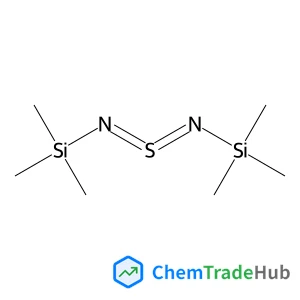
1,3-Bis(trimethylsilyl)-2lambda~4~-diazathia-1,2-diene
CAS Number:
18156-25-7
Molecular Formula:
C6H18N2SSi2
![3-(6-Nitrobenzo[d][1,3]dioxol-5-yl)acrylic acid structure](https://static.chemtradehub.com/structs/631/6315-90-8-6b36.webp "3-(6-Nitrobenzo[d][1,3]dioxol-5-yl)acrylic acid structure")
Recommended Suppliers





Disclaimer
This page provides academic journal information for reference and research purposes only. We are not affiliated with any journal publishers and do not handle publication submissions. For publication-related inquiries, please contact the respective journal publishers directly.
If you notice any inaccuracies in the information displayed, please contact us at support@chemtradehub.com. We will promptly review and address your concerns.