


Tandem transformations and multicomponent reactions utilizing alcohols following dehydrogenation strategy
Literature Information
Publication Date
2020-02-17
DOI
10.1039/C9OB02760B
Impact Factor
3.876
Authors
Bhaskar Paul, Milan Maji, Kaushik Chakrabarti, Sabuj Kundu
View Original
Abstract
The construction of new C–C, C–N and C–O bonds by replacing hazardous and waste generating chemicals with alcohols as the greener and sustainable reagents is one of the emerging areas of research. In consequence, the borrowing hydrogen and acceptorless dehydrogenative coupling principles have received significant momentum to synthesize various alkylated molecules and N-heterocycles. In the tandem transformations and multi-component reactions, simple substrates are directly converted to new functionalities or complex molecular systems using a single reaction set-up. In this review, the progress of tandem transformation of nitro, nitrile and azide functionalities as well as multi-component reactions utilizing alcohols is summarised. These transformations lead to the atom-economical synthesis of a wide range of alkylated imines, amines, amides and N-heterocycles such as pyrrole, pyridine, pyrimidine, quinoxaline, etc.
Recommended Journals

Biocatalysis and Biotransformation

Journal of Chemical Sciences

Acta Metallurgica Sinica-English Letters

Critical Reviews in Solid State and Materials Sciences

Main Group Chemistry

Journal of Asian Natural Products Research

Medicinal Chemistry Research

Topics in Catalysis

Journal of the Indian Institute of Science

Cellulose
Related Literature
A facile strategy to control polymer topology by variation of controlled radical polymerization mechanisms
Wen-Ming Wan, Cai-Yuan Pan
2008-09-30
Communication
DOI: 10.1039/B811618K
A two-step spin crossover mononuclear iron(ii) complex with a [HS–LS–LS] intermediate phase
Sylvestre Bonnet, Maxime A. Siegler, José Sánchez Costa, Gábor Molnár, Azzedine Bousseksou, Anthony L. Spek, Patrick Gamez, Jan Reedijk
2008-09-29
Communication
DOI: 10.1039/B811746B
Synthesis and characterization of 2,7-bis(pentafluorophenylethynyl)hexafluoroheterofluorenes: new materials with high electron affinities
Katharine Geramita, Jennifer McBee, Yuefei Tao, Rachel A. Segalman, T. Don Tilley
2008-09-30
Communication
DOI: 10.1039/B813440E
Fabrication of chiral silver nanoparticles and chiral nanoparticulate film via organogel
Yuangang Li, Minghua Liu
2008-09-24
Communication
DOI: 10.1039/B812567H
Facile preparation of low cytotoxicity fluorescent carbon nanocrystals by electrooxidation of graphite
Qiao-Ling Zhao, Zhi-Ling Zhang, Bi-Hai Huang, Jun Peng, Min Zhang, Dai-Wen Pang
2008-09-24
Communication
DOI: 10.1039/B812420E
Covalent double level dynamic combinatorial libraries: selectively addressable exchange processes
A. Gastón Orrillo, Andrea M. Escalante, Ricardo L. E. Furlan
2008-09-30
Communication
DOI: 10.1039/B808565J
A non-oxide sol–gel route to synthesise silicon imidonitride monolithic gels and high surface area aerogels
Shereen Hassan, Andrew L. Hector, Jason R. Hyde, Ali Kalaji, David C. Smith
2008-09-12
Communication
DOI: 10.1039/B810317H
1-Azadienes in cycloaddition and multicomponent reactions towards N-heterocycles
Bas Groenendaal, Eelco Ruijter, Romano V. A. Orru
2008-09-08
Feature Article
DOI: 10.1039/B809206K
Diborylenetetraaminoperylenes (DIBOTAP): a new class of highly fluorescent functional polycyclic aromatic hydrocarbons with N–B–N units
Till Riehm, Gabriele De Paoli, Hubert Wadepohl, Luisa De Cola, Lutz H. Gade
2008-09-19
Communication
DOI: 10.1039/B811864G
You might also like
Compound Q&A
What regulatory guidelines apply to 6-Bromo-2-methylimidazo[1,2-a]pyrimidine (CAS: 1111638-05-1)?
6-Bromo-2-methylimidazo[1,2-a]pyrimidine (CAS: 1111638-05-1) falls under various...
1111638-05-16-Bromo-2-methylimid...
Compound Q&A
Are there alternatives to 1-Pyrrolidineethanol, β-methyl-α-phenyl-, (αS,βR) (CAS: 123620-80-4) in synthesis?
While there are no direct alternatives, similar compounds like 1-Pyrrolidineetha...
123620-80-41-Pyrrolidineethanol...
Compound Q&A
Is 4-Methyl-2,6-bis(2-methyl-2-propanyl)phenyl methylcarbamate (CAS: 1918-11-2) safe?
4-Methyl-2,6-bis(2-methyl-2-propanyl)phenyl methylcarbamate (CAS: 1918-11-2) is ...
1918-11-24-Methyl-2,6-bis(2-m...
Compound Q&A
How should 2-(3-Bromo-4-fluorophenyl)-1,3-dioxolane (CAS: 77771-04-1) be stored?
2-(3-Bromo-4-fluorophenyl)-1,3-dioxolane (CAS: 77771-04-1) should be stored in a...
77771-04-12-(3-Bromo-4-fluorop...
Compound Q&A
What are the physical and chemical properties of 4,5,6,7-Tetrahydro-1H-indazole hydrochloride (CAS: 18161-11-0)?
4,5,6,7-Tetrahydro-1H-indazole hydrochloride is a white crystalline solid with a...
18161-11-04,5,6,7-Tetrahydro-1...
Compound Q&A
What is (2R)-1-Methoxy-3-phenyl-2-propanamine (CAS: 59919-07-2)?
(2R)-1-Methoxy-3-phenyl-2-propanamine is a chiral organic compound with the CAS ...
59919-07-2(2R)-1-Methoxy-3-phe...
Compound Q&A
What industries use Ethyl 1-(1-phenylethyl)-1H-imidazole-5-carboxylate (CAS: 56649-47-9)?
Ethyl 1-(1-phenylethyl)-1H-imidazole-5-carboxylate is used in various industries...
56649-47-9Ethyl 1-(1-phenyleth...
Compound Q&A
What regulatory guidelines apply to 4-[(1E,3S)-1-(4-Hydroxyphenyl)-1,4-pentadien-3-yl]phenol (CAS: 17676-24-3)?
4-[(1E,3S)-1-(4-Hydroxyphenyl)-1,4-pentadien-3-yl]phenol (CAS: 17676-24-3) falls...
17676-24-34-[(1E,3S)-1-(4-Hydr...
Compound Q&A
What industries use (S)-3-Amino-5-phenylpentanoic acid hydrochloride (CAS: 331846-97-0)?
(S)-3-Amino-5-phenylpentanoic acid hydrochloride is primarily used in the pharma...
331846-97-0(S)-3-Amino-5-phenyl...
Compound Q&A
How is 7-methoxy-1-benzothiophene-2-carboxylic acid (CAS: 88791-07-5) typically synthesized?
7-Methoxy-1-benzothiophene-2-carboxylic acid is typically synthesized by reactin...
88791-07-57-methoxy-1-benzothi...
Source Journal
Organic & Biomolecular Chemistry

CiteScore:
3.4
Self-citation Rate:
10.3%
Articles per Year:
1041
Organic & Biomolecular Chemistry (OBC) publishes original and high impact research and reviews in organic chemistry. We welcome research that shows new or significantly improved protocols or methodologies in total synthesis, synthetic methodology or physical and theoretical organic chemistry as well as research that shows a significant advance in the organic chemistry or molecular design aspects of chemical biology, catalysis, supramolecular and macromolecular chemistry, theoretical chemistry, mechanism-oriented physical organic chemistry, medicinal chemistry or natural products. Articles published in the journal should report new work which makes a highly-significant impact in the field. Routine and incremental work is generally not suitable for publication in the journal. More details about key areas of our scope are below. In all cases authors should include in their article clear rationale for why their research has been carried out.
Recommended Compounds
![(3aS,6aS)-1-Methyloctahydropyrrolo[3,4-b]pyrrole structure](https://static.chemtradehub.com/structs/877/877212-98-1-9157.webp "(3aS,6aS)-1-Methyloctahydropyrrolo[3,4-b]pyrrole structure")
![(3R)-4-(4-Chlorophenyl)-3-({[(2-methyl-2-propanyl)oxy]carbonyl}amino)butanoic acid structure](https://static.chemtradehub.com/structs/218/218608-96-9-f871.webp "(3R)-4-(4-Chlorophenyl)-3-({[(2-methyl-2-propanyl)oxy]carbonyl}amino)butanoic acid structure")
(3R)-4-(4-Chlorophenyl)-3-({[(2-methyl-2-propanyl)oxy]carbonyl}amino)butanoic acid
CAS Number:
218608-96-9
Molecular Formula:
C15H20ClNO4
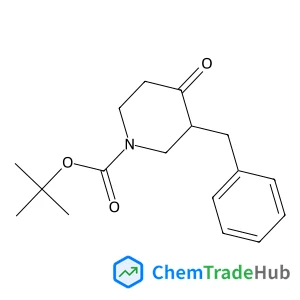
2-Methyl-2-propanyl 3-benzyl-4-oxo-1-piperidinecarboxylate
CAS Number:
193274-82-7
Molecular Formula:
C17H23NO3
Recommended Suppliers



Disclaimer
This page provides academic journal information for reference and research purposes only. We are not affiliated with any journal publishers and do not handle publication submissions. For publication-related inquiries, please contact the respective journal publishers directly.
If you notice any inaccuracies in the information displayed, please contact us at support@chemtradehub.com. We will promptly review and address your concerns.