












Diborylenetetraaminoperylenes (DIBOTAP): a new class of highly fluorescent functional polycyclic aromatic hydrocarbons with N–B–N units
Literature Information
Publication Date
2008-09-19
DOI
10.1039/B811864G
Impact Factor
6.222
Authors
Till Riehm, Gabriele De Paoli, Hubert Wadepohl, Luisa De Cola, Lutz H. Gade
View Original
Abstract
A new class of N–B–N functionalized perylenes derived from N,N′,N″,N‴-diborylene-3,4,9,10-tetraaminoperylene (DIBOTAP) is readily accessible via several synthetic routes; they display intense green fluorescence and undergo two electrochemically reversible one-electron oxidation steps at ∼−0.2 V and 0.3 V (vs.SCE).
Related Literature
How water flips at charged titanium dioxide: an SFG-study on the water–TiO2 interface
Simon J. Schlegel, Saman Hosseinpour, Maximilian Gebhard, Anjana Devi, Mischa Bonn
2019-04-05
Paper
DOI: 10.1039/C9CP01131E
Sodium bismuth dichalcogenides: candidates for ferroelectric high-mobility semiconductors for multifunctional applications
Tingting Zhong, Minghu Pan, Guoying Gao, Huahua Fu, Menghao Wu, Jun-Ming Liu
2019-03-22
Paper
DOI: 10.1039/C9CP00336C
Effects of single and double nickel doping on boron clusters: stabilization of tubular structures in BnNim, n = 2–22, m = 1, 2
Long Van Duong, Hung Tan Pham, Minh Tho Nguyen, My Phuong Pham-Ho
2019-03-28
Paper
DOI: 10.1039/C9CP00762H
Interaction of the simple carbene c-C3H2 with H2: potential energy surface and low-energy scattering
L. Wiesenfeld, K. Hammami
2019-04-19
Paper
DOI: 10.1039/C9CP01601E
Investigation of ECD conformational transition mechanism of GLP-1R by molecular dynamics simulations and Markov state model
Qifeng Bai, Horacio Pérez-Sánchez, Shuxia Shang, Xiaoli An, Xiaojun Yao
2019-03-25
Paper
DOI: 10.1039/C9CP00080A
Optical revelation of defects in epitaxial barium titanate films
D. Chvostova, A. Dejneka
2019-03-22
Paper
DOI: 10.1039/C9CP00923J
Excited states and excitonic interactions in prototypic polycyclic aromatic hydrocarbon dimers as models for graphitic interactions in carbon dots
Baimei Shi, Adélia J. A. Aquino, Francisco B. C. Machado, Hans Lischka
2019-03-04
Paper
DOI: 10.1039/C9CP00635D
Effects of temperature and pressure on the optical and vibrational properties of thermoelectric SnSe
Ilias Efthimiopoulos, Matthias Berg, Annika Bande, Ljiljana Puskar, Eglof Ritter, Wei Xu, Michele Ortolani, Martin Harms, Jan Müller, Sergio Speziale, Monika Koch-Müller, Yong Liu, Li-Dong Zhao, Ulrich Schade
2019-03-29
Paper
DOI: 10.1039/C9CP00897G
Using van der Waals heterostructures based on two-dimensional blue phosphorus and XC (X = Ge, Si) for water-splitting photocatalysis: a first-principles study
Kai Ren, Chongdan Ren, Yi Luo, Yujing Xu, Jin Yu, Wencheng Tang, Minglei Sun
2019-04-18
Paper
DOI: 10.1039/C8CP07680D
You might also like
Compound Q&A
What are the main uses of 1H-Indazole-6-carbonitrile (CAS: 141290-59-7)?
1H-Indazole-6-carbonitrile finds applications in pharmaceuticals, where it serve...
141290-59-71H-Indazole-6-carbon...
Compound Q&A
How should waste containing Dioctyl (2E)-2-butenedioate (CAS: 2997-85-5) be handled?
Waste containing Dioctyl (2E)-2-butenedioate (CAS: 2997-85-5) should be collecte...
2997-85-5Dioctyl (2E)-2-buten...
Compound Q&A
What industries use Sodium [(1,2-benzoxazol-3-ylmethyl)sulfonyl]azanide (CAS: 68291-98-5)?
Sodium [(1,2-benzoxazol-3-ylmethyl)sulfonyl]azanide is primarily used in pharmac...
68291-98-5Sodium [(1,2-benzoxa...
Compound Q&A
Are there alternatives to Dimethyl 4-(4,4,5,5-tetramethyl-1,3,2-dioxaborolan-2-yl)-2,6-pyridinedicarboxylate (CAS: 741709-66-0) in synthesis?
Dimethyl 4-(4,4,5,5-tetramethyl-1,3,2-dioxaborolan-2-yl)-2,6-pyridinedicarboxyla...
741709-66-0Dimethyl 4-(4,4,5,5-...
Compound Q&A
How should waste containing 2-Fluoro-6-hydrazinopyridine (CAS: 80714-39-2) be handled?
Waste containing 2-Fluoro-6-hydrazinopyridine (CAS: 80714-39-2) should be manage...
80714-39-22-Fluoro-6-hydrazino...
Compound Q&A
What is 6-Formyl-2-pyridinecarboxylic acid (CAS: 499214-11-8)?
6-Formyl-2-pyridinecarboxylic acid is an organic compound with the molecular for...
499214-11-86-Formyl-2-pyridinec...
Compound Q&A
What is the market or research trend for 3-(3,4-dimethoxyphenyl)-2,5-dimethyl-N-(2-morpholin-4-ylethyl)pyrazolo[1,5-a]pyrimidin-7-amine (CAS: 900874-91-1)?
Research trends for this compound indicate a focus on its potential applications...
900874-91-13-(3,4-dimethoxyphen...
Compound Q&A
How is 9H-Tribenzo[b,d,f]azepine (CAS: 29875-73-8) typically synthesized?
9H-Tribenzo[b,d,f]azepine is typically synthesized via a multi-step process invo...
29875-73-89H-Tribenzo[b,d,f]az...
Compound Q&A
How is 1-Cyclopropyl-7-ethoxy-6-fluoro-8-methoxy-4-oxo-1,4-dihydro-3-quinolinecarboxylic acid (CAS: 1797982-51-4) typically synthesized?
1-Cyclopropyl-7-ethoxy-6-fluoro-8-methoxy-4-oxo-1,4-dihydro-3-quinolinecarboxyli...
1797982-51-41-Cyclopropyl-7-etho...
Compound Q&A
How should waste containing Methyl 3-oxo-1,2,3,4-tetrahydro-6-quinoxalinecarboxylate (CAS: 671820-52-3) be handled?
Waste containing Methyl 3-oxo-1,2,3,4-tetrahydro-6-quinoxalinecarboxylate (CAS: ...
671820-52-3Methyl 3-oxo-1,2,3,4...
Source Journal
Chemical Communications

CiteScore:
8.6
Self-citation Rate:
4.7%
Articles per Year:
2458
ChemComm publishes urgent research which is of outstanding significance and interest to experts in the field, while also appealing to the journal’s broad chemistry readership. Our communication format is ideally suited to short, urgent studies that are of such importance that they require accelerated publication. Our scope covers all topics in chemistry, and research at the interface of chemistry and other disciplines (such as materials science, nanoscience, physics, engineering and biology) where there is a significant novelty in the chemistry aspects. Major topic areas covered include: Analytical Chemistry Catalysis Chemical Biology and medicinal chemistry Computational Chemistry and Machine Learning Energy and sustainable chemistry Environmental Chemistry Green Chemistry Inorganic Chemistry Materials Chemistry Nanoscience Organic Chemistry Physical Chemistry Polymer Chemistry Supramolecular Chemistry
Recommended Compounds
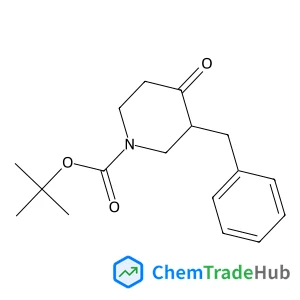
2-Methyl-2-propanyl 3-benzyl-4-oxo-1-piperidinecarboxylate
CAS Number:
193274-82-7
Molecular Formula:
C17H23NO3
![9H-Fluoren-9-ylmethyl {15-[(2,5-dioxo-1-pyrrolidinyl)oxy]-15-oxo-3,6,9,12-tetraoxapentadec-1-yl}carbamate structure](https://static.chemtradehub.com/structs/131/1314378-14-7-4316.webp "9H-Fluoren-9-ylmethyl {15-[(2,5-dioxo-1-pyrrolidinyl)oxy]-15-oxo-3,6,9,12-tetraoxapentadec-1-yl}carbamate structure")
9H-Fluoren-9-ylmethyl {15-[(2,5-dioxo-1-pyrrolidinyl)oxy]-15-oxo-3,6,9,12-tetraoxapentadec-1-yl}carbamate
CAS Number:
1314378-14-7
Molecular Formula:
C30H36N2O10
Recommended Suppliers



Disclaimer
This page provides academic journal information for reference and research purposes only. We are not affiliated with any journal publishers and do not handle publication submissions. For publication-related inquiries, please contact the respective journal publishers directly.
If you notice any inaccuracies in the information displayed, please contact us at support@chemtradehub.com. We will promptly review and address your concerns.