












Probing the dynamics of highly excited toluene on the fs timescale
Literature Information
Publication Date
2015-11-12
DOI
10.1039/C5CP04346H
Impact Factor
3.676
Authors
C. C. Papadopoulou, S. Kaziannis, C. Kosmidis
View Original
Abstract
Investigation of the dynamics of toluene-h8 (C6H5CH3), toluene-d8 (C6D5CD3) and toluene-α,α,α-d3 (C6H5CD3) has been performed utilizing the VUV pump-IR probe technique on the fs timescale. Using the 5th harmonic (∼160 nm) of a Ti:sapphire laser as the pump beam, two superimposed electronic states, the valence S3 and the Rydberg 4p, were excited by one-photon absorption, followed by ionization and dissociation induced by the probe beam (800 nm). Analysis of the transient signal of the parent (P+) and fragment ions ([P–H]+ or [P–D]+) implies the existence of two different relaxation processes: (i) from the Rydberg and (ii) from the S3 valence state. Using a rate equation model, the decay times have been determined and comparison between the different isotopologues has been made. Conclusions on the relaxation path, the relative displacements of the potential energy surfaces and the activation energies needed have been drawn from the decay times. The signals corresponding to the fragment ions present a small in amplitude, but nonetheless, unambiguous periodical modulation, which is attributed to out-of-plane bending oscillation, involving also the methyl group. The dynamics of the H- and D-loss channels has been investigated. Especially for the case of toluene-α,α,α-d3, where both channels are in operation, it was found that the ratio of the abundance of H/D-loss dissociation reactions decreases as the pump–probe delay time increases.
Recommended Journals
Related Literature
Design of NiO–MgO materials with different properties
Marc Serra, Pilar Salagre, Yolanda Cesteros, Francisco Medina, Jesús E. Sueiras
2004-01-22
Paper
DOI: 10.1039/B313500B
Hydrogen storage by physisorption on nanostructured graphite platelets
2004-02-04
Paper
DOI: 10.1039/B316209E
Spontaneous emulsification of detergent solubilized reaction center: protein conformational changes precede droplet growth
Gerardo Palazzo, Antonia Mallardi, Francesco Francia, Manuela Dezi, Giovanni Venturoli, Matteo Pierno, Emanuele Vignati, Roberto Piazza
2004-03-01
Paper
DOI: 10.1039/B314588N
Fullerene monolayers adsorbed on high index gold single crystal surfaces
Akiyoshi Kuzume, Enrique Herrero, Juan M. Feliu, Richard J. Nichols, David J. Schiffrin
2004-01-06
Paper
DOI: 10.1039/B311393K
Dielectric investigation of the temperature dependence of the dynamics of a hydrated protein
F. Bruni, S. E. Pagnotta
2004-02-18
Paper
DOI: 10.1039/B314046F
Effect of H2reduction on the catalytic properties of MoO3 with noble metals for the conversions of pentane and propan-2-ol
Takeshi Matsuda, Shuhei Uozumi, Nobuo Takahashi
2004-01-12
Paper
DOI: 10.1039/B309870M
A unified view of the theoretical description of magnetic coupling in molecular chemistry and solid state physics
2006-02-13
Invited Article
DOI: 10.1039/B515732C
Heterogeneous reaction of ozone with hydrocarbon flame soot
Stéphane Lelièvre, Yuri Bedjanian, Nicolas Pouvesle, Jean-Louis Delfau, Christian Vovelle, Georges Le Bras
2004-02-13
Paper
DOI: 10.1039/B316895F
You might also like
Compound Q&A
Is 6-(3-Fluorophenyl)picolinic acid (CAS: 887982-40-3) safe?
6-(3-Fluorophenyl)picolinic acid is generally considered safe for laboratory use...
887982-40-36-(3-Fluorophenyl)pi...
Compound Q&A
What industries use (3R)-3-Pyrrolidinol (CAS: 2799-21-5)?
(3R)-3-Pyrrolidinol is used in the pharmaceutical industry as a precursor for dr...
2799-21-5(3R)-3-Pyrrolidinol
Compound Q&A
What precautions should be taken when handling (4R,5R)-4,5-Diethoxycarbonyl-2,2-dimethyldioxolane (CAS: 59779-75-8)?
When handling (4R,5R)-4,5-Diethoxycarbonyl-2,2-dimethyldioxolane (CAS: 59779-75-...
59779-75-8(4R,5R)-4,5-Diethoxy...
Compound Q&A
How is 1-(6-Chloroimidazo[1,2-b]pyridazin-3-yl)ethanone (CAS: 90734-71-7) typically synthesized?
1-(6-Chloroimidazo[1,2-b]pyridazin-3-yl)ethanone is often synthesized via a mult...
90734-71-71-(6-Chloroimidazo[1...
Compound Q&A
What is the market or research trend for N-Ethyl-3,4-dimethylbenzylamine (CAS: 39180-83-1)?
The market for N-Ethyl-3,4-dimethylbenzylamine (CAS: 39180-83-1) remains steady,...
39180-83-1N-Ethyl-3,4-dimethyl...
Compound Q&A
What is Tert-butyl 3-(pyrrolidin-1-yl)azetidine-1-carboxylate (CAS: 1019008-21-9)?
Tert-butyl 3-(pyrrolidin-1-yl)azetidine-1-carboxylate is a chemical compound wit...
1019008-21-9Tert-butyl 3-(pyrrol...
Compound Q&A
What regulatory guidelines apply to 1-Bromo-3-chloro-2,4-dimethoxybenzene (CAS: 1228956-93-1)?
1-Bromo-3-chloro-2,4-dimethoxybenzene (CAS: 1228956-93-1) falls under the classi...
1228956-93-11-Bromo-3-chloro-2,4...
Compound Q&A
Is 8-Bromo-2-methyl-3,4-dihydroisoquinolin-1(2H)-one (CAS: 1368622-07-4) safe?
The safety of 8-Bromo-2-methyl-3,4-dihydroisoquinolin-1(2H)-one (CAS: 1368622-07...
1368622-07-48-Bromo-2-methyl-3,4...
Compound Q&A
Is Benzyl [(3S)-2,6-dioxo-3-piperidinyl]carbamate (CAS: 22785-43-9) safe?
Benzyl [(3S)-2,6-dioxo-3-piperidinyl]carbamate is generally safe when handled wi...
22785-43-9Benzyl [(3S)-2,6-dio...
Compound Q&A
How should 1-{[4-(4,4,5,5-Tetramethyl-1,3,2-dioxaborolan-2-yl)phenyl]sulfonyl}pyrrolidine (CAS: 928657-21-0) be stored?
1-{[4-(4,4,5,5-Tetramethyl-1,3,2-dioxaborolan-2-yl)phenyl]sulfonyl}pyrrolidine s...
928657-21-01-{[4-(4,4,5,5-Tetra...
Source Journal
Physical Chemistry Chemical Physics

CiteScore:
5.5
Self-citation Rate:
10.3%
Articles per Year:
3036
Physical Chemistry Chemical Physics (PCCP) is an international journal co-owned by 19 physical chemistry and physics societies from around the world. This journal publishes original, cutting-edge research in physical chemistry, chemical physics and biophysical chemistry. To be suitable for publication in PCCP, articles must include significant innovation and/or insight into physical chemistry; this is the most important criterion that reviewers and Editors will judge against when evaluating submissions. The journal has a broad scope and welcomes contributions spanning experiment, theory, computation and data science. Topical coverage includes spectroscopy, dynamics, kinetics, statistical mechanics, thermodynamics, electrochemistry, catalysis, surface science, quantum mechanics, quantum computing and machine learning. Interdisciplinary research areas such as polymers and soft matter, materials, nanoscience, energy, surfaces/interfaces, and biophysical chemistry are welcomed if they demonstrate significant innovation and/or insight into physical chemistry. Joined experimental/theoretical studies are particularly appreciated when complementary and based on up-to-date approaches.
Recommended Compounds
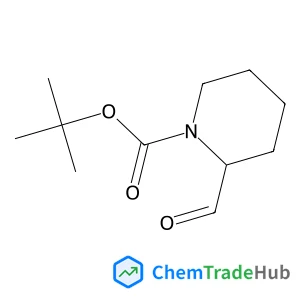
2-Methyl-2-propanyl (2R)-2-formyl-1-piperidinecarboxylate
CAS Number:
134526-69-5
Molecular Formula:
C11H19NO3
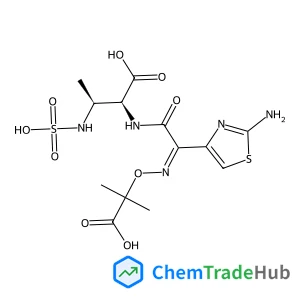
Aztreonam USP Related Compound A (Open-ring Aztreonam)
CAS Number:
87500-74-1
Molecular Formula:
C13H19N5O9S2
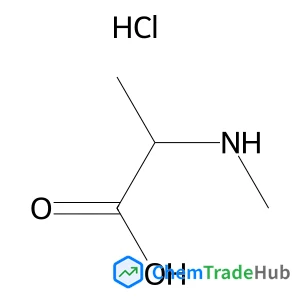
(R)-2-(Methylamino)propanoic acid hydrochloride
CAS Number:
1155878-14-0
Molecular Formula:
C4H10ClNO2
Recommended Suppliers




Disclaimer
This page provides academic journal information for reference and research purposes only. We are not affiliated with any journal publishers and do not handle publication submissions. For publication-related inquiries, please contact the respective journal publishers directly.
If you notice any inaccuracies in the information displayed, please contact us at support@chemtradehub.com. We will promptly review and address your concerns.