













Methane partial oxidation using FeOx@La0.8Sr0.2FeO3−δ core–shell catalyst – transient pulse studies
Literature Information
Publication Date
2015-11-02
DOI
10.1039/C5CP05583K
Impact Factor
3.676
Authors
Arya Shafiefarhood, Joseph Clay Hamill, Luke Michael Neal, Fanxing Li
View Original
Abstract
The chemical looping reforming (CLR) process, which utilizes a transition metal oxide based redox catalyst to partially oxidize methane to syngas, represents a potentially efficient approach for methane valorization. The CLR process inherently avoids costly cryogenic air separation by replacing gaseous oxygen with regenerable ionic oxygen (O2−) from the catalyst lattice. Our recent studies show that an Fe2O3@La0.8Sr0.2FeO3−δ core–shell redox catalyst is effective for CLR, as it combines the selectivity of an LSF shell with the oxygen capacity of an iron oxide core. The reaction between methane and the catalyst is also found to be highly dynamic, resulting from changes in lattice oxygen availability and surface properties. In this study, a transient pulse injection approach is used to investigate the mechanisms of methane partial oxidation over the Fe2O3@LSF redox catalyst. As confirmed by isotope exchange, the catalyst undergoes transitions between reaction “regions” with markedly different mechanisms. While oxygen evolution maintains a modified Mars–van Krevelen mechanism throughout the reaction with O2− conduction being the rate limiting step, the mechanism of methane conversion changes from an Eley–Rideal type in the first reaction region to a Langmuir–Hinshelwood-like mechanism in the third region. Availability of surface oxygen controls the reduction scheme of the catalyst and the underlying reaction mechanism.
Related Literature
Theoretical modeling of the valence UV spectra of 1,2,3-triazine and uracil in solution
Andrea Amadei, Nico Sanna, Andrea Grandi, Giovanni Chillemi, Alfredo Di Nola, Marco D’Abramo, Massimiliano Aschi
2006-02-24
Paper
DOI: 10.1039/B515648C
Nanoassemblies formed from hydrophilic block copolymers and multivalent ions
Nicolas Sanson, Frédéric Bouyer, Corine Gérardin, Martin In
2004-03-03
Paper
DOI: 10.1039/B314521M
Structure and dynamics of the aluminum chlorohydrate polymer Al13O4(OH)24(H2O)12Cl7
Vojislava Pophristic, Venkatachalapathy S. K. Balagurusamy, Michael L. Klein
2004-02-03
Paper
DOI: 10.1039/B310882A
UV induced local heating effects in TiO2nanocrystals
Thomas Berger, Oliver Diwald, Erich Knözinger, Martin Sterrer, John T. Yates Jr
2006-03-02
Paper
DOI: 10.1039/B517107E
Structure and dynamics of the [Zn(NH3)(H2O)5]2+ complex in aqueous solution obtained by an ab initio QM/MM molecular dynamics study
M. Qaiser Fatmi, Thomas S. Hofer, Bernhard R. Randolf, Bernd M. Rode
2006-03-13
Paper
DOI: 10.1039/B518223A
Biphasic redox chemistry of α-tocopherol: Evidence for electrochemically induced hydrolysisand dimerization on the surface of and within femtolitre droplets immobilized onto graphite electrodes
Andrew J. Wain, Jay D. Wadhawan, Robert. R. France, Richard G. Compton
2004-01-23
Paper
DOI: 10.1039/B315052F
Kinetics of the interaction of water vapour with mineral dust and soot surfaces at T = 298 K
Sabine Seisel, Yu Lian, Thorsten Keil, Maxim E. Trukhin, Reinhard Zellner
2004-02-11
Paper
DOI: 10.1039/B314568A
A kinetic study of the reactions FeO+ + O, Fe+·N2 + O, Fe+·O2 + O and FeO+ + CO: implications for sporadic E layers in the upper atmosphere
K. R. S. Woodcock, T. Vondrak, S. R. Meech, J. M. C. Plane
2006-03-06
Paper
DOI: 10.1039/B518155K
Structure of a β-sheet model system in the gas phase: Analysis of the fingerprint region up to 10 μm
H. Fricke, A. Gerlach, M. Gerhards
2006-03-01
Communication
DOI: 10.1039/B600154H
Evolution of nickel speciation during preparation of Ni–SiO2catalysts: effect of the number of chelating ligands in [Ni(en)x(H2O)6−2x]2+ precursor complexes
Ke-Qiang Sun, Eric Marceau, Michel Che
2006-02-28
Paper
DOI: 10.1039/B513319J
You might also like
Compound Q&A
Is 6-(3-Fluorophenyl)picolinic acid (CAS: 887982-40-3) safe?
6-(3-Fluorophenyl)picolinic acid is generally considered safe for laboratory use...
887982-40-36-(3-Fluorophenyl)pi...
Compound Q&A
What industries use (3R)-3-Pyrrolidinol (CAS: 2799-21-5)?
(3R)-3-Pyrrolidinol is used in the pharmaceutical industry as a precursor for dr...
2799-21-5(3R)-3-Pyrrolidinol
Compound Q&A
What precautions should be taken when handling (4R,5R)-4,5-Diethoxycarbonyl-2,2-dimethyldioxolane (CAS: 59779-75-8)?
When handling (4R,5R)-4,5-Diethoxycarbonyl-2,2-dimethyldioxolane (CAS: 59779-75-...
59779-75-8(4R,5R)-4,5-Diethoxy...
Compound Q&A
How is 1-(6-Chloroimidazo[1,2-b]pyridazin-3-yl)ethanone (CAS: 90734-71-7) typically synthesized?
1-(6-Chloroimidazo[1,2-b]pyridazin-3-yl)ethanone is often synthesized via a mult...
90734-71-71-(6-Chloroimidazo[1...
Compound Q&A
What is the market or research trend for N-Ethyl-3,4-dimethylbenzylamine (CAS: 39180-83-1)?
The market for N-Ethyl-3,4-dimethylbenzylamine (CAS: 39180-83-1) remains steady,...
39180-83-1N-Ethyl-3,4-dimethyl...
Compound Q&A
What is Tert-butyl 3-(pyrrolidin-1-yl)azetidine-1-carboxylate (CAS: 1019008-21-9)?
Tert-butyl 3-(pyrrolidin-1-yl)azetidine-1-carboxylate is a chemical compound wit...
1019008-21-9Tert-butyl 3-(pyrrol...
Compound Q&A
What regulatory guidelines apply to 1-Bromo-3-chloro-2,4-dimethoxybenzene (CAS: 1228956-93-1)?
1-Bromo-3-chloro-2,4-dimethoxybenzene (CAS: 1228956-93-1) falls under the classi...
1228956-93-11-Bromo-3-chloro-2,4...
Compound Q&A
Is 8-Bromo-2-methyl-3,4-dihydroisoquinolin-1(2H)-one (CAS: 1368622-07-4) safe?
The safety of 8-Bromo-2-methyl-3,4-dihydroisoquinolin-1(2H)-one (CAS: 1368622-07...
1368622-07-48-Bromo-2-methyl-3,4...
Compound Q&A
Is Benzyl [(3S)-2,6-dioxo-3-piperidinyl]carbamate (CAS: 22785-43-9) safe?
Benzyl [(3S)-2,6-dioxo-3-piperidinyl]carbamate is generally safe when handled wi...
22785-43-9Benzyl [(3S)-2,6-dio...
Compound Q&A
How should 1-{[4-(4,4,5,5-Tetramethyl-1,3,2-dioxaborolan-2-yl)phenyl]sulfonyl}pyrrolidine (CAS: 928657-21-0) be stored?
1-{[4-(4,4,5,5-Tetramethyl-1,3,2-dioxaborolan-2-yl)phenyl]sulfonyl}pyrrolidine s...
928657-21-01-{[4-(4,4,5,5-Tetra...
Source Journal
Physical Chemistry Chemical Physics

CiteScore:
5.5
Self-citation Rate:
10.3%
Articles per Year:
3036
Physical Chemistry Chemical Physics (PCCP) is an international journal co-owned by 19 physical chemistry and physics societies from around the world. This journal publishes original, cutting-edge research in physical chemistry, chemical physics and biophysical chemistry. To be suitable for publication in PCCP, articles must include significant innovation and/or insight into physical chemistry; this is the most important criterion that reviewers and Editors will judge against when evaluating submissions. The journal has a broad scope and welcomes contributions spanning experiment, theory, computation and data science. Topical coverage includes spectroscopy, dynamics, kinetics, statistical mechanics, thermodynamics, electrochemistry, catalysis, surface science, quantum mechanics, quantum computing and machine learning. Interdisciplinary research areas such as polymers and soft matter, materials, nanoscience, energy, surfaces/interfaces, and biophysical chemistry are welcomed if they demonstrate significant innovation and/or insight into physical chemistry. Joined experimental/theoretical studies are particularly appreciated when complementary and based on up-to-date approaches.
Recommended Compounds
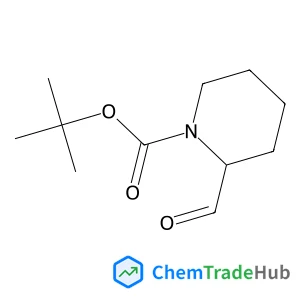
2-Methyl-2-propanyl (2R)-2-formyl-1-piperidinecarboxylate
CAS Number:
134526-69-5
Molecular Formula:
C11H19NO3

Benzyl 3-(aminomethyl)piperidine-1-carboxylate hydrochloride
CAS Number:
1186663-23-9
Molecular Formula:
C14H21ClN2O2
![2-[({[(2-Methyl-2-propanyl)oxy]carbonyl}amino)methyl]isonicotinic acid structure](https://static.chemtradehub.com/structs/473/473924-63-9-973b.webp "2-[({[(2-Methyl-2-propanyl)oxy]carbonyl}amino)methyl]isonicotinic acid structure")
2-[({[(2-Methyl-2-propanyl)oxy]carbonyl}amino)methyl]isonicotinic acid
CAS Number:
473924-63-9
Molecular Formula:
C12H16N2O4
Recommended Suppliers





Disclaimer
This page provides academic journal information for reference and research purposes only. We are not affiliated with any journal publishers and do not handle publication submissions. For publication-related inquiries, please contact the respective journal publishers directly.
If you notice any inaccuracies in the information displayed, please contact us at support@chemtradehub.com. We will promptly review and address your concerns.