


Distinct microscopic mechanisms for the accelerated aggregation of pathogenic Tau mutants revealed by kinetic analysis
Literature Information
Publication Date
2020-03-17
DOI
10.1039/C9CP06083A
Impact Factor
3.676
Authors
Liu Hong
View Original
Abstract
The self-assembly of Tau protein into amyloid structures is associated with Alzheimer's disease and other tauopathies. Dominant familial mutations in the Tau gene, such as P301L and P301S, increase the propensity of the Tau protein to aggregate abnormally into filaments. A quantitative description of the fibrillization process of Tau will facilitate the understanding of the cytotoxicity of Tau aggregates and their intercellular spreading. Here, we investigated the aggregation kinetics of Tau and disease-associated P301L and P301S mutants by combined thioflavin T assay and kinetic modeling, which revealed the rate constants of individual microscopic steps in the process of amyloid formation. Compared to WT Tau, P301L shows a larger primary nucleation rate while P301S has higher elongation and fragmentation rates and a more apparent fibril annealing process. Cross-seeding assays and FRET experiments indicate that the structures of the fibrillar nuclei of the three variants are distinct. These results provide detailed insights into how the amyloid aggregation mechanism of Tau protein is affected by the familial mutations P301L and P301S, and relates the physical properties of Tau mutants to their pathogenic mechanism.
Recommended Journals

European Journal of Organic Chemistry

Environmental Toxicology and Pharmacology

Nature Reviews Drug Discovery

Foundations of Chemistry

Faraday Discussions

Mini-Reviews in Medicinal Chemistry

Journal of Enzyme inhibition and Medicinal Chemistry

Molecular Diversity

Journal of Medical Biochemistry

Lab on a Chip
Related Literature
Vibrational spectroscopy of hydrogens in diamond: a quantum mechanical treatment
Francesco Silvio Gentile, Simone Salustro, Anna Maria Ferrari, Philippe D'Arco, Roberto Dovesi
2018-04-04
Paper
DOI: 10.1039/C8CP00596F
The fate of plasma-generated oxygen atoms in aqueous solutions: non-equilibrium atmospheric pressure plasmas as an efficient source of atomic O(aq)
J. Benedikt, A. Shaw, B. R. Buckley, F. Iza, S. Schäkermann, J. E. Bandow
2018-04-19
Paper
DOI: 10.1039/C8CP00197A
Dynamical modes of two almost identical chemical oscillators connected via both pulsatile and diffusive coupling
2018-04-03
Paper
DOI: 10.1039/C7CP08032H
The influence of the size and symmetry of cations and anions on the physicochemical behavior of organic ionic plastic crystal electrolytes mixed with sodium salts
F. Makhlooghiazad, J. Guazzagaloppa, L. A. O’Dell, R. Yunis, A. Basile, P. C. Howlett, M. Forsyth
2018-01-25
Paper
DOI: 10.1039/C7CP06971E
Examination of inequivalent wetting on the crystal habit surfaces of RS-ibuprofen using grid-based molecular modelling
I. Rosbottom, J. H. Pickering, B. Etbon, R. B. Hammond, K. J. Roberts
2018-04-17
Paper
DOI: 10.1039/C7CP08354H
Phase behaviours of a cationic surfactant in deep eutectic solvents: from micelles to lyotropic liquid crystals
Qintang Li, Jiao Wang, Nana Lei, Minhao Yan, Xiao Chen
2018-04-11
Paper
DOI: 10.1039/C8CP00001H
A sinter-resistant catalyst using an alumina support recycled from AlP fumigation residue: trash to treasure
Jinshi Dong, Jun Wang, Jianqiang Wang, Guanghao Cheng, Tianming Huang
2018-03-27
Paper
DOI: 10.1039/C8CP00111A
Mechanistic insights into the interaction between energetic oxygen ions and nanosized ZnFe2O4: XAS-XMCD investigations
Jitendra Pal Singh, Baljeet Kaur, Aditya Sharma, So Hee Kim, Sanjeev Gautam, Ramesh Chandra Srivastava, Navdeep Goyal, Weol Cheol Lim, H.-J. Lin, J. M. Chen, K. Asokan, D. Kanjilal, Sung Ok Won, Ik-Jae Lee, Keun Hwa Chae
2018-04-03
Paper
DOI: 10.1039/C8CP00368H
Electron-stimulated reactions in nanoscale water films adsorbed on α-Al2O3(0001)
Nikolay G. Petrik, Greg A. Kimmel
2018-04-11
Paper
DOI: 10.1039/C8CP01284A
Unique orientations and rotational dynamics of a 1-butyl-3-methyl-imidazolium hexafluorophosphate ionic liquid at the gas–liquid interface: the effects of the hydrogen bond and hydrophobic interactions
Fangjia Fu, Li Li, Zhen Yang, Zheng Wan, Yi Luo, Na Hu, Xiangshu Chen, Guixiang Zeng
2018-04-04
Paper
DOI: 10.1039/C8CP00839F
You might also like
Compound Q&A
What are the main uses of 1-(3-Aminophenyl)-3-[(3R)-1-(3,3-dimethyl-2-oxobutyl)-2-oxo-5-(2-pyridinyl)-2,3-dihydro-1H-1,4-benzodiazepin-3-yl]urea (CAS: 155412-88-7)?
This compound is mainly used as an intermediate in the synthesis of antipsychoti...
155412-88-71-(3-Aminophenyl)-3-...
Compound Q&A
How should waste containing 1-(D-Ribofuranosyl)-1,4-dihydro-3-pyridinecarboxamide (CAS: 19132-12-8) be handled?
Waste containing 1-(D-Ribofuranosyl)-1,4-dihydro-3-pyridinecarboxamide (CAS: 191...
19132-12-81-(D-Ribofuranosyl)-...
Compound Q&A
What regulatory guidelines apply to 2-Methyl-2-propanyl 3-bromo-3-(hydroxymethyl)-1-azetidinecarboxylate (CAS: 2007919-81-3)?
2-Methyl-2-propanyl 3-bromo-3-(hydroxymethyl)-1-azetidinecarboxylate (CAS: 20079...
2007919-81-32-Methyl-2-propanyl ...
Compound Q&A
What is N-(4-Chloro-2-pyridinyl)acetamide (CAS: 245056-66-0)?
N-(4-Chloro-2-pyridinyl)acetamide (CAS: 245056-66-0) is a chemical compound with...
245056-66-0N-(4-Chloro-2-pyridi...
Compound Q&A
What is 5-Chloro-2-hydroxybenzoic acid (CAS: 321-14-2)?
5-Chloro-2-hydroxybenzoic acid, also known as 5-chlorosalicylic acid, is an arom...
321-14-25-Chloro-2-hydroxybe...
Compound Q&A
What precautions should be taken when handling 1,1-Dichloro-1-fluoroethane (CAS: 1717-00-6)?
When handling 1,1-Dichloro-1-fluoroethane (CAS: 1717-00-6), it is important to u...
1717-00-61,1-Dichloro-1-fluor...
Compound Q&A
What are the physical and chemical properties of Fmoc-(2S,3R)-3-phenylpyrrolidine-2-carboxylic acid (CAS: 281655-32-1)?
Fmoc-(2S,3R)-3-phenylpyrrolidine-2-carboxylic acid is a white crystalline solid ...
281655-32-1Fmoc-(2S,3R)-3-pheny...
Compound Q&A
What are the main uses of 4-Amino-5-bromo-2-pyridinecarboxylic acid (CAS: 1363381-01-4)?
4-Amino-5-bromo-2-pyridinecarboxylic acid is primarily used as a precursor in th...
1363381-01-44-Amino-5-bromo-2-py...
Compound Q&A
What precautions should be taken when handling (S)-tert-butyl 2-((2-(4-bromophenyl)-2-oxoethyl)carbamoyl)pyrrolidine-1-carboxylate (CAS: 1007881-98-2)?
Handling this compound should be done with personal protective equipment (PPE) i...
1007881-98-2(S)-tert-butyl 2-((2...
Compound Q&A
What precautions should be taken when handling 8-bromo-2,2-dimethyl-3,4-dihydro-2H-1,4-benzoxazin-3-one (CAS: 688363-73-7)?
When handling 8-bromo-2,2-dimethyl-3,4-dihydro-2H-1,4-benzoxazin-3-one, use prop...
688363-73-78-bromo-2,2-dimethyl...
Source Journal
Physical Chemistry Chemical Physics

CiteScore:
5.5
Self-citation Rate:
10.3%
Articles per Year:
3036
Physical Chemistry Chemical Physics (PCCP) is an international journal co-owned by 19 physical chemistry and physics societies from around the world. This journal publishes original, cutting-edge research in physical chemistry, chemical physics and biophysical chemistry. To be suitable for publication in PCCP, articles must include significant innovation and/or insight into physical chemistry; this is the most important criterion that reviewers and Editors will judge against when evaluating submissions. The journal has a broad scope and welcomes contributions spanning experiment, theory, computation and data science. Topical coverage includes spectroscopy, dynamics, kinetics, statistical mechanics, thermodynamics, electrochemistry, catalysis, surface science, quantum mechanics, quantum computing and machine learning. Interdisciplinary research areas such as polymers and soft matter, materials, nanoscience, energy, surfaces/interfaces, and biophysical chemistry are welcomed if they demonstrate significant innovation and/or insight into physical chemistry. Joined experimental/theoretical studies are particularly appreciated when complementary and based on up-to-date approaches.
Recommended Compounds
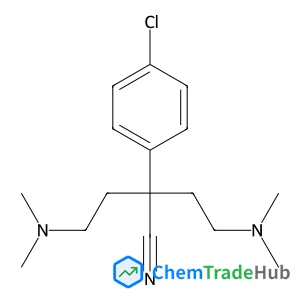
2-(4-Chlorophenyl)-4-(dimethylamino)-2-(2-(dimethylamino)ethyl)butanenitrile
CAS Number:
1246816-57-8
Molecular Formula:
C16H24ClN3



Recommended Suppliers



Disclaimer
This page provides academic journal information for reference and research purposes only. We are not affiliated with any journal publishers and do not handle publication submissions. For publication-related inquiries, please contact the respective journal publishers directly.
If you notice any inaccuracies in the information displayed, please contact us at support@chemtradehub.com. We will promptly review and address your concerns.