












Vibrational spectroscopy of hydrogens in diamond: a quantum mechanical treatment
Literature Information
Publication Date
2018-04-04
DOI
10.1039/C8CP00596F
Impact Factor
3.676
Authors
Francesco Silvio Gentile, Simone Salustro, Anna Maria Ferrari, Philippe D'Arco, Roberto Dovesi
View Original
Abstract
The electronic and vibrational features of the VHn (n = 1 to 4) family of defects in diamond (hydrogen atoms saturating the dangling bonds of the atoms surrounding a vacancy) are investigated at the quantum mechanical level by using the periodic supercell approach, an all electron Gaussian type basis set, hybrid functionals, and the CRYSTAL code. Most of the results have been collected for supercells containing 64 atoms; however, in order to explore the effect of the defect concentration on both the IR and Raman spectra, supercells containing 216, 512 and 1000 atoms have also been considered in the VH4 case. For each system, all the possible spin states are considered; their relative stability, band structure, charge and spin density distributions are thoroughly described. All the investigated systems present specific IR and Raman spectra, with vibrational spectroscopic features that can in principle be used as fingerprints for their characterization. This is particularly true for the C–H stretching, that ranges between 2500 and 4400 cm−1. The stretching modes are strongly affected by anharmonicity that has been evaluated in this work; it turns out to be extremely sensitive to the H load and spin state of the system, and ranges from −335 cm−1 for VH1 to +85 cm−1 for VH4. All of the investigated defects have very low C–H stretching IR intensity, so that they essentially appear as silent, the exception being VH1. The situation is different for the Raman spectra: the stretching modes of all defects do have similar large intensity; unfortunately here it is the experimental evidence that is lacking.
Recommended Journals
Related Literature
Nanopore-mediated ultrashort laser-induced formation and erasure of volume nanogratings in glass
Anton Rudenko, Jean-Philippe Colombier, Tatiana E. Itina
2018-01-25
Paper
DOI: 10.1039/C7CP07603G
Solvent-dependent dual fluorescence of the push–pull system 2-diethylamino-7-nitrofluorene
M. A. B. Larsen, A. B. Stephansen, E. Alarousu, M. Pittelkow, O. F. Mohammed, T. I. Sølling
2018-01-31
Paper
DOI: 10.1039/C8CP00235E
Halogen-like properties of the Al13 cluster mimicking astatine
B. Molina, J. R. Soto, J. J. Castro
2018-04-04
Communication
DOI: 10.1039/C8CP00494C
Thermodynamics of faceted palladium(–gold) nanoparticles supported on rutile titania nanorods studied using transmission electron microscopy
Nhat Tai Nguyen, Jaysen Nelayah, Damien Alloyeau, Guillaume Wang, Laurent Piccolo, Pavel Afanasiev, Christian Ricolleau
2018-04-05
Paper
DOI: 10.1039/C8CP00737C
Intermolecular hydrogen bonds in water@IL supramolecular complexes
Marcileia Zanatta, Jairton Dupont, Gabriela Negruni Wentz, Francisco P. dos Santos
2018-04-04
Paper
DOI: 10.1039/C8CP00066B
Energy dispersive spectrometry and first principles studies on the oxidation of pentlandite
Xiaolu Xiong, Guangshi Li, Hongwei Cheng, Qian Xu
2018-04-03
Paper
DOI: 10.1039/C8CP00873F
Hydrogen bonds of the imidazolium rings of ionic liquids with DMSO studied by NMR, soft X-ray spectroscopy, and SANS
Takumi Tokuda, Takahiro Uchida, Kazuya Sonoda, Bogdan A. Marekha, Abdenacer Idrissi, Takashi Tokushima, Hiroyuki Sakurai, Masahiro Kawano, Koichiro Sadakane, Hiroki Iwase
2018-04-12
Paper
DOI: 10.1039/C8CP00963E
Thermal decomposition of FC(O)OCH3 and FC(O)OCH2CH3
M. Berasategui, G. A. Argüello, M. A. Burgos Paci
2018-03-29
Paper
DOI: 10.1039/C7CP08656C
Origin of enhancement in Raman scattering from Ag-dressed carbon-nanotube antennas: experiment and modelling
T. V. Raziman, J. A. Duenas, W. I. Milne, O. J. F. Martin, P. Dawson
2018-01-31
Paper
DOI: 10.1039/C7CP06416K
Modulation of electronic and magnetic properties of edge hydrogenated armchair phosphorene nanoribbons by transition metal adsorption
Yong-Chao Rao, Peng Zhang, Shun-Fang Li, Xiang-Mei Duan, Su-Huai Wei
2018-04-13
Paper
DOI: 10.1039/C8CP00880A
You might also like
Compound Q&A
What are the main uses of 1-(3-Aminophenyl)-3-[(3R)-1-(3,3-dimethyl-2-oxobutyl)-2-oxo-5-(2-pyridinyl)-2,3-dihydro-1H-1,4-benzodiazepin-3-yl]urea (CAS: 155412-88-7)?
This compound is mainly used as an intermediate in the synthesis of antipsychoti...
155412-88-71-(3-Aminophenyl)-3-...
Compound Q&A
How should waste containing 1-(D-Ribofuranosyl)-1,4-dihydro-3-pyridinecarboxamide (CAS: 19132-12-8) be handled?
Waste containing 1-(D-Ribofuranosyl)-1,4-dihydro-3-pyridinecarboxamide (CAS: 191...
19132-12-81-(D-Ribofuranosyl)-...
Compound Q&A
What regulatory guidelines apply to 2-Methyl-2-propanyl 3-bromo-3-(hydroxymethyl)-1-azetidinecarboxylate (CAS: 2007919-81-3)?
2-Methyl-2-propanyl 3-bromo-3-(hydroxymethyl)-1-azetidinecarboxylate (CAS: 20079...
2007919-81-32-Methyl-2-propanyl ...
Compound Q&A
What is N-(4-Chloro-2-pyridinyl)acetamide (CAS: 245056-66-0)?
N-(4-Chloro-2-pyridinyl)acetamide (CAS: 245056-66-0) is a chemical compound with...
245056-66-0N-(4-Chloro-2-pyridi...
Compound Q&A
What is 5-Chloro-2-hydroxybenzoic acid (CAS: 321-14-2)?
5-Chloro-2-hydroxybenzoic acid, also known as 5-chlorosalicylic acid, is an arom...
321-14-25-Chloro-2-hydroxybe...
Compound Q&A
What precautions should be taken when handling 1,1-Dichloro-1-fluoroethane (CAS: 1717-00-6)?
When handling 1,1-Dichloro-1-fluoroethane (CAS: 1717-00-6), it is important to u...
1717-00-61,1-Dichloro-1-fluor...
Compound Q&A
What are the physical and chemical properties of Fmoc-(2S,3R)-3-phenylpyrrolidine-2-carboxylic acid (CAS: 281655-32-1)?
Fmoc-(2S,3R)-3-phenylpyrrolidine-2-carboxylic acid is a white crystalline solid ...
281655-32-1Fmoc-(2S,3R)-3-pheny...
Compound Q&A
What are the main uses of 4-Amino-5-bromo-2-pyridinecarboxylic acid (CAS: 1363381-01-4)?
4-Amino-5-bromo-2-pyridinecarboxylic acid is primarily used as a precursor in th...
1363381-01-44-Amino-5-bromo-2-py...
Compound Q&A
What precautions should be taken when handling (S)-tert-butyl 2-((2-(4-bromophenyl)-2-oxoethyl)carbamoyl)pyrrolidine-1-carboxylate (CAS: 1007881-98-2)?
Handling this compound should be done with personal protective equipment (PPE) i...
1007881-98-2(S)-tert-butyl 2-((2...
Compound Q&A
What precautions should be taken when handling 8-bromo-2,2-dimethyl-3,4-dihydro-2H-1,4-benzoxazin-3-one (CAS: 688363-73-7)?
When handling 8-bromo-2,2-dimethyl-3,4-dihydro-2H-1,4-benzoxazin-3-one, use prop...
688363-73-78-bromo-2,2-dimethyl...
Source Journal
Physical Chemistry Chemical Physics

CiteScore:
5.5
Self-citation Rate:
10.3%
Articles per Year:
3036
Physical Chemistry Chemical Physics (PCCP) is an international journal co-owned by 19 physical chemistry and physics societies from around the world. This journal publishes original, cutting-edge research in physical chemistry, chemical physics and biophysical chemistry. To be suitable for publication in PCCP, articles must include significant innovation and/or insight into physical chemistry; this is the most important criterion that reviewers and Editors will judge against when evaluating submissions. The journal has a broad scope and welcomes contributions spanning experiment, theory, computation and data science. Topical coverage includes spectroscopy, dynamics, kinetics, statistical mechanics, thermodynamics, electrochemistry, catalysis, surface science, quantum mechanics, quantum computing and machine learning. Interdisciplinary research areas such as polymers and soft matter, materials, nanoscience, energy, surfaces/interfaces, and biophysical chemistry are welcomed if they demonstrate significant innovation and/or insight into physical chemistry. Joined experimental/theoretical studies are particularly appreciated when complementary and based on up-to-date approaches.
Recommended Compounds
![4-Chloro-3-(trifluoromethyl)-1H-pyrrolo[2,3-b]pyridine structure](https://static.chemtradehub.com/structs/869/869335-75-1-a9d0.webp "4-Chloro-3-(trifluoromethyl)-1H-pyrrolo[2,3-b]pyridine structure")
4-Chloro-3-(trifluoromethyl)-1H-pyrrolo[2,3-b]pyridine
CAS Number:
869335-75-1
Molecular Formula:
C8H4ClF3N2
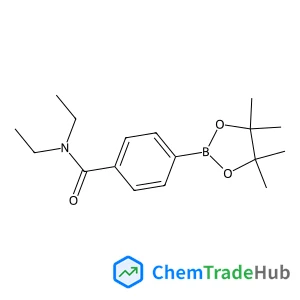
N,N-Diethyl-4-(4,4,5,5-tetramethyl-1,3,2-dioxaborolan-2-yl)benzamide
CAS Number:
325142-99-2
Molecular Formula:
C17H26BNO3
Recommended Suppliers






Disclaimer
This page provides academic journal information for reference and research purposes only. We are not affiliated with any journal publishers and do not handle publication submissions. For publication-related inquiries, please contact the respective journal publishers directly.
If you notice any inaccuracies in the information displayed, please contact us at support@chemtradehub.com. We will promptly review and address your concerns.