












Electron-stimulated reactions in nanoscale water films adsorbed on α-Al2O3(0001)
Literature Information
Publication Date
2018-04-11
DOI
10.1039/C8CP01284A
Impact Factor
3.676
Authors
Nikolay G. Petrik, Greg A. Kimmel
View Original
Abstract
The radiation-induced decomposition and desorption of nanoscale amorphous solid water (D2O) films adsorbed on an α-Al2O3(0001) surface was studied at low temperature in ultrahigh vacuum using temperature programmed desorption (TPD) and electron stimulated desorption (ESD) with a mono-energetic, low energy electron source. ESD yields of molecular products (D2, O2 and D2O) and the total sputtering yield increased with increasing D2O coverage up to ∼15 water monolayers (i.e. ∼15 × 1015 cm−2) to a coverage-independent level for thicker water films. Experiments with isotopically-layered water films (D2O and H2O) demonstrated that the highest water decomposition yields occurred at the interfaces of the nanoscale water films with the alumina substrate and vacuum. However, the increased reactivity of the water/alumina interface is relatively small compared to the enhancements in the non-thermal reactions previously observed at the water/Pt(111) and water/TiO2(110) interfaces. We propose that the relatively low activity of Al2O3(0001) for the radiation-induced production of molecular hydrogen is associated with lower reactivity of this surface with hydrogen atoms, which are likely precursors for the formation of molecular hydrogen.
Related Literature
Selective sodium intercalation into sodium nickel–manganese sulfate for dual Na–Li-ion batteries
Delyana M. Marinova, Rosica R. Kukeva, Ekaterina N. Zhecheva, Radostina K. Stoyanova
2018-04-09
Paper
DOI: 10.1039/C8CP01667D
Molecular dynamics of the halloysite nanotubes
Danil A. Prishchenko, Evgeniy V. Zenkov, Vladimir V. Mazurenko, Rawil F. Fakhrullin, Vladimir G. Mazurenko
2018-01-19
Paper
DOI: 10.1039/C7CP06575B
First-principles study on thermodynamic stability of the hybrid interfacial structure of LiMn2O4 cathode and carbonate electrolyte in Li-ion batteries
Daehyeon Choi, Joonhee Kang, Jinwoo Park, Byungchan Han
2018-03-28
Paper
DOI: 10.1039/C7CP08037A
Ion hydration: linking self-diffusion and reorientational motion to water structure
Seishi Shimizu
2018-02-08
Paper
DOI: 10.1039/C7CP07309G
Aerogen bonds formed between AeOF2 (Ae = Kr, Xe) and diazines: comparisons between σ-hole and π-hole complexes
Wiktor Zierkiewicz, Mariusz Michalczyk, Steve Scheiner
2018-01-10
Paper
DOI: 10.1039/C7CP08048D
Study of low temperature chlorine atom initiated oxidation of methyl and ethyl butyrate using synchrotron photoionization TOF-mass spectrometry
Joseph Czekner, Craig A. Taatjes, David L. Osborn, Giovanni Meloni
2018-02-01
Paper
DOI: 10.1039/C7CP08221E
Thermal equilibration between excited states or solvent effects: unveiling the origins of anomalous emissions in heteroleptic Ru(ii) complexes
Denis Jacquemin, Daniel Escudero
2018-04-04
Communication
DOI: 10.1039/C8CP01101J
Time-dependent changes in the growth of ultrathin ionic liquid films on Ag(111)
Matthias Lexow, Timo Talwar, Bettina S. J. Heller, Benjamin May, Radha G. Bhuin, Florian Maier, Hans-Peter Steinrück
2018-04-27
Paper
DOI: 10.1039/C8CP01411F
Optical absorption and photoconductivity in iodine-excess ionic liquids: the case of 1-alkyl-3-methyl imidazolium iodides
Masami Aono, Hisashi Miyazaki, Takahiro Takekiyo, Seiji Tsuzuki, Hiroshi Abe
2018-01-25
Paper
DOI: 10.1039/C7CP07387A
You might also like
Compound Q&A
What are the main uses of 1-(3-Aminophenyl)-3-[(3R)-1-(3,3-dimethyl-2-oxobutyl)-2-oxo-5-(2-pyridinyl)-2,3-dihydro-1H-1,4-benzodiazepin-3-yl]urea (CAS: 155412-88-7)?
This compound is mainly used as an intermediate in the synthesis of antipsychoti...
155412-88-71-(3-Aminophenyl)-3-...
Compound Q&A
How should waste containing 1-(D-Ribofuranosyl)-1,4-dihydro-3-pyridinecarboxamide (CAS: 19132-12-8) be handled?
Waste containing 1-(D-Ribofuranosyl)-1,4-dihydro-3-pyridinecarboxamide (CAS: 191...
19132-12-81-(D-Ribofuranosyl)-...
Compound Q&A
What regulatory guidelines apply to 2-Methyl-2-propanyl 3-bromo-3-(hydroxymethyl)-1-azetidinecarboxylate (CAS: 2007919-81-3)?
2-Methyl-2-propanyl 3-bromo-3-(hydroxymethyl)-1-azetidinecarboxylate (CAS: 20079...
2007919-81-32-Methyl-2-propanyl ...
Compound Q&A
What is N-(4-Chloro-2-pyridinyl)acetamide (CAS: 245056-66-0)?
N-(4-Chloro-2-pyridinyl)acetamide (CAS: 245056-66-0) is a chemical compound with...
245056-66-0N-(4-Chloro-2-pyridi...
Compound Q&A
What is 5-Chloro-2-hydroxybenzoic acid (CAS: 321-14-2)?
5-Chloro-2-hydroxybenzoic acid, also known as 5-chlorosalicylic acid, is an arom...
321-14-25-Chloro-2-hydroxybe...
Compound Q&A
What precautions should be taken when handling 1,1-Dichloro-1-fluoroethane (CAS: 1717-00-6)?
When handling 1,1-Dichloro-1-fluoroethane (CAS: 1717-00-6), it is important to u...
1717-00-61,1-Dichloro-1-fluor...
Compound Q&A
What are the physical and chemical properties of Fmoc-(2S,3R)-3-phenylpyrrolidine-2-carboxylic acid (CAS: 281655-32-1)?
Fmoc-(2S,3R)-3-phenylpyrrolidine-2-carboxylic acid is a white crystalline solid ...
281655-32-1Fmoc-(2S,3R)-3-pheny...
Compound Q&A
What are the main uses of 4-Amino-5-bromo-2-pyridinecarboxylic acid (CAS: 1363381-01-4)?
4-Amino-5-bromo-2-pyridinecarboxylic acid is primarily used as a precursor in th...
1363381-01-44-Amino-5-bromo-2-py...
Compound Q&A
What precautions should be taken when handling (S)-tert-butyl 2-((2-(4-bromophenyl)-2-oxoethyl)carbamoyl)pyrrolidine-1-carboxylate (CAS: 1007881-98-2)?
Handling this compound should be done with personal protective equipment (PPE) i...
1007881-98-2(S)-tert-butyl 2-((2...
Compound Q&A
What precautions should be taken when handling 8-bromo-2,2-dimethyl-3,4-dihydro-2H-1,4-benzoxazin-3-one (CAS: 688363-73-7)?
When handling 8-bromo-2,2-dimethyl-3,4-dihydro-2H-1,4-benzoxazin-3-one, use prop...
688363-73-78-bromo-2,2-dimethyl...
Source Journal
Physical Chemistry Chemical Physics

CiteScore:
5.5
Self-citation Rate:
10.3%
Articles per Year:
3036
Physical Chemistry Chemical Physics (PCCP) is an international journal co-owned by 19 physical chemistry and physics societies from around the world. This journal publishes original, cutting-edge research in physical chemistry, chemical physics and biophysical chemistry. To be suitable for publication in PCCP, articles must include significant innovation and/or insight into physical chemistry; this is the most important criterion that reviewers and Editors will judge against when evaluating submissions. The journal has a broad scope and welcomes contributions spanning experiment, theory, computation and data science. Topical coverage includes spectroscopy, dynamics, kinetics, statistical mechanics, thermodynamics, electrochemistry, catalysis, surface science, quantum mechanics, quantum computing and machine learning. Interdisciplinary research areas such as polymers and soft matter, materials, nanoscience, energy, surfaces/interfaces, and biophysical chemistry are welcomed if they demonstrate significant innovation and/or insight into physical chemistry. Joined experimental/theoretical studies are particularly appreciated when complementary and based on up-to-date approaches.
Recommended Compounds
![2,6-Bis({(2R)-2-[hydroxy(diphenyl)methyl]-1-pyrrolidinyl}methyl)-4-methylphenol structure](https://static.chemtradehub.com/structs/877/877395-58-9-70bf.webp "2,6-Bis({(2R)-2-[hydroxy(diphenyl)methyl]-1-pyrrolidinyl}methyl)-4-methylphenol structure")
2,6-Bis({(2R)-2-[hydroxy(diphenyl)methyl]-1-pyrrolidinyl}methyl)-4-methylphenol
CAS Number:
877395-58-9
Molecular Formula:
C43H46N2O3

3-Chloro-5-(4,4,5,5-tetramethyl-1,3,2-dioxaborolan-2-yl)-2-pyridinamine
CAS Number:
1032758-99-8
Molecular Formula:
C11H16BClN2O2
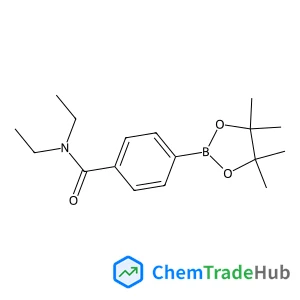
N,N-Diethyl-4-(4,4,5,5-tetramethyl-1,3,2-dioxaborolan-2-yl)benzamide
CAS Number:
325142-99-2
Molecular Formula:
C17H26BNO3
Recommended Suppliers





Disclaimer
This page provides academic journal information for reference and research purposes only. We are not affiliated with any journal publishers and do not handle publication submissions. For publication-related inquiries, please contact the respective journal publishers directly.
If you notice any inaccuracies in the information displayed, please contact us at support@chemtradehub.com. We will promptly review and address your concerns.