













The fate of plasma-generated oxygen atoms in aqueous solutions: non-equilibrium atmospheric pressure plasmas as an efficient source of atomic O(aq)
Literature Information
Publication Date
2018-04-19
DOI
10.1039/C8CP00197A
Impact Factor
3.676
Authors
J. Benedikt, A. Shaw, B. R. Buckley, F. Iza, S. Schäkermann, J. E. Bandow
View Original
Abstract
Non-equilibrium radio-frequency driven atmospheric-pressure plasma in He/0.6%O2 gas mixture has been used to study the reaction mechanism of plasma-generated oxygen atoms in aqueous solutions. The effluent from the plasma source operated with standard and 18O-labeled O2 gas was used to treat water in the presence of phenol as a chemical probe. Comparing the mass spectrometry and gas chromatography-mass spectrometry data of the solutions treated with plasma under normal and labeled oxygen provides clear evidence that O(aq) originating from the gas phase enters the liquid and reacts directly with phenol, without any intermediate reactions. Additionally, the atmospheric-pressure plasma source demonstrates great potential to be an effective source of O(aq) atoms without the requirement for any precursors in the liquid phase.
Related Literature
Factors impacting the aggregation/agglomeration and photocatalytic activity of highly crystalline spheroid- and rod-shaped TiO2 nanoparticles in aqueous solutions
Thomas Degabriel, Elodie Colaço, Rute F. Domingos, Karim El Kirat, Dalil Brouri, Sandra Casale, Jessem Landoulsi, Jolanda Spadavecchia
2018-04-05
Paper
DOI: 10.1039/C7CP08054A
Computational screening of a single transition metal atom supported on the C2N monolayer for electrochemical ammonia synthesis
Zhongxu Wang, Zhigang Yu, Jingxiang Zhao
2018-04-13
Paper
DOI: 10.1039/C8CP01215F
Li deposition and desolvation with electron transfer at a silicon/propylene-carbonate interface: transition-state and free-energy profiles by large-scale first-principles molecular dynamics
Tsukuru Ohwaki, Taisuke Ozaki, Yukihiro Okuno, Hideto Imai, Minoru Otani
2018-03-05
Paper
DOI: 10.1039/C7CP08569A
The effect of copper on the redox behaviour of iron oxide for chemical-looping hydrogen production probed by in situ X-ray absorption spectroscopy
Nur Sena Yüzbasi, Paula M. Abdala, Qasim Imtiaz, Sung Min Kim, Agnieszka M. Kierzkowska, Andac Armutlulu, Wouter van Beek, Christoph R. Müller
2018-04-17
Paper
DOI: 10.1039/C8CP01309H
Mediating both valence and conduction bands of TiO2 by anionic dopants for visible- and infrared-light photocatalysis
Tingwei Chen, Guokui Liu, Fan Jin, Min Wei, Jin Feng, Yuchen Ma
2018-04-04
Paper
DOI: 10.1039/C8CP00895G
Untangling the methane chemistry in interstellar and solar system ices toward ionizing radiation: a combined infrared and reflectron time-of-flight analysis
2017-09-26
Paper
DOI: 10.1039/C7CP05882A
Thermal activation of methane by vanadium boride cluster cations VBn+ (n = 3–6)
2018-01-17
Communication
DOI: 10.1039/C8CP00071A
Crystallization of silica promoted by residual hydrogen bonding interactions at high temperature
Xiaojiao Zhang, Yang Liu, Wenchuan Lai, Zaoming Wang, Wang Xu, Xiangyang Liu
2018-04-09
Paper
DOI: 10.1039/C8CP00642C
The origin of absorptive features in the two-dimensional electronic spectra of rhodopsin
Marwa H. Farag, Thomas L. C. Jansen, Jasper Knoester
2018-04-18
Paper
DOI: 10.1039/C8CP00638E
You might also like
Compound Q&A
What are the main uses of 1-(3-Aminophenyl)-3-[(3R)-1-(3,3-dimethyl-2-oxobutyl)-2-oxo-5-(2-pyridinyl)-2,3-dihydro-1H-1,4-benzodiazepin-3-yl]urea (CAS: 155412-88-7)?
This compound is mainly used as an intermediate in the synthesis of antipsychoti...
155412-88-71-(3-Aminophenyl)-3-...
Compound Q&A
How should waste containing 1-(D-Ribofuranosyl)-1,4-dihydro-3-pyridinecarboxamide (CAS: 19132-12-8) be handled?
Waste containing 1-(D-Ribofuranosyl)-1,4-dihydro-3-pyridinecarboxamide (CAS: 191...
19132-12-81-(D-Ribofuranosyl)-...
Compound Q&A
What regulatory guidelines apply to 2-Methyl-2-propanyl 3-bromo-3-(hydroxymethyl)-1-azetidinecarboxylate (CAS: 2007919-81-3)?
2-Methyl-2-propanyl 3-bromo-3-(hydroxymethyl)-1-azetidinecarboxylate (CAS: 20079...
2007919-81-32-Methyl-2-propanyl ...
Compound Q&A
What is N-(4-Chloro-2-pyridinyl)acetamide (CAS: 245056-66-0)?
N-(4-Chloro-2-pyridinyl)acetamide (CAS: 245056-66-0) is a chemical compound with...
245056-66-0N-(4-Chloro-2-pyridi...
Compound Q&A
What is 5-Chloro-2-hydroxybenzoic acid (CAS: 321-14-2)?
5-Chloro-2-hydroxybenzoic acid, also known as 5-chlorosalicylic acid, is an arom...
321-14-25-Chloro-2-hydroxybe...
Compound Q&A
What precautions should be taken when handling 1,1-Dichloro-1-fluoroethane (CAS: 1717-00-6)?
When handling 1,1-Dichloro-1-fluoroethane (CAS: 1717-00-6), it is important to u...
1717-00-61,1-Dichloro-1-fluor...
Compound Q&A
What are the physical and chemical properties of Fmoc-(2S,3R)-3-phenylpyrrolidine-2-carboxylic acid (CAS: 281655-32-1)?
Fmoc-(2S,3R)-3-phenylpyrrolidine-2-carboxylic acid is a white crystalline solid ...
281655-32-1Fmoc-(2S,3R)-3-pheny...
Compound Q&A
What are the main uses of 4-Amino-5-bromo-2-pyridinecarboxylic acid (CAS: 1363381-01-4)?
4-Amino-5-bromo-2-pyridinecarboxylic acid is primarily used as a precursor in th...
1363381-01-44-Amino-5-bromo-2-py...
Compound Q&A
What precautions should be taken when handling (S)-tert-butyl 2-((2-(4-bromophenyl)-2-oxoethyl)carbamoyl)pyrrolidine-1-carboxylate (CAS: 1007881-98-2)?
Handling this compound should be done with personal protective equipment (PPE) i...
1007881-98-2(S)-tert-butyl 2-((2...
Compound Q&A
What precautions should be taken when handling 8-bromo-2,2-dimethyl-3,4-dihydro-2H-1,4-benzoxazin-3-one (CAS: 688363-73-7)?
When handling 8-bromo-2,2-dimethyl-3,4-dihydro-2H-1,4-benzoxazin-3-one, use prop...
688363-73-78-bromo-2,2-dimethyl...
Source Journal
Physical Chemistry Chemical Physics

CiteScore:
5.5
Self-citation Rate:
10.3%
Articles per Year:
3036
Physical Chemistry Chemical Physics (PCCP) is an international journal co-owned by 19 physical chemistry and physics societies from around the world. This journal publishes original, cutting-edge research in physical chemistry, chemical physics and biophysical chemistry. To be suitable for publication in PCCP, articles must include significant innovation and/or insight into physical chemistry; this is the most important criterion that reviewers and Editors will judge against when evaluating submissions. The journal has a broad scope and welcomes contributions spanning experiment, theory, computation and data science. Topical coverage includes spectroscopy, dynamics, kinetics, statistical mechanics, thermodynamics, electrochemistry, catalysis, surface science, quantum mechanics, quantum computing and machine learning. Interdisciplinary research areas such as polymers and soft matter, materials, nanoscience, energy, surfaces/interfaces, and biophysical chemistry are welcomed if they demonstrate significant innovation and/or insight into physical chemistry. Joined experimental/theoretical studies are particularly appreciated when complementary and based on up-to-date approaches.
Recommended Compounds
![Pyrazolo[1,5-a]pyridine-3-carbothioamide structure](https://static.chemtradehub.com/structs/885/885275-44-5-aae0.webp "Pyrazolo[1,5-a]pyridine-3-carbothioamide structure")
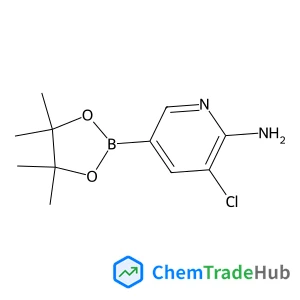
3-Chloro-5-(4,4,5,5-tetramethyl-1,3,2-dioxaborolan-2-yl)-2-pyridinamine
CAS Number:
1032758-99-8
Molecular Formula:
C11H16BClN2O2
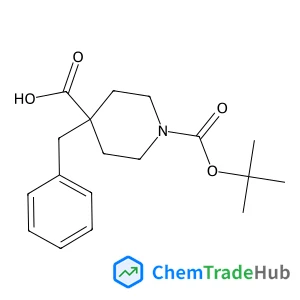
4-Benzyl-1-(tert-butoxycarbonyl)piperidine-4-carboxylic acid
CAS Number:
170838-87-6
Molecular Formula:
C18H25NO4
Recommended Suppliers




Disclaimer
This page provides academic journal information for reference and research purposes only. We are not affiliated with any journal publishers and do not handle publication submissions. For publication-related inquiries, please contact the respective journal publishers directly.
If you notice any inaccuracies in the information displayed, please contact us at support@chemtradehub.com. We will promptly review and address your concerns.