












Mechanistic insights into the interaction between energetic oxygen ions and nanosized ZnFe2O4: XAS-XMCD investigations
Literature Information
Publication Date
2018-04-03
DOI
10.1039/C8CP00368H
Impact Factor
3.676
Authors
Jitendra Pal Singh, Baljeet Kaur, Aditya Sharma, So Hee Kim, Sanjeev Gautam, Ramesh Chandra Srivastava, Navdeep Goyal, Weol Cheol Lim, H.-J. Lin, J. M. Chen, K. Asokan, D. Kanjilal, Sung Ok Won, Ik-Jae Lee, Keun Hwa Chae
View Original
Abstract
The interactions of energetic ions with multi-cation compounds and their consequences in terms of changes in the local electronic structure, which may facilitate intriguing hybridization between O 2p and metal d orbitals and magnetic ordering, are the subject of debate and require a deep understanding of energy transfer processes and magnetic exchange mechanisms. In this study, nanocrystals of ZnFe2O4 were exposed to O7+ ions with an energy of 100 MeV to understand, qualitatively and quantitatively, the metal–ligand field interactions, cation migration and magnetic exchange interactions by employing X-ray absorption fine structure measurements and X-ray magnetic circular dichroism to get deeper mechanistic insights. Nanosized zinc ferrite nanoparticles (NPs) with a size of ∼16 nm synthesized in the cubic spinel phase exhibited deterioration of the crystalline phase when 100 MeV O7+ ions passed through them. However, the size of these NPs remained almost the same. The behaviour of crystal deterioration is associated with the confinement of heat in this interaction. The energy confined inside the nanoparticles promotes cation redistribution as well as the modification of the local electronic structure. Prior to this interaction, almost 42% of Zn2+ ions occupied AO4 tetrahedra; however, this value increased to 63% after the interaction. An inverse effect was observed for metal ion occupancies in BO6 octahedra. The L-edge spectra of Fe and Zn reveal that the spin and valence states of the metal ions were not affected by this interaction. This effect is also supported by K-edge measurements for Fe and Zn. The t2g/eg intensity ratio in the O K-edge spectra decreased after this interaction, which is associated with detachment of Zn2+ ions from the lattice. The extent of hybridization, as estimated from the ratio of the post-edge to the pre-edge region of the O K-edge spectra, decreased after this interaction. The metal–oxygen and metal–metal bond lengths were modified as a result of this interaction, as determined from extended X-ray absorption fine structure measurements. These measurements further support the observation of cation migration from AO4 tetrahedra to AO6 octahedra and vice versa. The Fe L-edge magnetic circular dichroism spectra indicate that Fe3+ ions occupying sites in AO4 tetrahedra and BO6 octahedra exhibited antiferromagnetic-like ordering prior to this interaction. The NPs that interacted with energetic O ions displayed a different kind of magnetic ordering.
Related Literature
Palladium-catalyzed heck-type cascade cyclization of (Z)-1-iodo-1,6-dienes with N-tosyl hydrazones
Jun Li, Xiaochen Chi, Long Meng, Luyang Jiao, Wenhui Shang, Ping Wang, Daopeng Zhang, Yunhui Dong, Qing Liu, Hui Liu
2018-09-25
Communication
DOI: 10.1039/C8OB01821A
Synthesis of N-arylsulfonamides through a Pd-catalyzed reduction coupling reaction of nitroarenes with sodium arylsulfinates
Bo Yang, Chang Lian, Guanglu Yue, Danyang Liu, Liyan Wei, Yi Ding, Xiancai Zheng, Kui Lu, Di Qiu, Xia Zhao
2018-10-15
Paper
DOI: 10.1039/C8OB02226G
Activation of the hypervalent fluoroiodane reagent by hydrogen bonding to hexafluoroisopropanol
Harsimran K. Minhas, William Riley, Alison M. Stuart, Martyna Urbonaite
2018-09-18
Paper
DOI: 10.1039/C8OB02236D
Palladium(ii)-mediated rapid 11C-cyanation of (hetero)arylborons
Zhouen Zhang, Takashi Niwa, Yasuyoshi Watanabe
2018-10-02
Paper
DOI: 10.1039/C8OB02049C
Iron(iii)-catalyzed radical α,β-aminophosphinoylation of styrenes with diphenylphosphine oxides and anilines
Yu Wang, Wei Wang, Ruyun Tang, Zhenhua Liu, Weihua Tao, Zhongxue Fang
2018-10-15
Communication
DOI: 10.1039/C8OB02151A
Synthesis of highly rigid phosphine–oxazoline ligands for palladium-catalyzed asymmetric allylic alkylation
Zhongxuan Qiu, Rui Sun, Dawei Teng
2018-10-01
Paper
DOI: 10.1039/C8OB02265H
Tandem radical cyclization of N-methacryloyl benzamides with CBr4 to construct brominated isoquinolinediones
Songhai Huang, Pengfei Niu, Yingpeng Su, Dongcheng Hu, Congde Huo
2018-10-02
Paper
DOI: 10.1039/C8OB01964A
A supramolecular red to near-infrared fluorescent probe for the detection of drugs in urine
Gyan H. Aryal, Kenneth W. Hunter, Liming Huang
2018-09-21
Paper
DOI: 10.1039/C8OB02180E
Nazarov cyclisations initiated by DDQ-oxidised pentadienyl ether: a mechanistic investigation from the DFT perspective
Ali Gouranourimi, Antony Chipman, Rasool Babaahmadi, Angus Olding, Brian F. Yates, Alireza Ariafard
2018-11-08
Paper
DOI: 10.1039/C8OB02590H
Synthesis of iminoisoindolinones via a cascade of the three-component Ugi reaction, palladium catalyzed isocyanide insertion, hydroxylation and an unexpected rearrangement reaction
Zhi-Lin Ren, Ping He, Wen-Ting Lu, Mei Sun, Ming-Wu Ding
2018-08-17
Paper
DOI: 10.1039/C8OB01728J
You might also like
Compound Q&A
What are the main uses of 1-(3-Aminophenyl)-3-[(3R)-1-(3,3-dimethyl-2-oxobutyl)-2-oxo-5-(2-pyridinyl)-2,3-dihydro-1H-1,4-benzodiazepin-3-yl]urea (CAS: 155412-88-7)?
This compound is mainly used as an intermediate in the synthesis of antipsychoti...
155412-88-71-(3-Aminophenyl)-3-...
Compound Q&A
How should waste containing 1-(D-Ribofuranosyl)-1,4-dihydro-3-pyridinecarboxamide (CAS: 19132-12-8) be handled?
Waste containing 1-(D-Ribofuranosyl)-1,4-dihydro-3-pyridinecarboxamide (CAS: 191...
19132-12-81-(D-Ribofuranosyl)-...
Compound Q&A
What regulatory guidelines apply to 2-Methyl-2-propanyl 3-bromo-3-(hydroxymethyl)-1-azetidinecarboxylate (CAS: 2007919-81-3)?
2-Methyl-2-propanyl 3-bromo-3-(hydroxymethyl)-1-azetidinecarboxylate (CAS: 20079...
2007919-81-32-Methyl-2-propanyl ...
Compound Q&A
What is N-(4-Chloro-2-pyridinyl)acetamide (CAS: 245056-66-0)?
N-(4-Chloro-2-pyridinyl)acetamide (CAS: 245056-66-0) is a chemical compound with...
245056-66-0N-(4-Chloro-2-pyridi...
Compound Q&A
What is 5-Chloro-2-hydroxybenzoic acid (CAS: 321-14-2)?
5-Chloro-2-hydroxybenzoic acid, also known as 5-chlorosalicylic acid, is an arom...
321-14-25-Chloro-2-hydroxybe...
Compound Q&A
What precautions should be taken when handling 1,1-Dichloro-1-fluoroethane (CAS: 1717-00-6)?
When handling 1,1-Dichloro-1-fluoroethane (CAS: 1717-00-6), it is important to u...
1717-00-61,1-Dichloro-1-fluor...
Compound Q&A
What are the physical and chemical properties of Fmoc-(2S,3R)-3-phenylpyrrolidine-2-carboxylic acid (CAS: 281655-32-1)?
Fmoc-(2S,3R)-3-phenylpyrrolidine-2-carboxylic acid is a white crystalline solid ...
281655-32-1Fmoc-(2S,3R)-3-pheny...
Compound Q&A
What are the main uses of 4-Amino-5-bromo-2-pyridinecarboxylic acid (CAS: 1363381-01-4)?
4-Amino-5-bromo-2-pyridinecarboxylic acid is primarily used as a precursor in th...
1363381-01-44-Amino-5-bromo-2-py...
Compound Q&A
What precautions should be taken when handling (S)-tert-butyl 2-((2-(4-bromophenyl)-2-oxoethyl)carbamoyl)pyrrolidine-1-carboxylate (CAS: 1007881-98-2)?
Handling this compound should be done with personal protective equipment (PPE) i...
1007881-98-2(S)-tert-butyl 2-((2...
Compound Q&A
What precautions should be taken when handling 8-bromo-2,2-dimethyl-3,4-dihydro-2H-1,4-benzoxazin-3-one (CAS: 688363-73-7)?
When handling 8-bromo-2,2-dimethyl-3,4-dihydro-2H-1,4-benzoxazin-3-one, use prop...
688363-73-78-bromo-2,2-dimethyl...
Source Journal
Physical Chemistry Chemical Physics

CiteScore:
5.5
Self-citation Rate:
10.3%
Articles per Year:
3036
Physical Chemistry Chemical Physics (PCCP) is an international journal co-owned by 19 physical chemistry and physics societies from around the world. This journal publishes original, cutting-edge research in physical chemistry, chemical physics and biophysical chemistry. To be suitable for publication in PCCP, articles must include significant innovation and/or insight into physical chemistry; this is the most important criterion that reviewers and Editors will judge against when evaluating submissions. The journal has a broad scope and welcomes contributions spanning experiment, theory, computation and data science. Topical coverage includes spectroscopy, dynamics, kinetics, statistical mechanics, thermodynamics, electrochemistry, catalysis, surface science, quantum mechanics, quantum computing and machine learning. Interdisciplinary research areas such as polymers and soft matter, materials, nanoscience, energy, surfaces/interfaces, and biophysical chemistry are welcomed if they demonstrate significant innovation and/or insight into physical chemistry. Joined experimental/theoretical studies are particularly appreciated when complementary and based on up-to-date approaches.
Recommended Compounds
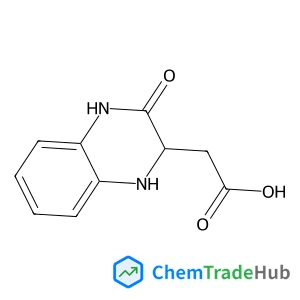
(3-Oxo-1,2,3,4-tetrahydro-2-quinoxalinyl)acetic acid
CAS Number:
136584-14-0
Molecular Formula:
C10H10N2O3
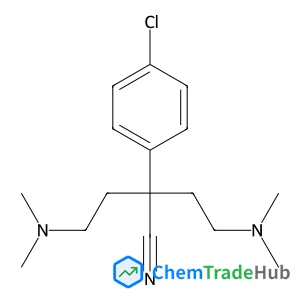
2-(4-Chlorophenyl)-4-(dimethylamino)-2-(2-(dimethylamino)ethyl)butanenitrile
CAS Number:
1246816-57-8
Molecular Formula:
C16H24ClN3
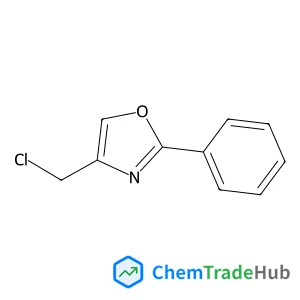
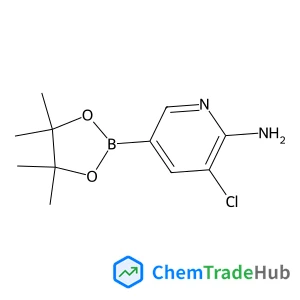
3-Chloro-5-(4,4,5,5-tetramethyl-1,3,2-dioxaborolan-2-yl)-2-pyridinamine
CAS Number:
1032758-99-8
Molecular Formula:
C11H16BClN2O2
Recommended Suppliers





Disclaimer
This page provides academic journal information for reference and research purposes only. We are not affiliated with any journal publishers and do not handle publication submissions. For publication-related inquiries, please contact the respective journal publishers directly.
If you notice any inaccuracies in the information displayed, please contact us at support@chemtradehub.com. We will promptly review and address your concerns.