












Influence of the type of carrier on ferromagnetism in a Si semiconductor implanted with Cu ions
Literature Information
Publication Date
2020-03-09
DOI
10.1039/C9CP05608D
Impact Factor
3.676
Authors
Li Wang, Denglu Hou, Chunfang Wu, Yuanping Shi, Shaohui Shi, Weikun Gao, Shunzhen Feng, Yingdi Liu, Li Li, Denghui Ji
View Original
Abstract
Silicon semiconductor samples implanted with Cu ions and samples co-implanted with Cu- and N-ions were prepared by MEVVA and the Kaufman technique. None of the samples showed evidence of secondary phases. The initially n-type Si matrix, when implanted with Cu ions, changed to a p-type semiconductor, and the Cu ions existed as local Cu2+ cations in the p-type environment. As a result, none of the Cu-implanted samples were ferromagnetic at room temperature. The co-implanted samples, on the other hand, showed room-temperature ferromagnetism because the introduction of N ions made the carrier type change from p-type to n-type which is favorable for the appearance of Cu2+. First principles calculations were applied to understand the experimental phenomena. The formation energy was reduced by implanting N ions, and was decreased effectively with the increase in ratio of N to Cu ions. The density of states and spin density of states indicated that the hybridization of s, p and d electrons induced ferromagnetism at 0 K. Particularly, we proposed possible exchange interactions between the Cu2+–N−(N4+)–Cu2+ ions to explain the ferromagnetism mechanism.
Recommended Journals
Related Literature
Pronounced exciton and coherent phonon dynamics in BiI3
Mirko Scholz, Kawon Oum, Thomas Lenzer
2017-12-20
Paper
DOI: 10.1039/C7CP07729G
Application of far-infrared spectroscopy to the structural identification of protein materials
Yanchen Han, Shengjie Ling, Zeming Qi, Zhengzhong Shao, Xin Chen
2018-04-04
Paper
DOI: 10.1039/C8CP00802G
Effects of crystal structure and composition on the photocatalytic performance of Ta–O–N functional materials
Qing-Lu Liu, Zong-Yan Zhao, Jian-Hong Yi
2018-03-27
Paper
DOI: 10.1039/C8CP00432C
Vibrational spectroscopy of hydrogens in diamond: a quantum mechanical treatment
Francesco Silvio Gentile, Simone Salustro, Anna Maria Ferrari, Philippe D'Arco, Roberto Dovesi
2018-04-04
Paper
DOI: 10.1039/C8CP00596F
Understanding the hydrogen transfer mechanism for the biodegradation of 2,4,6-trinitrotoluene catalyzed by pentaerythritol tetranitrate reductase: molecular dynamics simulations
Zhilin Yang, Yang Zhou, Hui Huang, Dingguo Xu, Chaoyang Zhang
2018-04-06
Paper
DOI: 10.1039/C8CP00345A
A DFT study on Zr-SBA-15 catalyzed conversion of ethanol to 1,3-butadiene
2018-04-09
Paper
DOI: 10.1039/C7CP08620B
Excimer formation and evolution of excited state properties in discrete dimeric stacking of an anthracene derivative: a computational investigation
Yu Gao, Haichao Liu, Shitong Zhang, Qiang Gu, Yue Shen, Yunpeng Ge, Bing Yang
2018-04-06
Paper
DOI: 10.1039/C8CP00834E
Modelling of adsorption and intercalation of hydrogen on/into tungsten disulphide multilayers and multiwall nanotubes
José I. Martínez, Alex Laikhtman, Hoi Ri Moon, Alla Zak, Julio A. Alonso
2018-04-13
Paper
DOI: 10.1039/C8CP01437J
Molecular structure and adsorption of dimethyl sulfoxide at the air/aqueous solution interface probed by non-resonant second harmonic generation
Qianshun Wei, Dexia Zhou, Hongtao Bian
2018-03-27
Paper
DOI: 10.1039/C8CP00099A
Structural signature and transition dynamics of Sb2Te3 melt upon fast cooling
Y. R. Guo, F. Dong, C. Qiao, J. J. Wang, Ming Xu, Y. X. Zheng, R. J. Zhang, L. Y. Chen, C. Z. Wang, K. M. Ho
2018-03-27
Paper
DOI: 10.1039/C8CP00142A
You might also like
Compound Q&A
What are the main uses of 1-(3-Aminophenyl)-3-[(3R)-1-(3,3-dimethyl-2-oxobutyl)-2-oxo-5-(2-pyridinyl)-2,3-dihydro-1H-1,4-benzodiazepin-3-yl]urea (CAS: 155412-88-7)?
This compound is mainly used as an intermediate in the synthesis of antipsychoti...
155412-88-71-(3-Aminophenyl)-3-...
Compound Q&A
How should waste containing 1-(D-Ribofuranosyl)-1,4-dihydro-3-pyridinecarboxamide (CAS: 19132-12-8) be handled?
Waste containing 1-(D-Ribofuranosyl)-1,4-dihydro-3-pyridinecarboxamide (CAS: 191...
19132-12-81-(D-Ribofuranosyl)-...
Compound Q&A
What regulatory guidelines apply to 2-Methyl-2-propanyl 3-bromo-3-(hydroxymethyl)-1-azetidinecarboxylate (CAS: 2007919-81-3)?
2-Methyl-2-propanyl 3-bromo-3-(hydroxymethyl)-1-azetidinecarboxylate (CAS: 20079...
2007919-81-32-Methyl-2-propanyl ...
Compound Q&A
What is N-(4-Chloro-2-pyridinyl)acetamide (CAS: 245056-66-0)?
N-(4-Chloro-2-pyridinyl)acetamide (CAS: 245056-66-0) is a chemical compound with...
245056-66-0N-(4-Chloro-2-pyridi...
Compound Q&A
What is 5-Chloro-2-hydroxybenzoic acid (CAS: 321-14-2)?
5-Chloro-2-hydroxybenzoic acid, also known as 5-chlorosalicylic acid, is an arom...
321-14-25-Chloro-2-hydroxybe...
Compound Q&A
What precautions should be taken when handling 1,1-Dichloro-1-fluoroethane (CAS: 1717-00-6)?
When handling 1,1-Dichloro-1-fluoroethane (CAS: 1717-00-6), it is important to u...
1717-00-61,1-Dichloro-1-fluor...
Compound Q&A
What are the physical and chemical properties of Fmoc-(2S,3R)-3-phenylpyrrolidine-2-carboxylic acid (CAS: 281655-32-1)?
Fmoc-(2S,3R)-3-phenylpyrrolidine-2-carboxylic acid is a white crystalline solid ...
281655-32-1Fmoc-(2S,3R)-3-pheny...
Compound Q&A
What are the main uses of 4-Amino-5-bromo-2-pyridinecarboxylic acid (CAS: 1363381-01-4)?
4-Amino-5-bromo-2-pyridinecarboxylic acid is primarily used as a precursor in th...
1363381-01-44-Amino-5-bromo-2-py...
Compound Q&A
What precautions should be taken when handling (S)-tert-butyl 2-((2-(4-bromophenyl)-2-oxoethyl)carbamoyl)pyrrolidine-1-carboxylate (CAS: 1007881-98-2)?
Handling this compound should be done with personal protective equipment (PPE) i...
1007881-98-2(S)-tert-butyl 2-((2...
Compound Q&A
What precautions should be taken when handling 8-bromo-2,2-dimethyl-3,4-dihydro-2H-1,4-benzoxazin-3-one (CAS: 688363-73-7)?
When handling 8-bromo-2,2-dimethyl-3,4-dihydro-2H-1,4-benzoxazin-3-one, use prop...
688363-73-78-bromo-2,2-dimethyl...
Source Journal
Physical Chemistry Chemical Physics

CiteScore:
5.5
Self-citation Rate:
10.3%
Articles per Year:
3036
Physical Chemistry Chemical Physics (PCCP) is an international journal co-owned by 19 physical chemistry and physics societies from around the world. This journal publishes original, cutting-edge research in physical chemistry, chemical physics and biophysical chemistry. To be suitable for publication in PCCP, articles must include significant innovation and/or insight into physical chemistry; this is the most important criterion that reviewers and Editors will judge against when evaluating submissions. The journal has a broad scope and welcomes contributions spanning experiment, theory, computation and data science. Topical coverage includes spectroscopy, dynamics, kinetics, statistical mechanics, thermodynamics, electrochemistry, catalysis, surface science, quantum mechanics, quantum computing and machine learning. Interdisciplinary research areas such as polymers and soft matter, materials, nanoscience, energy, surfaces/interfaces, and biophysical chemistry are welcomed if they demonstrate significant innovation and/or insight into physical chemistry. Joined experimental/theoretical studies are particularly appreciated when complementary and based on up-to-date approaches.
Recommended Compounds

![4-Chloro-3-(trifluoromethyl)-1H-pyrrolo[2,3-b]pyridine structure](https://static.chemtradehub.com/structs/869/869335-75-1-a9d0.webp "4-Chloro-3-(trifluoromethyl)-1H-pyrrolo[2,3-b]pyridine structure")
4-Chloro-3-(trifluoromethyl)-1H-pyrrolo[2,3-b]pyridine
CAS Number:
869335-75-1
Molecular Formula:
C8H4ClF3N2
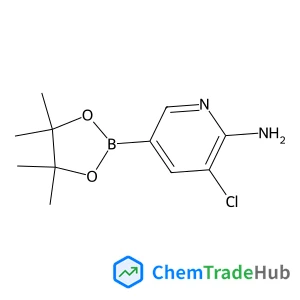
3-Chloro-5-(4,4,5,5-tetramethyl-1,3,2-dioxaborolan-2-yl)-2-pyridinamine
CAS Number:
1032758-99-8
Molecular Formula:
C11H16BClN2O2
Recommended Suppliers




Disclaimer
This page provides academic journal information for reference and research purposes only. We are not affiliated with any journal publishers and do not handle publication submissions. For publication-related inquiries, please contact the respective journal publishers directly.
If you notice any inaccuracies in the information displayed, please contact us at support@chemtradehub.com. We will promptly review and address your concerns.