













Molecular structure and adsorption of dimethyl sulfoxide at the air/aqueous solution interface probed by non-resonant second harmonic generation
Literature Information
Publication Date
2018-03-27
DOI
10.1039/C8CP00099A
Impact Factor
3.676
Authors
Qianshun Wei, Dexia Zhou, Hongtao Bian
View Original
Abstract
In this study, non-resonant second harmonic generation (SHG) was used to investigate the molecular structure and adsorption of DMSO at the air/neat DMSO liquid and air/DMSO aqueous solution interfaces. The molecular orientation of interfacial DMSO as a function of the bulk DMSO concentration was investigated by quantitative polarization SHG analysis. For the air/neat DMSO liquid interface, the transition dipole moment of the SO group of DMSO is oriented 140° from the surface normal, where the SO group of DMSO is estimated to be 30° from the surface plane. The orientation of the SO group of interfacial DMSO is not dependent on the bulk DMSO concentration. Furthermore, the concentration-dependent SHG signal confirmed that the antiparallel double layer structure does not form at the air/DMSO water interface. The free energy of adsorption of DMSO at the air/DMSO aqueous solution interface was determined to be ΔGads = −5.6 ± 0.4 kJ mol−1.
Recommended Journals
Related Literature
Tsavoenones A–C: unprecedented polyketides with a 1,7-dioxadispiro[4.0.4.4]tetradecane core from the lichen Parmotrema tsavoense
Mehdi A. Beniddir, Grégory Genta-Jouve, Thammarat Aree, Marylène Chollet-Krugler, Joël Boustie, Solenn Ferron, Aurélie Sauvager, Huu-Hung Nguyen, Kim-Phi-Phung Nguyen, Warinthorn Chavasiri, Pierre Le Pogam
2018-07-31
Paper
DOI: 10.1039/C8OB01280F
Synthesis of iminoisoindolinones via a cascade of the three-component Ugi reaction, palladium catalyzed isocyanide insertion, hydroxylation and an unexpected rearrangement reaction
Zhi-Lin Ren, Ping He, Wen-Ting Lu, Mei Sun, Ming-Wu Ding
2018-08-17
Paper
DOI: 10.1039/C8OB01728J
A red-emitting fluorescent probe for the detection of Hg2+ in aqueous medium, living cells and organisms with a large Stokes shift
Lei Yang, Yuanan Su, Yani Geng, Haiqing Xiong, Jinliang Han, Qian Fang, Xiangzhi Song
2018-06-20
Paper
DOI: 10.1039/C8OB00831K
A supramolecular red to near-infrared fluorescent probe for the detection of drugs in urine
Gyan H. Aryal, Kenneth W. Hunter, Liming Huang
2018-09-21
Paper
DOI: 10.1039/C8OB02180E
Synthesis of α-oxygenated β,γ-unsaturated ketones by a catalytic rearrangement strategy
Luisa Lempenauer, Aline Soupart, Elisabet Duñach, Gilles Lemière
2018-07-11
Paper
DOI: 10.1039/C8OB01559G
Rational design of a highly reactive dicysteine peptide tag for fluorogenic protein labelling
Miroslava Strmiskova, Kelvin Tsao, Jeffrey W. Keillor
2018-08-14
Paper
DOI: 10.1039/C8OB01417E
Synthesis and potassium KV7 channel opening activity of thioether analogues of the analgesic flupirtine
Christian Bock, Kristin Beirow, Abdrrahman S. Surur, Lukas Schulig, Anja Bodtke, Patrick J. Bednarski, Andreas Link
2018-10-30
Communication
DOI: 10.1039/C8OB02530D
Diastereoselective construction of pyrrolo[2,1-a]isoquinoline-based bispirooxindoles through a three-component [3 + 2] cycloaddition
Jiaomei Guo, Yang Zhao, Dongmei Fang, Qilin Wang, Zhanwei Bu
2018-08-03
Paper
DOI: 10.1039/C8OB01493K
You might also like
Compound Q&A
What are the main uses of 1-(3-Aminophenyl)-3-[(3R)-1-(3,3-dimethyl-2-oxobutyl)-2-oxo-5-(2-pyridinyl)-2,3-dihydro-1H-1,4-benzodiazepin-3-yl]urea (CAS: 155412-88-7)?
This compound is mainly used as an intermediate in the synthesis of antipsychoti...
155412-88-71-(3-Aminophenyl)-3-...
Compound Q&A
How should waste containing 1-(D-Ribofuranosyl)-1,4-dihydro-3-pyridinecarboxamide (CAS: 19132-12-8) be handled?
Waste containing 1-(D-Ribofuranosyl)-1,4-dihydro-3-pyridinecarboxamide (CAS: 191...
19132-12-81-(D-Ribofuranosyl)-...
Compound Q&A
What regulatory guidelines apply to 2-Methyl-2-propanyl 3-bromo-3-(hydroxymethyl)-1-azetidinecarboxylate (CAS: 2007919-81-3)?
2-Methyl-2-propanyl 3-bromo-3-(hydroxymethyl)-1-azetidinecarboxylate (CAS: 20079...
2007919-81-32-Methyl-2-propanyl ...
Compound Q&A
What is N-(4-Chloro-2-pyridinyl)acetamide (CAS: 245056-66-0)?
N-(4-Chloro-2-pyridinyl)acetamide (CAS: 245056-66-0) is a chemical compound with...
245056-66-0N-(4-Chloro-2-pyridi...
Compound Q&A
What is 5-Chloro-2-hydroxybenzoic acid (CAS: 321-14-2)?
5-Chloro-2-hydroxybenzoic acid, also known as 5-chlorosalicylic acid, is an arom...
321-14-25-Chloro-2-hydroxybe...
Compound Q&A
What precautions should be taken when handling 1,1-Dichloro-1-fluoroethane (CAS: 1717-00-6)?
When handling 1,1-Dichloro-1-fluoroethane (CAS: 1717-00-6), it is important to u...
1717-00-61,1-Dichloro-1-fluor...
Compound Q&A
What are the physical and chemical properties of Fmoc-(2S,3R)-3-phenylpyrrolidine-2-carboxylic acid (CAS: 281655-32-1)?
Fmoc-(2S,3R)-3-phenylpyrrolidine-2-carboxylic acid is a white crystalline solid ...
281655-32-1Fmoc-(2S,3R)-3-pheny...
Compound Q&A
What are the main uses of 4-Amino-5-bromo-2-pyridinecarboxylic acid (CAS: 1363381-01-4)?
4-Amino-5-bromo-2-pyridinecarboxylic acid is primarily used as a precursor in th...
1363381-01-44-Amino-5-bromo-2-py...
Compound Q&A
What precautions should be taken when handling (S)-tert-butyl 2-((2-(4-bromophenyl)-2-oxoethyl)carbamoyl)pyrrolidine-1-carboxylate (CAS: 1007881-98-2)?
Handling this compound should be done with personal protective equipment (PPE) i...
1007881-98-2(S)-tert-butyl 2-((2...
Compound Q&A
What precautions should be taken when handling 8-bromo-2,2-dimethyl-3,4-dihydro-2H-1,4-benzoxazin-3-one (CAS: 688363-73-7)?
When handling 8-bromo-2,2-dimethyl-3,4-dihydro-2H-1,4-benzoxazin-3-one, use prop...
688363-73-78-bromo-2,2-dimethyl...
Source Journal
Physical Chemistry Chemical Physics

CiteScore:
5.5
Self-citation Rate:
10.3%
Articles per Year:
3036
Physical Chemistry Chemical Physics (PCCP) is an international journal co-owned by 19 physical chemistry and physics societies from around the world. This journal publishes original, cutting-edge research in physical chemistry, chemical physics and biophysical chemistry. To be suitable for publication in PCCP, articles must include significant innovation and/or insight into physical chemistry; this is the most important criterion that reviewers and Editors will judge against when evaluating submissions. The journal has a broad scope and welcomes contributions spanning experiment, theory, computation and data science. Topical coverage includes spectroscopy, dynamics, kinetics, statistical mechanics, thermodynamics, electrochemistry, catalysis, surface science, quantum mechanics, quantum computing and machine learning. Interdisciplinary research areas such as polymers and soft matter, materials, nanoscience, energy, surfaces/interfaces, and biophysical chemistry are welcomed if they demonstrate significant innovation and/or insight into physical chemistry. Joined experimental/theoretical studies are particularly appreciated when complementary and based on up-to-date approaches.
Recommended Compounds
![Pyrazolo[1,5-a]pyridine-3-carbothioamide structure](https://static.chemtradehub.com/structs/885/885275-44-5-aae0.webp "Pyrazolo[1,5-a]pyridine-3-carbothioamide structure")
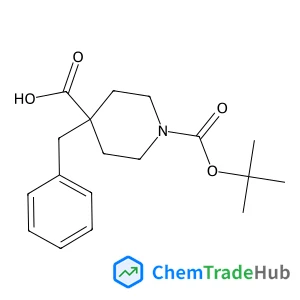
4-Benzyl-1-(tert-butoxycarbonyl)piperidine-4-carboxylic acid
CAS Number:
170838-87-6
Molecular Formula:
C18H25NO4

Recommended Suppliers



Disclaimer
This page provides academic journal information for reference and research purposes only. We are not affiliated with any journal publishers and do not handle publication submissions. For publication-related inquiries, please contact the respective journal publishers directly.
If you notice any inaccuracies in the information displayed, please contact us at support@chemtradehub.com. We will promptly review and address your concerns.