












Partition of optical properties into orbital contributions
Literature Information
Publication Date
2019-06-20
DOI
10.1039/C9CP02662B
Impact Factor
3.676
Authors
Josep M. Luis
View Original
Abstract
Nonlinear optical properties (NLOPs) play a major role in photonics, electro-optics and optoelectronics, and other fields of modern optics. The design of new NLO molecules and materials has benefited from the development of computational tools to analyze the relationship between the electronic structure of molecules and their optical response. In this paper, we present a new means to analyze the response property through the partition of NLOPs in terms of orbital contributions (PNOC). This tool can be used to obtain a real-space representation of the NLOPs, providing a powerful visualization aid to connect the magnitude of the optical property with some parts of the molecule. Unlike other methods to analyze NLOPs, the PNOC decomposes the optical property into orbitals of the unperturbed system, furnishing this method with the ability to assess the performance of single- and multi-determinant electronic structure methods. PNOC can be also used to design small basis sets for an accurate description of large systems, saving a substantial amount of computer time for the calculation of optical properties.
Related Literature
A preliminary observation of additive thermodynamic contribution of pendant arms to the complexation of calixarene derivatives with mercury(ii)
Angela F. Danil de Namor, Samir Chahine, Eduardo E. Castellano, Oscar E. Piro, H. Donald Brooke Jenkins
2005-06-23
Communication
DOI: 10.1039/B505408G
Highly regio-, chemo- and diastereoselective synthesis of oxa-bridged spirocycles: A novel observation of reverse selectivity
Sengodagounder Muthusamy, Janagiraman Krishnamurthi, Munirathnam Nethaji
2005-06-21
Communication
DOI: 10.1039/B504692K
GaS and GaSe nanowalls and their transformation to Ga2O3 and GaN nanowalls
S. R. C. Vivekchand
2005-07-11
Communication
DOI: 10.1039/B506676J
Structural basis for bending of organic crystals
C. Malla Reddy, Ravi C. Gundakaram, Srinivas Basavoju, Michael T. Kirchner, K. Anantha Padmanabhan, Gautam R. Desiraju
2005-06-23
Communication
DOI: 10.1039/B505103G
Second generation N-heterocyclic carbene–Pt(0) complexes as efficient catalysts for the hydrosilylation of alkenes
Olivier Buisine, Guillaume Berthon-Gelloz, Jean-François Brière, Sébastien Stérin, Gérard Mignani, Paul Branlard, Bernard Tinant, Jean-Paul Declercq, István E. Markó
2005-06-21
Communication
DOI: 10.1039/B506369H
Non-steady-state living polymerization: a new route to control cationic ring-opening polymerization (CROP) of oxetanevia an activation chain end (ACE) mechanism at ambient temperature
Hassen Bouchékif, Marcia I. Philbin, Eamon Colclough, Allan J. Amass
2005-06-15
Communication
DOI: 10.1039/B417076H
A potential and ion switched molecular photonic logic gate
Carlo Bignozzi, Hugh Doyle, Gareth Redmond
2005-07-08
Communication
DOI: 10.1039/B507021J
A previously unrecognised hydronium di-cation in the crystal structure of a cucurbituril derivative
Ivan Bernal, Uday Mukhopadhyay, Alexander V. Virovets, Vladimir P. Fedin, William Clegg
2005-06-27
Communication
DOI: 10.1039/B505641C
The Ru(ii)-supported heptatungstates [HXW7O28Ru(dmso)3]6− (X = P, As)
Li-Hua Bi, Michael H. Dickman, Ulrich Kortz, Ina Dix
2005-07-06
Communication
DOI: 10.1039/B504903M
You might also like
Compound Q&A
How is 3-(2-Bromoimidazo[2,1-b]thiazol-6-yl)propanoic acid hydrochloride (CAS: 1187830-80-3) typically synthesized?
3-(2-Bromoimidazo[2,1-b]thiazol-6-yl)propanoic acid hydrochloride is typically s...
1187830-80-33-(2-Bromoimidazo[2,...
Compound Q&A
How is 2-Isopropyl-1,3-dioxane-5-carboxylic acid (CAS: 116193-72-7) typically synthesized?
2-Isopropyl-1,3-dioxane-5-carboxylic acid is typically synthesized by the carbox...
116193-72-72-Isopropyl-1,3-diox...
Compound Q&A
What is Alisporivir (CAS: 254435-95-5)?
Alisporivir (CAS: 254435-95-5) is an antiviral medication used in the treatment ...
254435-95-5Alisporivir
Compound Q&A
What are the physical and chemical properties of [1,2,4]triazolo[3,4-a]phthalazine (CAS: 234-80-0)?
[1,2,4]triazolo[3,4-a]phthalazine (CAS: 234-80-0) is a crystalline compound with...
234-80-0[1,2,4]triazolo[3,4-...
Compound Q&A
What regulatory guidelines apply to (2S)-5-Hydroxy-2-(4-hydroxyphenyl)-4-oxo-3,4-dihydro-2H-chromen-7-yl methyl beta-D-glucopyranosiduronate (CAS: 1985597-72-5)?
Regulatory guidelines for (2S)-5-Hydroxy-2-(4-hydroxyphenyl)-4-oxo-3,4-dihydro-2...
1985597-72-5(2S)-5-Hydroxy-2-(4-...
Compound Q&A
Is 2,2-Difluorocyclohexanamine hydrochloride (CAS: 921602-83-7) safe?
2,2-Difluorocyclohexanamine hydrochloride is generally safe when handled under p...
921602-83-72,2-Difluorocyclohex...
Compound Q&A
What are the main uses of 3-Nitro-2-phenylthiophene (CAS: 18150-94-2)?
3-Nitro-2-phenylthiophene is primarily used in the synthesis of other organic co...
18150-94-23-Nitro-2-phenylthio...
Compound Q&A
What is 1-(Trifluoroacetyl)-4-piperidinecarbonitrile (CAS: 77940-79-5)?
1-(Trifluoroacetyl)-4-piperidinecarbonitrile (CAS: 77940-79-5) is a colorless to...
77940-79-51-(Trifluoroacetyl)-...
Compound Q&A
What is the market or research trend for 1,3,6,8-Tetranitro-9H-carbazole (CAS: 4543-33-3)?
Research and market trends for 1,3,6,8-Tetranitro-9H-carbazole (CAS: 4543-33-3) ...
4543-33-31,3,6,8-Tetranitro-9...
Compound Q&A
How should waste containing Dibenzo[b,d]thiophen-1-ylboronic acid (CAS: 1245943-60-5) be handled?
Waste containing Dibenzo[b,d]thiophen-1-ylboronic acid (CAS: 1245943-60-5) shoul...
1245943-60-5Dibenzo[b,d]thiophen...
Source Journal
Physical Chemistry Chemical Physics

CiteScore:
5.5
Self-citation Rate:
10.3%
Articles per Year:
3036
Physical Chemistry Chemical Physics (PCCP) is an international journal co-owned by 19 physical chemistry and physics societies from around the world. This journal publishes original, cutting-edge research in physical chemistry, chemical physics and biophysical chemistry. To be suitable for publication in PCCP, articles must include significant innovation and/or insight into physical chemistry; this is the most important criterion that reviewers and Editors will judge against when evaluating submissions. The journal has a broad scope and welcomes contributions spanning experiment, theory, computation and data science. Topical coverage includes spectroscopy, dynamics, kinetics, statistical mechanics, thermodynamics, electrochemistry, catalysis, surface science, quantum mechanics, quantum computing and machine learning. Interdisciplinary research areas such as polymers and soft matter, materials, nanoscience, energy, surfaces/interfaces, and biophysical chemistry are welcomed if they demonstrate significant innovation and/or insight into physical chemistry. Joined experimental/theoretical studies are particularly appreciated when complementary and based on up-to-date approaches.
Recommended Compounds

2,6-Diisopropylphenylimidoneophylidene molybdenum(VI) bis(hexafluoro-t-butoxide)
CAS Number:
139220-25-0
Molecular Formula:
C30H37F12MoNO2

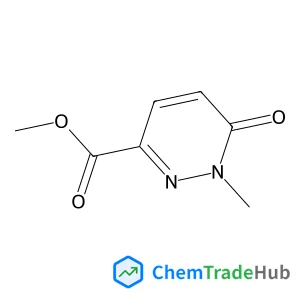
Methyl 1-methyl-6-oxo-1,6-dihydro-3-pyridazinecarboxylate
CAS Number:
74173-58-3
Molecular Formula:
C7H8N2O3
Recommended Suppliers





Disclaimer
This page provides academic journal information for reference and research purposes only. We are not affiliated with any journal publishers and do not handle publication submissions. For publication-related inquiries, please contact the respective journal publishers directly.
If you notice any inaccuracies in the information displayed, please contact us at support@chemtradehub.com. We will promptly review and address your concerns.